Do Children and Other Animals Think Like Scientists?
8°C · 17% rain
Ask AI: is it for me?
Similar events
View allAbout This Event
Professor Marta Halina delivers the Larmor Lecture at the Bristol-Myers Squibb Lecture Theatre in Cambridge on 23 November 2026. The talk examines whether children and other animals think like scientists by comparing broad theories with a case-worker approach to science.
Professor Marta Halina - Larmor Lecture
For decades, psychologists have characterised children as little scientists. This view holds that kids and nonhuman animals navigate the physical world by building broad, abstract theories, much like physicists searching for universal laws. Modern philosophy of science, however, tells a different story about how actual science works. In our complex and tangled world, universal laws often fail outside the highly controlled environment of a laboratory. Because the real world is messy and unpredictable, successful scientists frequently adopt a ‘case-worker’ approach. They sift through a toolbox of models to find the one that fits the specific, local situation at hand.
If professional scientists act more like case-workers than general theorists, we must reconsider how children and animals learn about the causal world. This talk explores what happens when we view everyday reasoning through this highly local, context-driven lens. Drawing on the idea that our brain acts as a continuous prediction machine, I will discuss how organisms adapt to a noisy world not by finding an overarching theory, but by actively testing the environment and dynamically adjusting their confidence in which local patterns are reliable right here and right now.
From the flight of the hawkmoth to the problem-solving strategies of chimpanzees, this approach reveals that a failure to apply a general rule to a new situation is not necessarily a lack of understanding. Rather, it is often a smart, adaptive strategy for surviving in an ever-changing environment. Ultimately, we might need to ask not whether the child acts like a scientist, but exactly what kind of scientist the child actually is.
Description supplied by the event organiser.
Staying overnight?
Hotels within walking distance of Bristol-Myers Squibb Lecture Theatre, Yusef Hamied Department of Chemistry, (entrance to lecture theatre, adjacent to the Scott Polar Research Institute).
Ad · Stay22 affiliate link
Similar Events in Cambridge
View all →
Thu, 12 Nov 2026
Thomas Mann’s The Magic Mountain: A Conversation with Translator Simon Pare
Emmanuel College Lecture Theatre
Free Entry
Sun, 15 Nov 2026
Olivia Trummer @ Divinity School Lecture Theatre
Divinity School Lecture Theatre
Wed, 18 Nov 2026
Antibody Validation: The Key to Reproducible and Reliable Research
Clifford Allbutt Lecture Theatre
Free Entry
Mon, 23 Nov 2026
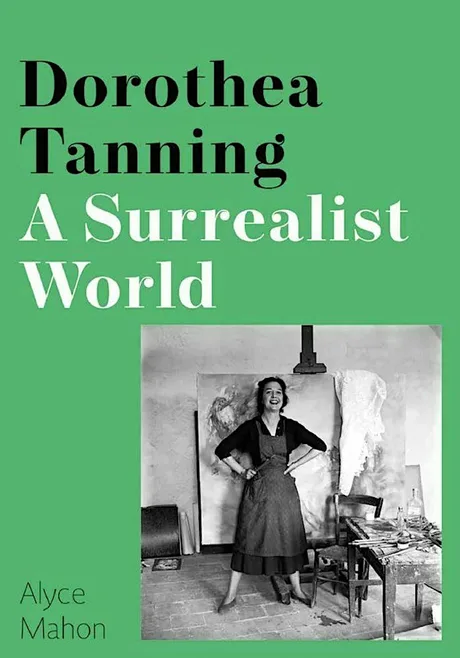
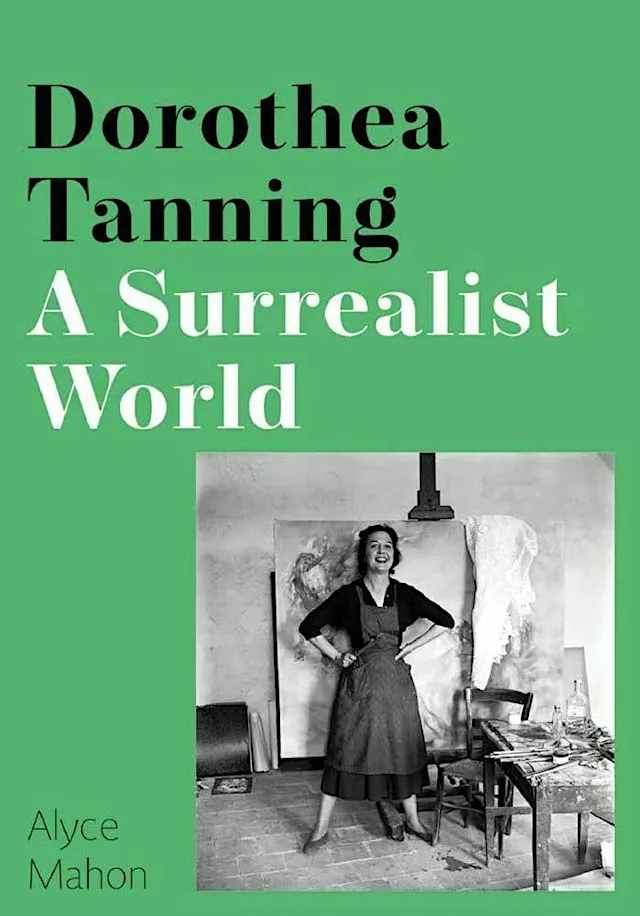
Dorothea Tanning: A Surrealist World with Alyce Mahon
Buckingham House Lecture Theatre
Free – £10
Wed, 18 Nov 2026
Geoffrey Winthrop Young: mountaineer, poet, educator – a personal view

Fri, 13 Nov 2026
OMEGA NEBULA Live @ The Portland Arms, Cambridge 13/11/26
The Portland Arms
£17
Frequently asked questions
Do Children and Other Animals Think Like Scientists? takes place on Monday, 23 November 2026 at 17:30.
Do Children and Other Animals Think Like Scientists? is held at Bristol-Myers Squibb Lecture Theatre, Yusef Hamied Department of Chemistry, (entrance to lecture theatre, adjacent to the Scott Polar Research Institute) in Cambridge (29 Lensfield Road, Cambridge, CB2 1ER).
Entry to Do Children and Other Animals Think Like Scientists? is free.
The forecast for Do Children and Other Animals Think Like Scientists? is Mainly clear · 8°C.
Yes — hotels within walking distance of Bristol-Myers Squibb Lecture Theatre, Yusef Hamied Department of Chemistry, (entrance to lecture theatre, adjacent to the Scott Polar Research Institute) can be compared using the accommodation search further down this page.
Tickets for Do Children and Other Animals Think Like Scientists? can be booked via Eventbrite using the "Check Tickets & Live Prices" button on this page, which opens the official booking site in a new tab.
Editorial summaryAbout this event
Professor Marta Halina delivers the Larmor Lecture at the Bristol-Myers Squibb Lecture Theatre in Cambridge on 23 November 2026. The talk examines whether children and other animals think like scientists by comparing broad theories with a case-worker approach to science.
This summary was automatically generated from event data sourced from official ticketing providers.
Professor Marta Halina - Larmor Lecture
For decades, psychologists have characterised children as little scientists. This view holds that kids and nonhuman animals navigate the physical world by building broad, abstract theories, much like physicists searching for universal laws. Modern philosophy of science, however, tells a different story about how actual science works. In our complex and tangled world, universal laws often fail outside the highly controlled environment of a laboratory. Because the real world is messy and unpredictable, successful scientists frequently adopt a ‘case-worker’ approach. They sift through a toolbox of models to find the one that fits the specific, local situation at hand.
If professional scientists act more like case-workers than general theorists, we must reconsider how children and animals learn about the causal world. This talk explores what happens when we view everyday reasoning through this highly local, context-driven lens. Drawing on the idea that our brain acts as a continuous prediction machine, I will discuss how organisms adapt to a noisy world not by finding an overarching theory, but by actively testing the environment and dynamically adjusting their confidence in which local patterns are reliable right here and right now.
From the flight of the hawkmoth to the problem-solving strategies of chimpanzees, this approach reveals that a failure to apply a general rule to a new situation is not necessarily a lack of understanding. Rather, it is often a smart, adaptive strategy for surviving in an ever-changing environment. Ultimately, we might need to ask not whether the child acts like a scientist, but exactly what kind of scientist the child actually is.
Description supplied by the event organiser.
StayStaying overnight?
Hotels within walking distance of Bristol-Myers Squibb Lecture Theatre, Yusef Hamied Department of Chemistry, (entrance to lecture theatre, adjacent to the Scott Polar Research Institute). Searching near 29 Lensfield Road, Cambridge, CB2 1ER; check-in Monday, 23 November 2026.
Ad · Stay22 affiliate link
WhereBristol-Myers Squibb Lecture Theatre, Yusef Hamied Department of Chemistry, (entrance to lecture theatre, adjacent to the Scott Polar Research Institute)
Before you goFrequently asked questions
When is Do Children and Other Animals Think Like Scientists??
Do Children and Other Animals Think Like Scientists? takes place on Monday, 23 November 2026 at 17:30.
Where is Do Children and Other Animals Think Like Scientists? taking place?
Do Children and Other Animals Think Like Scientists? is held at Bristol-Myers Squibb Lecture Theatre, Yusef Hamied Department of Chemistry, (entrance to lecture theatre, adjacent to the Scott Polar Research Institute) in Cambridge (29 Lensfield Road, Cambridge, CB2 1ER).
How much are tickets for Do Children and Other Animals Think Like Scientists??
Entry to Do Children and Other Animals Think Like Scientists? is free.
What will the weather be like at Do Children and Other Animals Think Like Scientists??
The forecast for Do Children and Other Animals Think Like Scientists? is Mainly clear · 8°C.
Is there anywhere to stay near Do Children and Other Animals Think Like Scientists??
Yes — hotels within walking distance of Bristol-Myers Squibb Lecture Theatre, Yusef Hamied Department of Chemistry, (entrance to lecture theatre, adjacent to the Scott Polar Research Institute) can be compared using the accommodation search further down this page.
How do I get tickets for Do Children and Other Animals Think Like Scientists??
Tickets for Do Children and Other Animals Think Like Scientists? can be booked via Eventbrite using the "Check Tickets & Live Prices" button on this page, which opens the official booking site in a new tab.
Price
Free Entry
Date
Time
Weather
feels like 3°C · chance of rain 17% · wind 23 km/h
Venue
Secure checkout on Eventbrite — opens in a new tab
Ask AI: is it for me?
EventsList lists 217,000+ events across the UK. Tickets are sold by the venue or its authorised sellers, never by us.
Not this one?Similar events in Cambridge
View all


More things to do in Cambridge
- A Christmas CarolSunday, 20 December 2026
- Eddington ArtsSaturday, 14 November 2026
- James Phelan: The Man Who Was MagicThursday, 1 April 2027
- Shakespeare in a Suitcase - HamletSunday, 22 November 2026
- Susie Dent: Word PerfectSunday, 15 November 2026
- From the poem to the novel: Heba’s JourneyFriday, 27 November 2026
- CUPS Winter Showcase 2026: Naughty or NiceSunday, 22 November 2026
- Murder Mystery Book Club - The Murder at the Vicarage by Agatha ChristieTuesday, 24 November 2026
- OliverTuesday, 24 November 2026
- Choral Evensong Broadcast on BBC Radio 3Wednesday, 25 November 2026
- Plonk&PaintFriday, 20 November 2026
- Jack and the BeanstalkFriday, 27 November 2026
- ADC Theatre visit - The Da Vinci CodeThursday, 19 November 2026
- Christmas Jumper SwapSaturday, 28 November 2026