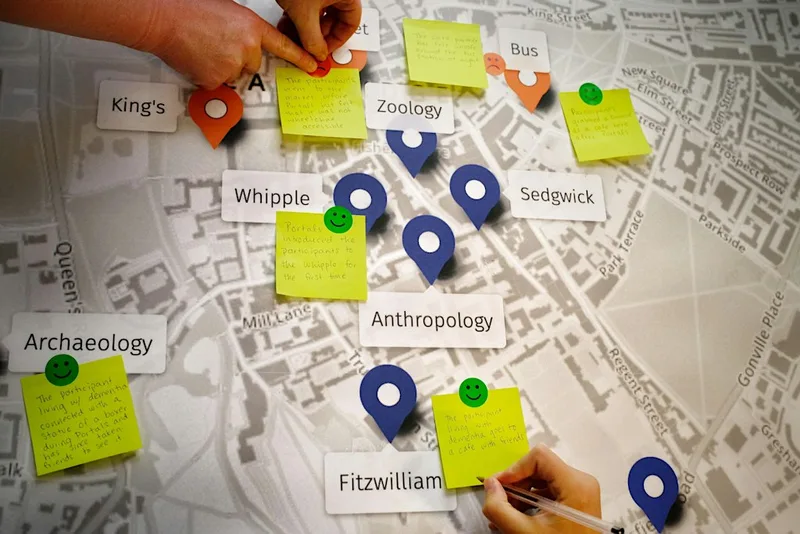
What can mapping reveal about museums as social and cultural infrastructure
Thu 3 Dec · 17:30
The Cambridge Room, The Grafton, Cambridge
Venue events →
5°C · 2% rain
Ask AI: is it for me?
Similar events
View allNot quite it? Try these
See all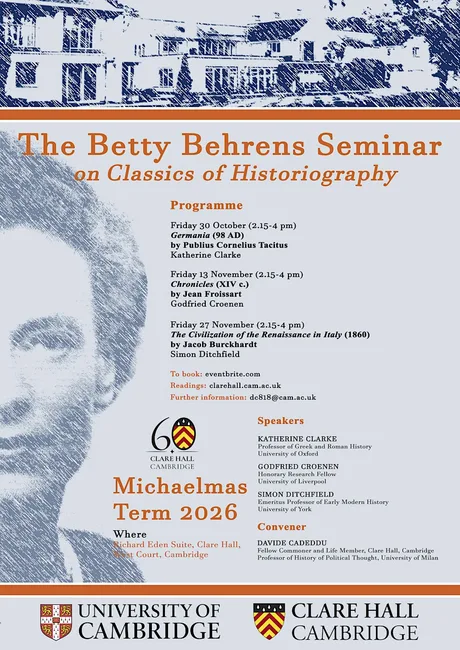 Fri, 27 Nov 2026
The Betty Behrens Seminar on Classics of Historiography
Free Entry
 Fri, 27 Nov 2026
Law and Climate Science - Cambridge Seminar Series on Law & Climate Crisis
Free Entry
 Mon, 30 Nov 2026
Dr Olga Petri: Queer Geographies from the Wrong City
Free Entry
 Mon, 30 Nov 2026
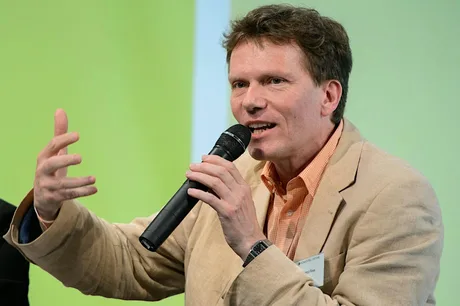
Hartmut Rosa: Public Lecture
Free Entry
 Tue, 1 Dec 2026
Who becomes a teacher in Pakistan and why?
Free Entry
About This Event
A talk titled 'What can mapping reveal about museums as social and cultural infrastructure' is scheduled for 3 December 2026 at The Cambridge Room, The Grafton in Cambridge. The discussion will explore the role of museums in social and cultural contexts and the insights mapping can provide.
How do museums fit into people's everyday social and cultural lives? And can a map show us something that surveys and statistics cannot?
How do museums fit into people's everyday social and cultural lives? And can a map show us something that surveys and statistics cannot?
In this interactive session, Katie Miller (University of Cambridge Collections) and Martin Conway (Public Map East Anglia) share findings from a University of Cambridge Museums (UCM) evaluation project that used mapping-based conversations with programme participants to explore the role museums play as social and cultural infrastructure. The project's maps, built in uMap, are now published on the Public Map Platform.
Rather than simply presenting results, the session invites you to read the maps for yourself. Working in small groups, you will look at participant maps and discuss what they suggest about the relationships between museums and the other places in people's lives. We will then add further context from the wider qualitative data and explain how the digital maps were made, and ask whether that changes how you read them.
Who this session is for
Anyone interested in museums, mapping, planning, or how we understand the value of cultural and community spaces. No background is needed. The session is equally open to residents and community groups, museum and heritage professionals, planners, policy makers, students, and researchers.
What we will cover
UCM's evaluation project, which piloted the Bennett School of Public Policy's framework for measuring social and cultural infrastructure
How the mapping data was collected, and what it reveals about accessibility, participation, and use of place
A hands-on group activity interpreting participant maps
How the digital maps were generated
An open discussion on what mapping adds to evaluation, and what is difficult to represent spatially
Participation and ethics
The conversation will not be audio- or video-recorded. However, UCM will capture key insights and feedback through written notes to inform our internal reflections and learning, particularly around the potential continued use of mapping as an evaluation tool. Attendees may request that their comments not be included in written notes. Notes will not identify individual attendees.
We will also take a few photographs of the event and attendees' completed maps to document the experience and support our learning. Attendees may opt out of being photographed without affecting their participation. Any external use or sharing of identifiable photographs or information will require separate permission.
About the series
This event is part of the Community Design Research Lab (CDRL) series sponsired by CRASSH, hosted at The Cambridge Room. Drinks and snacks will be provided.
Booking
The session is free, but places are limited and registration is required. Please release your ticket if you can no longer attend so that someone else can take your place.
Description supplied by the event organiser.
Staying overnight?
Hotels within walking distance of The Cambridge Room, The Grafton, Cambridge.
Ad · Stay22 affiliate link
Similar Events in Cambridge
View all →Fri, 27 Nov 2026
The Betty Behrens Seminar on Classics of Historiography
Clare Hall, University of Cambridge
Free Entry
Fri, 27 Nov 2026
Law and Climate Science - Cambridge Seminar Series on Law & Climate Crisis
David Attenborough Building
Free Entry
Mon, 30 Nov 2026
Dr Olga Petri: Queer Geographies from the Wrong City
S1, Alison Richard Building
Free Entry
Mon, 30 Nov 2026
Hartmut Rosa: Public Lecture
Emmanuel College, University of Cambridge
Free Entry
Tue, 1 Dec 2026
Who becomes a teacher in Pakistan and why?
Faculty of Education, University of Cambridge
Free Entry
Tue, 1 Dec 2026
Islamic Interiority Lecture Series
Cambridge Muslim College
Free Entry
Frequently asked questions
What can mapping reveal about museums as social and cultural infrastructure takes place on Thursday, 3 December 2026 at 17:30.
What can mapping reveal about museums as social and cultural infrastructure is held at The Cambridge Room, The Grafton, Cambridge in Cambridge (Unit 55 Grafton, Cambridge, CB1 1PS).
Entry to What can mapping reveal about museums as social and cultural infrastructure is free.
The forecast for What can mapping reveal about museums as social and cultural infrastructure is Clear · 5°C.
Yes — hotels within walking distance of The Cambridge Room, The Grafton, Cambridge can be compared using the accommodation search further down this page.
Tickets for What can mapping reveal about museums as social and cultural infrastructure can be booked via Eventbrite using the "Check Tickets & Live Prices" button on this page, which opens the official booking site in a new tab.
Editorial summaryAbout this event
A talk titled 'What can mapping reveal about museums as social and cultural infrastructure' is scheduled for 3 December 2026 at The Cambridge Room, The Grafton in Cambridge. The discussion will explore the role of museums in social and cultural contexts and the insights mapping can provide.
This summary was automatically generated from event data sourced from official ticketing providers.
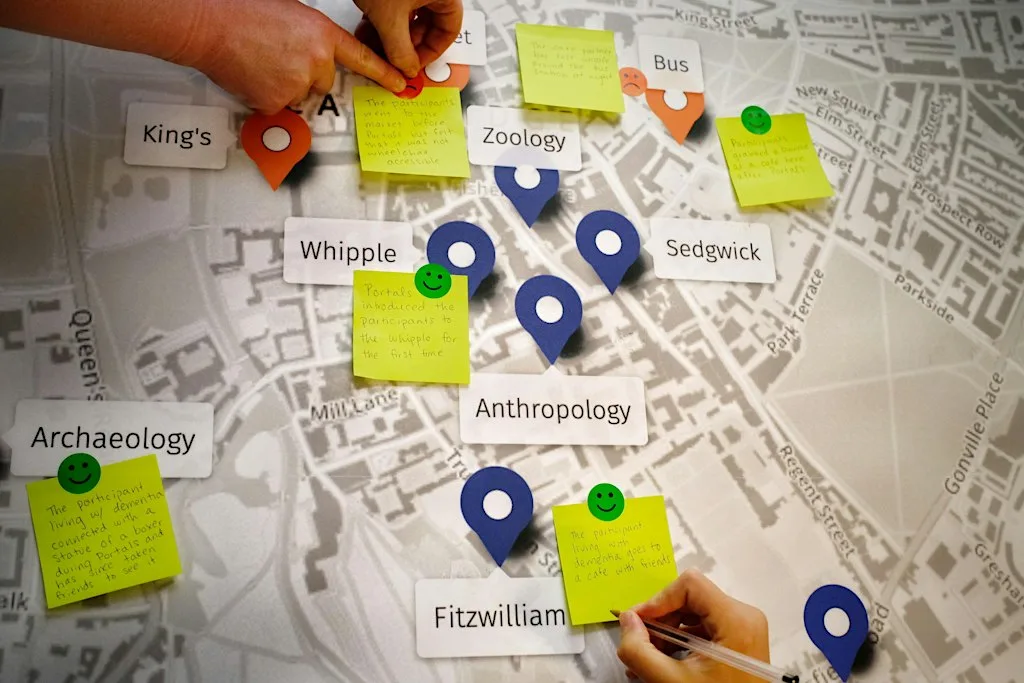
How do museums fit into people's everyday social and cultural lives? And can a map show us something that surveys and statistics cannot?
How do museums fit into people's everyday social and cultural lives? And can a map show us something that surveys and statistics cannot?
In this interactive session, Katie Miller (University of Cambridge Collections) and Martin Conway (Public Map East Anglia) share findings from a University of Cambridge Museums (UCM) evaluation project that used mapping-based conversations with programme participants to explore the role museums play as social and cultural infrastructure. The project's maps, built in uMap, are now published on the Public Map Platform.
Rather than simply presenting results, the session invites you to read the maps for yourself. Working in small groups, you will look at participant maps and discuss what they suggest about the relationships between museums and the other places in people's lives. We will then add further context from the wider qualitative data and explain how the digital maps were made, and ask whether that changes how you read them.
Who this session is for
Anyone interested in museums, mapping, planning, or how we understand the value of cultural and community spaces. No background is needed. The session is equally open to residents and community groups, museum and heritage professionals, planners, policy makers, students, and researchers.
What we will cover
UCM's evaluation project, which piloted the Bennett School of Public Policy's framework for measuring social and cultural infrastructure
How the mapping data was collected, and what it reveals about accessibility, participation, and use of place
A hands-on group activity interpreting participant maps
How the digital maps were generated
An open discussion on what mapping adds to evaluation, and what is difficult to represent spatially
Participation and ethics
The conversation will not be audio- or video-recorded. However, UCM will capture key insights and feedback through written notes to inform our internal reflections and learning, particularly around the potential continued use of mapping as an evaluation tool. Attendees may request that their comments not be included in written notes. Notes will not identify individual attendees.
We will also take a few photographs of the event and attendees' completed maps to document the experience and support our learning. Attendees may opt out of being photographed without affecting their participation. Any external use or sharing of identifiable photographs or information will require separate permission.
About the series
This event is part of the Community Design Research Lab (CDRL) series sponsired by CRASSH, hosted at The Cambridge Room. Drinks and snacks will be provided.
Booking
The session is free, but places are limited and registration is required. Please release your ticket if you can no longer attend so that someone else can take your place.
Description supplied by the event organiser.
StayStaying overnight?
Hotels within walking distance of The Cambridge Room, The Grafton, Cambridge. Searching near Unit 55 Grafton, Cambridge, CB1 1PS; check-in Thursday, 3 December 2026.
Ad · Stay22 affiliate link
WhereThe Cambridge Room, The Grafton, Cambridge
Before you goFrequently asked questions
When is What can mapping reveal about museums as social and cultural infrastructure?
What can mapping reveal about museums as social and cultural infrastructure takes place on Thursday, 3 December 2026 at 17:30.
Where is What can mapping reveal about museums as social and cultural infrastructure taking place?
What can mapping reveal about museums as social and cultural infrastructure is held at The Cambridge Room, The Grafton, Cambridge in Cambridge (Unit 55 Grafton, Cambridge, CB1 1PS).
How much are tickets for What can mapping reveal about museums as social and cultural infrastructure?
Entry to What can mapping reveal about museums as social and cultural infrastructure is free.
What will the weather be like at What can mapping reveal about museums as social and cultural infrastructure?
The forecast for What can mapping reveal about museums as social and cultural infrastructure is Clear · 5°C.
Is there anywhere to stay near What can mapping reveal about museums as social and cultural infrastructure?
Yes — hotels within walking distance of The Cambridge Room, The Grafton, Cambridge can be compared using the accommodation search further down this page.
How do I get tickets for What can mapping reveal about museums as social and cultural infrastructure?
Tickets for What can mapping reveal about museums as social and cultural infrastructure can be booked via Eventbrite using the "Check Tickets & Live Prices" button on this page, which opens the official booking site in a new tab.
Price
Free Entry
Date
Time
Weather
feels like 2°C · chance of rain 2% · wind 10 km/h
Venue
Unit 55 Grafton, Cambridge, CB1 1PS
Secure checkout on Eventbrite — opens in a new tab
Ask AI: is it for me?
EventsList lists 204,000+ events across the UK. Tickets are sold by the venue or its authorised sellers, never by us.
Not this one?Similar events in Cambridge
View all


More things to do in Cambridge
- A Good Girl's Guide to Murder - Holly JacksonSunday, 20 December 2026
- The Revelation That Inspired Muhammad Ep 1 & 2Friday, 27 November 2026
- The Science of the multiverse: Do parallel universes exist?Monday, 14 December 2026
- Christmas LectureTuesday, 8 December 2026
- Cambridge - People Planet Pint™: Sustainability MeetupThursday, 3 December 2026
- Belarus and the Baltic after 2022Friday, 4 December 2026
- Gender, populism and the Far-Right: A case study of Germany's AfDWednesday, 2 December 2026
- New Horizons in OCD Treatment: Scientific Innovation, Life-Changing ImpactWednesday, 2 December 2026
- Towards a Living Critique of DominationWednesday, 2 December 2026
- English Conversation for international studentsWednesday, 2 December 2026
- TM Krishna: Lecture-PerformanceWednesday, 2 December 2026
- Integrating Sociophonetic Data with Forensic Frameworks: Acoustic EvidenceWednesday, 2 December 2026
- An Autistic Perspective on Communication and OCDSaturday, 5 December 2026
- Philosophical discussionSaturday, 5 December 2026