Fragile Landscapes: Memory, Migration and Embodied Mapping
Wed 9 Sept · 17:30
Paul Mellon Centre
Venue events →
Similar events
View all →About This Event
The Fragile Landscapes: Memory, Migration and Embodied Mapping event will take place at the Paul Mellon Centre in London on 2026-09-09, featuring a panel discussion with various speakers and priced at free admission.
A panel discussion with Nirmal Purwar and Rohini Rai, chaired by Katherine Parker
A panel discussion on history, cartography, memory, displacement and colonialism, reflecting on work by artist Fathi Hassan on display at the Paul Mellon Centre (PMC) in partnership with the Sunderland Collection.
This reception will celebrate the exhibition of work by Fathi Hassan, including historic work alongside work made in response to the Sunderland Collection of maps and atlases, followed by a conversation between Dr Rohini Rai and Nirmal Puwar, chaired by Dr Katie Parker.
Fathi Hassan was born in Cairo in 1957 to Nubian and Egyptian parents and, working across geographies throughout his career, Fathi 's visual language is unique; an open and fluid language influenced by memories of his nomadic life. The conversation will explore contemporary art practices and how displaced peoples consider the mapping process as an embodied experience that enables the re-remembering and preservation of stories and cultural practices.
Speaker and chair biographies
Nirmal Puwar is a co-director of the Centre for Feminist Research and a co-convenor of the MA Gender, Sexuality, Creative Practice degree programme. In 2005 she co-founded the Methods Lab. Her classic book Space Invaders: Race, Gender and Bodies Out of Place (2004) has been revisited for a twentieth anniversary issue of the European Journal of Cultural Studies. She is currently working on a revised Italian version of the book with a group of scholars. Nirmal has co-edited seventeen collections including Live Methods. She has a long practice of creative and publicly engaged research spanning twenty years including several funded projects: Noise of the Past (AHRC), Pierre Bourdieu in Algeria (ESRC), Working with Private Media Materials in the Public Realm (AHRC), Re-Visioning Britishness (AHRC) and, most recently, Multicultural Experiments in the Civic Life of a Cathedral (British Academy), which includes a podcast series Hear Here https://www.juncture-digital.org/mattering-press/Hear-Here-Spatial-Practices/
Dr Rohini Rai is a sociologist of racialisation, Indigeneity and post/decoloniality whose work examines how marginalised communities narrate, inhabit and reimagine contested geographies. Based at Brunel University London, she develops interdisciplinary, public-facing research that brings sociology into dialogue with geography, archives, diaspora studies, performance and creative practice. In 2023–24, Rohini led a British Academy-funded project with the Royal Geographical Society and the Institute of British Geographers (RGS-IBG), Indigenising the Himalayas, which worked with UK-based Himalayan Indigenous diaspora communities to challenge colonial imaginaries and foreground community stories. She is currently leading a British Academy/Leverhulme Small Research Grant 2026 exploring Indigeneity through dance, archival encounters and storytelling. Across her research, Rohini is committed to collaborative, ethically grounded and critically decolonial methods that make space for Indigenous knowledges, embodied memory and alternative histories. Her work contributes to debates on “race”, migration, belonging, heritage and the politics of representation within and beyond academia
Chair
Dr Katherine Parker is the Cartographic Collections Manager at the Royal Geographical Society , where she protects and promotes their collection of over one million maps. Her research focuses on the histories of maps, mapping and exploration, especially of the early modern Pacific, and Indigenous maps and mapping. She also serves as co-editor of Imago Mundi: International Journal of the History of Cartography, as the Administrative Editor for the Hakluyt Society and as a part-time lecturer in the history of architecture at New York University (NYU) in London.
Event schedule
5.30-6.30 pm: Brief intro and Panel discussion with Nirmal Purwar and Rohini Rai, chaired by Katherine Parker
6.30-7.00 pm: Q&As, chaired by Katherine Parker
7.00-8.00 pm: Drinks receptions and time to view Fathi Hassan's artwork at PMC
Event in-person and online. Please register for the appropriate ticket type accordingly
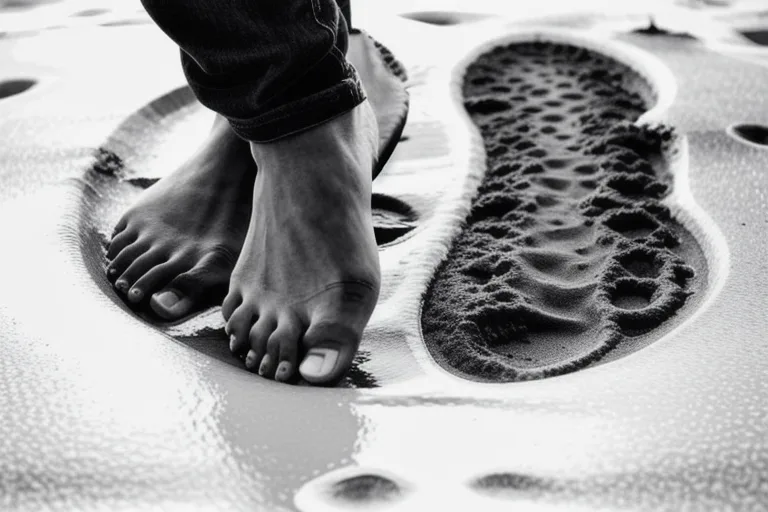
Image caption: The Light Man’s Historical Footstep, 1985. Image courtesy of Fathi Hassan
Accessibility at a Glance at the Paul Mellon Centre
✖ Level access
✔ Livestreamed
✔ Recorded
✔ Hearing loop available (please contact events@paul-mellon-centre.ac.uk)
✔ Closed caption on Zoom
✖ BSL
PMC Visitor Information - Accessibility Guide & Accessibility Map
If you wish to inform us of any access requirements, please email events@paul-mellon-centre.
Description supplied by the event organiser.
Weather on the day
Mainly clear · 19°C
Feels like 17°C · Chance of rain 0% · Wind 8 km/h
Forecast from Open-Meteo, updated 2 hours ago. Accuracy drops beyond a few days out.
Similar Events in London
View all →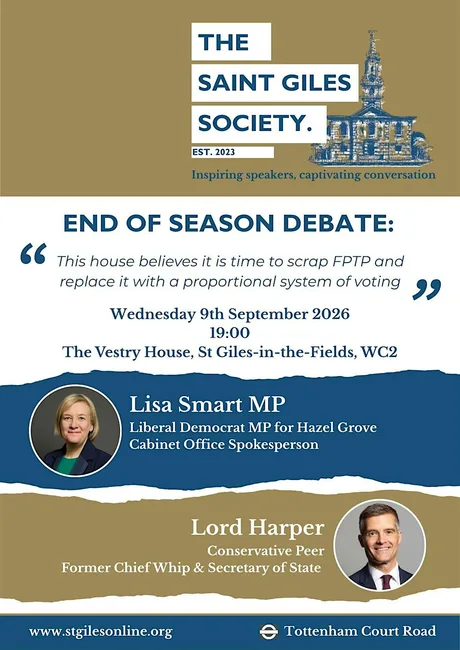 £5
£5St Giles Society | 9 Sep at 6pm | End of Season Debate
Wed, 9 Sept 2026
St Giles in the Fields, Saint Giles High Street, London
 £3.96
£3.9620x20 Speakers Night: Makers in London | 7-Minute Talks in London
Wed, 9 Sept 2026
The Doodle Bar
 Free Entry
TOMA Barking Drop-in: Open call Q&A and making with artist Graham Burnett
Thu, 10 Sept 2026
A House for Artists
 From £8
Monsters, Magic & Myths - Tottenham Court Road
Thu, 10 Sept 2026
Waterstones

celebrASIA Panel: Feast & Flavour
Sun, 13 Sept 2026
Battersea Power Station
celebrASIA Panel: The Artisan
Sun, 13 Sept 2026
Battersea Power Station
Frequently asked questions
Fragile Landscapes: Memory, Migration and Embodied Mapping takes place on Wednesday, 9 September 2026 at 17:30.
Fragile Landscapes: Memory, Migration and Embodied Mapping is held at Paul Mellon Centre in London (16 Bedford Square, London, WC1B 3JA).
Entry to Fragile Landscapes: Memory, Migration and Embodied Mapping is free.
Tickets for Fragile Landscapes: Memory, Migration and Embodied Mapping can be booked via Eventbrite using the "Check Tickets & Live Prices" button on this page, which opens the official booking site in a new tab.
Staying overnight?
Hotels within walking distance of Paul Mellon Centre.
Ad · Booking.com affiliate link
Fragile Landscapes: Memory, Migration and Embodied Mapping
Editorial Summary
The Fragile Landscapes: Memory, Migration and Embodied Mapping event will take place at the Paul Mellon Centre in London on 2026-09-09, featuring a panel discussion with various speakers and priced at free admission.
This summary was automatically generated from event data sourced from official ticketing providers.
Organiser’s full description
A panel discussion with Nirmal Purwar and Rohini Rai, chaired by Katherine Parker
A panel discussion on history, cartography, memory, displacement and colonialism, reflecting on work by artist Fathi Hassan on display at the Paul Mellon Centre (PMC) in partnership with the Sunderland Collection.
This reception will celebrate the exhibition of work by Fathi Hassan, including historic work alongside work made in response to the Sunderland Collection of maps and atlases, followed by a conversation between Dr Rohini Rai and Nirmal Puwar, chaired by Dr Katie Parker.
Fathi Hassan was born in Cairo in 1957 to Nubian and Egyptian parents and, working across geographies throughout his career, Fathi 's visual language is unique; an open and fluid language influenced by memories of his nomadic life. The conversation will explore contemporary art practices and how displaced peoples consider the mapping process as an embodied experience that enables the re-remembering and preservation of stories and cultural practices.
Speaker and chair biographies
Nirmal Puwar is a co-director of the Centre for Feminist Research and a co-convenor of the MA Gender, Sexuality, Creative Practice degree programme. In 2005 she co-founded the Methods Lab. Her classic book Space Invaders: Race, Gender and Bodies Out of Place (2004) has been revisited for a twentieth anniversary issue of the European Journal of Cultural Studies. She is currently working on a revised Italian version of the book with a group of scholars. Nirmal has co-edited seventeen collections including Live Methods. She has a long practice of creative and publicly engaged research spanning twenty years including several funded projects: Noise of the Past (AHRC), Pierre Bourdieu in Algeria (ESRC), Working with Private Media Materials in the Public Realm (AHRC), Re-Visioning Britishness (AHRC) and, most recently, Multicultural Experiments in the Civic Life of a Cathedral (British Academy), which includes a podcast series Hear Here https://www.juncture-digital.org/mattering-press/Hear-Here-Spatial-Practices/
Dr Rohini Rai is a sociologist of racialisation, Indigeneity and post/decoloniality whose work examines how marginalised communities narrate, inhabit and reimagine contested geographies. Based at Brunel University London, she develops interdisciplinary, public-facing research that brings sociology into dialogue with geography, archives, diaspora studies, performance and creative practice. In 2023–24, Rohini led a British Academy-funded project with the Royal Geographical Society and the Institute of British Geographers (RGS-IBG), Indigenising the Himalayas, which worked with UK-based Himalayan Indigenous diaspora communities to challenge colonial imaginaries and foreground community stories. She is currently leading a British Academy/Leverhulme Small Research Grant 2026 exploring Indigeneity through dance, archival encounters and storytelling. Across her research, Rohini is committed to collaborative, ethically grounded and critically decolonial methods that make space for Indigenous knowledges, embodied memory and alternative histories. Her work contributes to debates on “race”, migration, belonging, heritage and the politics of representation within and beyond academia
Chair
Dr Katherine Parker is the Cartographic Collections Manager at the Royal Geographical Society , where she protects and promotes their collection of over one million maps. Her research focuses on the histories of maps, mapping and exploration, especially of the early modern Pacific, and Indigenous maps and mapping. She also serves as co-editor of Imago Mundi: International Journal of the History of Cartography, as the Administrative Editor for the Hakluyt Society and as a part-time lecturer in the history of architecture at New York University (NYU) in London.
Event schedule
5.30-6.30 pm: Brief intro and Panel discussion with Nirmal Purwar and Rohini Rai, chaired by Katherine Parker
6.30-7.00 pm: Q&As, chaired by Katherine Parker
7.00-8.00 pm: Drinks receptions and time to view Fathi Hassan's artwork at PMC
Event in-person and online. Please register for the appropriate ticket type accordingly
Image caption: The Light Man’s Historical Footstep, 1985. Image courtesy of Fathi Hassan
Accessibility at a Glance at the Paul Mellon Centre
✖ Level access
✔ Livestreamed
✔ Recorded
✔ Hearing loop available (please contact events@paul-mellon-centre.ac.uk)
✔ Closed caption on Zoom
✖ BSL
PMC Visitor Information - Accessibility Guide & Accessibility Map
If you wish to inform us of any access requirements, please email events@paul-mellon-centre.
Description supplied by the event organiser.
❓ Frequently asked questions
When is Fragile Landscapes: Memory, Migration and Embodied Mapping?
Fragile Landscapes: Memory, Migration and Embodied Mapping takes place on Wednesday, 9 September 2026 at 17:30.
Where is Fragile Landscapes: Memory, Migration and Embodied Mapping taking place?
Fragile Landscapes: Memory, Migration and Embodied Mapping is held at Paul Mellon Centre in London (16 Bedford Square, London, WC1B 3JA).
How much are tickets for Fragile Landscapes: Memory, Migration and Embodied Mapping?
Entry to Fragile Landscapes: Memory, Migration and Embodied Mapping is free.
How do I get tickets for Fragile Landscapes: Memory, Migration and Embodied Mapping?
Tickets for Fragile Landscapes: Memory, Migration and Embodied Mapping can be booked via Eventbrite using the "Check Tickets & Live Prices" button on this page, which opens the official booking site in a new tab.
🏨 Staying overnight?
Hotels within walking distance of Paul Mellon Centre
Ad · Stay22 affiliate link
Price
Free Entry
Date
Until Wednesday, 9 September 2026
Time
Weather
feels like 17°C · chance of rain 0% · wind 8 km/h
EventsList curates 163,000+ events across the UK. Tickets purchased via the venue or authorised sellers only.
Similar Events in London
View all →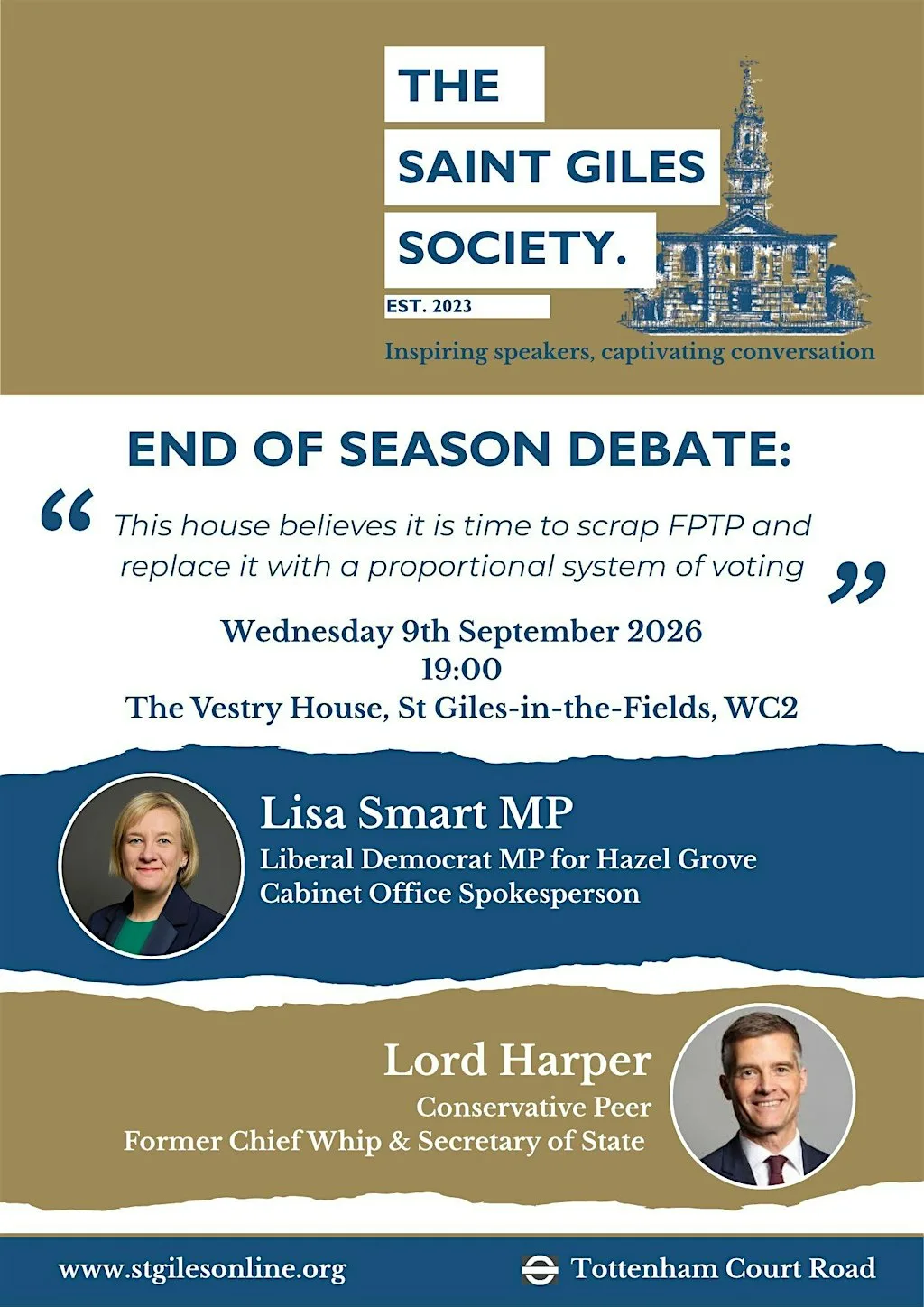
St Giles Society | 9 Sep at 6pm | End of Season Debate
📍 St Giles in the Fields, Saint Giles High Street, London
£5.00

20x20 Speakers Night: Makers in London | 7-Minute Talks in London
📍 The Doodle Bar
£3.96
 FREE
FREETOMA Barking Drop-in: Open call Q&A and making with artist Graham Burnett
📍 A House for Artists

Monsters, Magic & Myths - Tottenham Court Road
📍 Waterstones
£8.00 - £24.00

celebrASIA Panel: Feast & Flavour
📍 Battersea Power Station

celebrASIA Panel: The Artisan
📍 Battersea Power Station
More things to do in London
- Professor Brian Cox: Emergence· Friday, 23 October 2026
- Fran Lebowitz· Tuesday, 27 October 2026
- Materials· Saturday, 12 September 2026
- Public Lecture - Do you want ice with that? The impacts of climate change on nutrient cycling in polar coastal oceans· Tuesday, 15 September 2026
- Q in the Community - The London Edition· Saturday, 19 September 2026
- Fortnum’s Cellar Sessions with Olly Smith· Tuesday, 22 September 2026
- Talk and Tea: Exploring Identity through Uniform and Photographs· Thursday, 10 September 2026
- Bloomsbury Folklore Club (Baba Yaga)· Wednesday, 30 September 2026
- Yotam Ottolenghi - Simple Too: LIVE· Monday, 7 December 2026
- Placebo, Nocebo and Mind-Brain-Body Circuits:…· Wednesday, 9 September 2026
- Decoding Dreams: The science & psychology of dreams - Talks in the Pub· Wednesday, 9 September 2026
- Seminar: US–Japan Relations and the Asia-Pacific· Wednesday, 9 September 2026
- Rita Hinden Memorial Lecture: Yuan Yang MP· Wednesday, 9 September 2026
- Jorie Graham & Daniel Soar: Killing Spree· Wednesday, 9 September 2026