What Does It Take to Fly a Billion Miles from Earth?
Ask AI: is it for me?
Similar events
View allAbout This Event
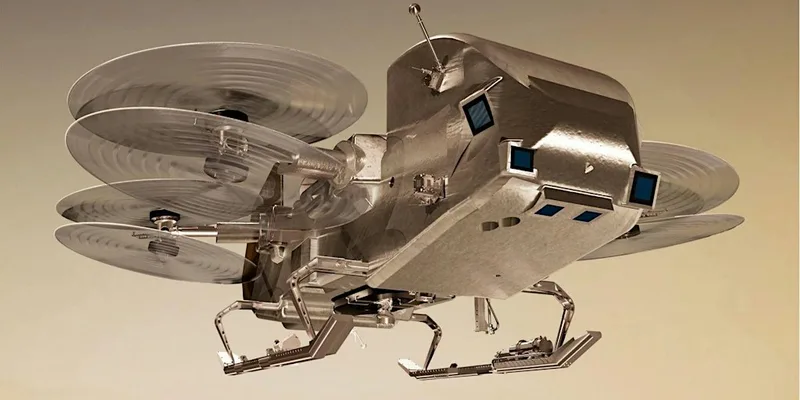
The event will explore NASA's Dragonfly mission, which aims to fly through the atmosphere of Titan, Saturn's largest moon, and search for signs of life. Set to launch in July 2028, the mission will deploy an octocopter designed to navigate Titan's unique environment. Attendees will learn about the engineering challenges involved in operating in extreme conditions and the potential discoveries awaiting on Titan.
The
Dragonfly octocopter mission to fly through the atmosphere of Saturn’s moon, Titan,
and to seek signs of life on the surface.
Set to launch in July 2028 and arrive in 2034, NASA’s Dragonfly mission will deploy a relocatable rotorcraft — an octocopter the size of a Mars rover — to explore Saturn's largest moon from the air. Flying on an alien world presents extraordinary engineering challenges: operating at cryogenic temperatures of -180°C (-290°F) powered by a radioisotope generator, navigating autonomously, and transmitting data directly back to Earth without a dedicated relay orbiter. Yet, Titan’s thick atmosphere and low gravity mean rotary-wing flight requires 38 times less power than on Earth, enabling Dragonfly to hop several kilometres at a time between diverse geological sites.
A vast landscape of discovery awaits. Soaring across Titan’s expansive organic sand dunes toward the ancient Selk impact crater, Dragonfly will investigate locations where impact heat once melted water ice and mixed it with organic compounds. By sampling these unique chemical environments, the mission aims to uncover the prebiotic chemical processes that could hold clues to the origins of life itself.
In this special talk, Dr Ralph Lorenz — Planetary Scientist at the Johns Hopkins Applied Physics Laboratory and Mission Architect for Dragonfly — will share personal insights into humanity’s return to Titan. He will explore how lessons from the Huygens landing helped shape this revolutionary flying lander, the unique hazards of operating in Titan’s environment, and the breathtaking scientific revelations on the horizon.
If you are fascinated by space exploration, planetary science, robotics, or the search for life’s chemical building blocks, you won't want to miss this event.
Practical Information
Booking is strongly advised.
Access
Access to the event is via the Altrincham Street entrance.
Accessibility Information
If you have any specific accessibility requirements, please contact us at events@manlitphil.ac.uk.
Description supplied by the event organiser.
Staying overnight?
Hotels within walking distance of Renold Building.
Ad · Stay22 affiliate link
Similar Events in Manchester
View all →
Tue, 17 Nov 2026
Digital confidence at Failsworth Library
Failsworth Library
Free Entry

Tue, 17 Nov 2026
Knit and Natter
Oldham Library & Lifelong Learning Centre
Free Entry

Tue, 17 Nov 2026
AI, Agents and the Future of Shopping: How Agentic Commerce Will Reshape Retail
Cross Street Chapel

Tue, 17 Nov 2026
Vinyl DJ Workshop
Manchester Central Library

Tue, 17 Nov 2026
Make A Silver Ring Workshop
Thorniley studios
£66.80

Tue, 17 Nov 2026
Building a Domain Specific Language for Acceptance tests
Peninsula Building
Frequently asked questions
What Does It Take to Fly a Billion Miles from Earth? takes place on Wednesday, 16 December 2026 at 18:30.
What Does It Take to Fly a Billion Miles from Earth? is held at Renold Building in Manchester (32a Altrincham Street, Manchester, M1 7JR).
Tickets for What Does It Take to Fly a Billion Miles from Earth? range from £7.21 to £16.96. Live prices and availability are shown on Eventbrite.
Yes — hotels within walking distance of Renold Building can be compared using the accommodation search further down this page.
Tickets for What Does It Take to Fly a Billion Miles from Earth? can be booked via Eventbrite using the "Check Tickets & Live Prices" button on this page, which opens the official booking site in a new tab.
What Does It Take to Fly a Billion Miles from Earth?
Editorial summaryAbout this event
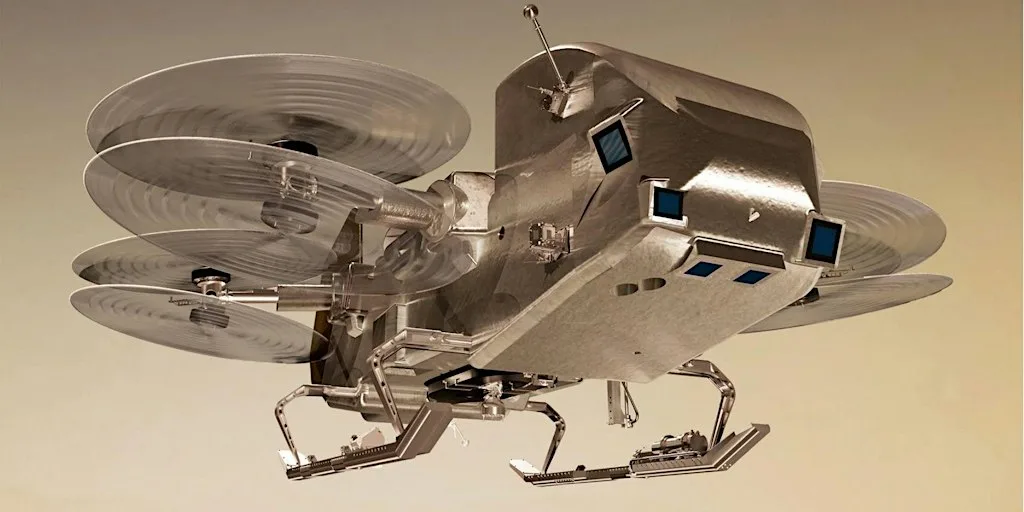
The event will explore NASA's Dragonfly mission, which aims to fly through the atmosphere of Titan, Saturn's largest moon, and search for signs of life. Set to launch in July 2028, the mission will deploy an octocopter designed to navigate Titan's unique environment. Attendees will learn about the engineering challenges involved in operating in extreme conditions and the potential discoveries awaiting on Titan.
This summary was automatically generated from event data sourced from official ticketing providers.
The
Dragonfly octocopter mission to fly through the atmosphere of Saturn’s moon, Titan,
and to seek signs of life on the surface.
Set to launch in July 2028 and arrive in 2034, NASA’s Dragonfly mission will deploy a relocatable rotorcraft — an octocopter the size of a Mars rover — to explore Saturn's largest moon from the air. Flying on an alien world presents extraordinary engineering challenges: operating at cryogenic temperatures of -180°C (-290°F) powered by a radioisotope generator, navigating autonomously, and transmitting data directly back to Earth without a dedicated relay orbiter. Yet, Titan’s thick atmosphere and low gravity mean rotary-wing flight requires 38 times less power than on Earth, enabling Dragonfly to hop several kilometres at a time between diverse geological sites.
A vast landscape of discovery awaits. Soaring across Titan’s expansive organic sand dunes toward the ancient Selk impact crater, Dragonfly will investigate locations where impact heat once melted water ice and mixed it with organic compounds. By sampling these unique chemical environments, the mission aims to uncover the prebiotic chemical processes that could hold clues to the origins of life itself.
In this special talk, Dr Ralph Lorenz — Planetary Scientist at the Johns Hopkins Applied Physics Laboratory and Mission Architect for Dragonfly — will share personal insights into humanity’s return to Titan. He will explore how lessons from the Huygens landing helped shape this revolutionary flying lander, the unique hazards of operating in Titan’s environment, and the breathtaking scientific revelations on the horizon.
If you are fascinated by space exploration, planetary science, robotics, or the search for life’s chemical building blocks, you won't want to miss this event.
Practical Information
Booking is strongly advised.
Access
Access to the event is via the Altrincham Street entrance.
Accessibility Information
If you have any specific accessibility requirements, please contact us at events@manlitphil.ac.uk.
Description supplied by the event organiser.
StayStaying overnight?
Hotels within walking distance of Renold Building. Searching near 32a Altrincham Street, Manchester, M1 7JR; check-in Wednesday, 16 December 2026.
Ad · Stay22 affiliate link
WhereRenold Building
Before you goFrequently asked questions
When is What Does It Take to Fly a Billion Miles from Earth??
What Does It Take to Fly a Billion Miles from Earth? takes place on Wednesday, 16 December 2026 at 18:30.
Where is What Does It Take to Fly a Billion Miles from Earth? taking place?
What Does It Take to Fly a Billion Miles from Earth? is held at Renold Building in Manchester (32a Altrincham Street, Manchester, M1 7JR).
How much are tickets for What Does It Take to Fly a Billion Miles from Earth??
Tickets for What Does It Take to Fly a Billion Miles from Earth? range from £7.21 to £16.96. Live prices and availability are shown on Eventbrite.
Is there anywhere to stay near What Does It Take to Fly a Billion Miles from Earth??
Yes — hotels within walking distance of Renold Building can be compared using the accommodation search further down this page.
How do I get tickets for What Does It Take to Fly a Billion Miles from Earth??
Tickets for What Does It Take to Fly a Billion Miles from Earth? can be booked via Eventbrite using the "Check Tickets & Live Prices" button on this page, which opens the official booking site in a new tab.
Tickets from
£7.21
Date
Time
Venue
32a Altrincham Street, Manchester, M1 7JR
Secure checkout on Eventbrite — opens in a new tab
Ask AI: is it for me?
EventsList lists 211,000+ events across the UK. Tickets are sold by the venue or its authorised sellers, never by us.
Not this one?Similar events in Manchester
View all

More things to do in Manchester
- Christmas Wreath Making WorkshopFriday, 4 December 2026
- Christmas Wreath WorkshopSunday, 22 November 2026
- Christmas door wreath workshopSunday, 22 November 2026
- Christmas Wreath Making at The Pack Horse, BuryMonday, 23 November 2026
- Winter Wreath Making WorkshopThursday, 10 December 2026
- Christmas Wreath Making at Moss trooper, TimperleyMonday, 30 November 2026
- WREATH MAKINGSaturday, 28 November 2026
- Willow Weaving Workshop & Afternoon TeaSaturday, 28 November 2026
- TEDxTrafford -Future Proof :Human by DesignSaturday, 21 November 2026
- Group craft evening - bring your craft or choose from our range!Wednesday, 16 December 2026
- Dance Scottish!Wednesday, 16 December 2026
- Dance for ParkinsonsWednesday, 16 December 2026
- Wire Christmas Decorations with Gemma ScullyThursday, 17 December 2026
- Christmas Bauble WorkshopTuesday, 15 December 2026