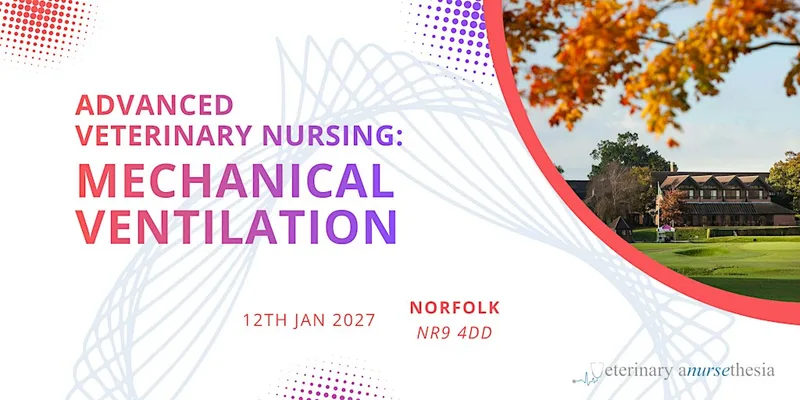
Norfolk - Advanced Veterinary Nursing: Mechanical Ventilation
Tue 12 Jan · 09:30
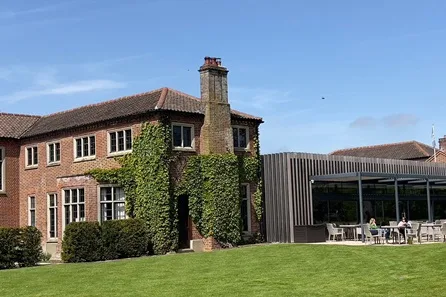
Barnham Broom Hotel, Spa, Gym & Golf Club
Venue events →
Ask AI: is it for me?
Similar events
View all
Tue, 13 Oct 2026
Full Day Golf Experience with Academy Course, 18 Championship Holes and Lunch at Royal Norwich
Tue, 13 Oct 2026
Half Day Golf Experience with 18 Holes on the Championship Course and Lunch at Royal Norwich

Tue, 13 Oct 2026
Half Day Golf Experience with 18 Holes on the Championship Course and Lunch for Two at Royal Norwich
About This Event
The Advanced Veterinary Nursing: Mechanical Ventilation course will take place on 12 January 2027 at Barnham Broom Hotel, Spa, Gym & Golf Club in Norwich. This event focuses on understanding the physiology of mechanical ventilation, selecting appropriate settings, and troubleshooting issues that may arise. The price for attending the course is £350.00.
Mechanical ventilation made practical: understand physiology, choose the right settings and confidently troubleshoot when things go wrong.
Take mechanical ventilation beyond simply choosing a respiratory rate and tidal volume with a full day of advanced, practical and interactive CPD for veterinary nurses.
Mechanical ventilation is becoming increasingly accessible in veterinary practice, but having a ventilator and knowing how to switch it on are only the beginning.
Ventilating a patient changes far more than the way air moves in and out of the lungs. Positive-pressure ventilation affects respiratory mechanics, gas exchange, venous return and cardiovascular function, and the settings we choose can have significant consequences for the patient.
This interactive one-day roadshow is designed to help veterinary nurses understand what the ventilator is actually doing to the patient, why we choose particular settings and, most importantly, how to recognise when something isn't going to plan.
We'll move from the physiology of positive-pressure ventilation through to choosing settings, interpreting airway pressures and volumes, understanding gas exchange and troubleshooting the ventilated patient. You'll then put the theory into practice with a hands-on mechanical ventilation session and interactive clinical cases.
Designed for veterinary nurses who already have a good understanding of anaesthesia and want to develop their knowledge further, this isn't a day about memorising ventilator settings. It's about understanding the physiology well enough to choose, change, and troubleshoot them for the patient in front of you. Our lectures include:
Why Ventilation Changes Everything: Part 1
What actually happens when we take over breathing for our patient?
We'll explore the pressure gradients that normally move air through the respiratory system and what changes when spontaneous negative-pressure breathing is replaced by positive-pressure ventilation. We'll look at respiratory system mechanics, including compliance and resistance, before exploring one of the most important consequences of mechanical ventilation: its effect on the cardiovascular system.
Understand why airway pressure, lung volume and intrathoracic pressure matter, and why changing the way a patient breathes can change much more than their ETCO₂.
Why Ventilation Changes Everything: Part 2
Moving air isn't the same as achieving effective gas exchange.
We'll explore how mechanical ventilation influences anatomical, apparatus and alveolar dead space, V/Q matching and oxygenation, and why apparently adequate tidal volumes and minute ventilation don't necessarily mean the patient is ventilating effectively.
We'll also look at the ETCO₂–PaCO₂ gradient, oxygenation indices and the information these can give us about what's happening inside the lungs.
Setting Up for Success: Choosing Your Ventilator Settings
Pressure or volume? What tidal volume? How much PEEP? What respiratory rate? And where should you actually start?
We'll break down the key ventilator settings and, more importantly, the physiology behind them. From pressure- and volume-controlled ventilation to respiratory rate, inspiratory pressure, tidal volume, PEEP, I ratio, flow and FiO₂, we'll explore how each setting influences the patient.
Rather than relying on one-size-fits-all numbers, you'll learn how to choose sensible starting settings and then adjust them according to the individual patient and the information your monitoring is giving you.
Ready, Steady, Ventilate!
Time to get hands-on.
In this practical session, we'll work through the process of setting up and checking a ventilator, connecting it to the breathing system and selecting appropriate initial settings.
You'll have the opportunity to adjust pressures, volumes, respiratory rates, PEEP and alarms, see what happens when settings are changed and practise the process of initiating, managing and weaning a patient from mechanical ventilation.
The aim is to make using a ventilator feel less like pressing buttons on an unfamiliar machine and more like making deliberate physiological decisions for your patient.
When Ventilation Gets Difficult
The patient is ventilating — but something isn't right.
ETCO₂ is climbing. Airway pressures are increasing. SpO₂ is falling. Delivered tidal volume has changed. Or perhaps the blood pressure has suddenly dropped.
We'll take a practical approach to troubleshooting the ventilated patient, exploring hypoxaemia, hypercapnia, poor compliance, airway obstruction, leaks, atelectasis, patient–ventilator dyssynchrony and the cardiovascular consequences of positive-pressure ventilation.
Rather than simply changing a setting until the numbers improve, we'll focus on working out why the numbers have changed and what we should do next.
The Machines Are Beeping – What Do You Do Next?
Now it's your turn to make the decisions.
Work through progressive clinical cases where the patient, monitor and ventilator won't always be
Description supplied by the event organiser.
Staying overnight?
Hotels within walking distance of Barnham Broom Hotel, Spa, Gym & Golf Club.
Ad · Stay22 affiliate link
Similar Events in Norwich
View all →Tue, 13 Oct 2026
Full Day Golf Experience with Academy Course, 18 Championship Holes and Lunch at Royal Norwich
Royal Norwich, Norfolk
£127
Tue, 13 Oct 2026
Half Day Golf Experience with 18 Holes on the Championship Course and Lunch at Royal Norwich
Royal Norwich, Norfolk
£103
Tue, 13 Oct 2026
Half Day Golf Experience with 18 Holes on the Championship Course and Lunch for Two at Royal Norwich
Royal Norwich, Norfolk
£204

Tue, 13 Oct 2026
Full Day Golf Experience with Academy Course, 18 Championship Holes and Lunch for Two at Royal Norwich
Royal Norwich, Norfolk
£255

Thu, 12 Nov 2026
Diss Business Forum
Diss Golf Club

Tue, 17 Nov 2026
Pure charity quiz 2026 - Norwich
Sprowston Manor Hotel, Golf & Country Club
£60
More at Barnham Broom Hotel, Spa, Gym & Golf Club
View all →

Frequently asked questions
Norfolk - Advanced Veterinary Nursing: Mechanical Ventilation takes place on Tuesday, 12 January 2027 at 09:30.
Norfolk - Advanced Veterinary Nursing: Mechanical Ventilation is held at Barnham Broom Hotel, Spa, Gym & Golf Club in Norwich (Honingham Road, Barnham Broom, NR9 4DD).
Tickets for Norfolk - Advanced Veterinary Nursing: Mechanical Ventilation are priced at £350. Live prices and availability are shown on Eventbrite.
Yes — hotels within walking distance of Barnham Broom Hotel, Spa, Gym & Golf Club can be compared using the accommodation search further down this page.
Tickets for Norfolk - Advanced Veterinary Nursing: Mechanical Ventilation can be booked via Eventbrite using the "Check Tickets & Live Prices" button on this page, which opens the official booking site in a new tab.
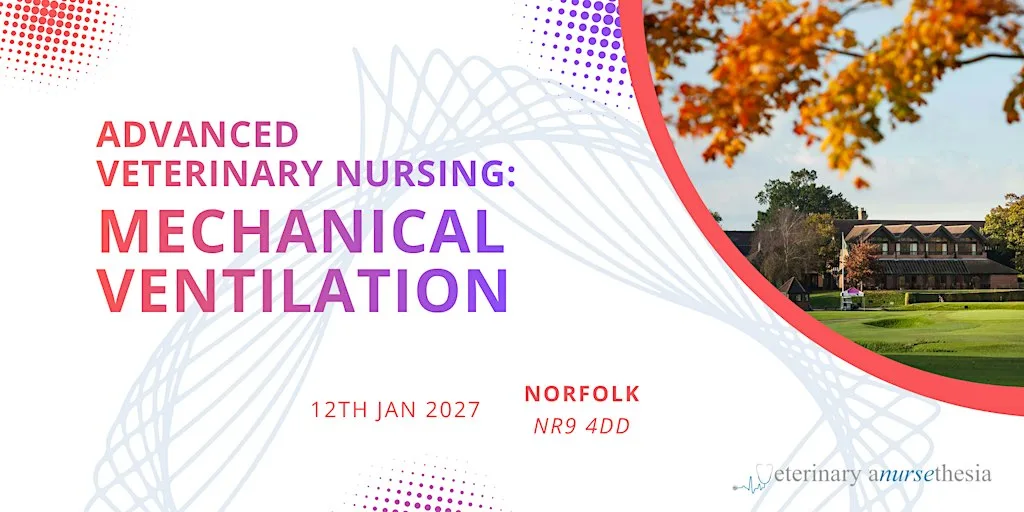
Norfolk - Advanced Veterinary Nursing: Mechanical Ventilation
Editorial summaryAbout this event
The Advanced Veterinary Nursing: Mechanical Ventilation course will take place on 12 January 2027 at Barnham Broom Hotel, Spa, Gym & Golf Club in Norwich. This event focuses on understanding the physiology of mechanical ventilation, selecting appropriate settings, and troubleshooting issues that may arise. The price for attending the course is £350.00.
This summary was automatically generated from event data sourced from official ticketing providers.
Mechanical ventilation made practical: understand physiology, choose the right settings and confidently troubleshoot when things go wrong.
Take mechanical ventilation beyond simply choosing a respiratory rate and tidal volume with a full day of advanced, practical and interactive CPD for veterinary nurses.
Mechanical ventilation is becoming increasingly accessible in veterinary practice, but having a ventilator and knowing how to switch it on are only the beginning.
Ventilating a patient changes far more than the way air moves in and out of the lungs. Positive-pressure ventilation affects respiratory mechanics, gas exchange, venous return and cardiovascular function, and the settings we choose can have significant consequences for the patient.
This interactive one-day roadshow is designed to help veterinary nurses understand what the ventilator is actually doing to the patient, why we choose particular settings and, most importantly, how to recognise when something isn't going to plan.
We'll move from the physiology of positive-pressure ventilation through to choosing settings, interpreting airway pressures and volumes, understanding gas exchange and troubleshooting the ventilated patient. You'll then put the theory into practice with a hands-on mechanical ventilation session and interactive clinical cases.
Designed for veterinary nurses who already have a good understanding of anaesthesia and want to develop their knowledge further, this isn't a day about memorising ventilator settings. It's about understanding the physiology well enough to choose, change, and troubleshoot them for the patient in front of you. Our lectures include:
Why Ventilation Changes Everything: Part 1
What actually happens when we take over breathing for our patient?
We'll explore the pressure gradients that normally move air through the respiratory system and what changes when spontaneous negative-pressure breathing is replaced by positive-pressure ventilation. We'll look at respiratory system mechanics, including compliance and resistance, before exploring one of the most important consequences of mechanical ventilation: its effect on the cardiovascular system.
Understand why airway pressure, lung volume and intrathoracic pressure matter, and why changing the way a patient breathes can change much more than their ETCO₂.
Why Ventilation Changes Everything: Part 2
Moving air isn't the same as achieving effective gas exchange.
We'll explore how mechanical ventilation influences anatomical, apparatus and alveolar dead space, V/Q matching and oxygenation, and why apparently adequate tidal volumes and minute ventilation don't necessarily mean the patient is ventilating effectively.
We'll also look at the ETCO₂–PaCO₂ gradient, oxygenation indices and the information these can give us about what's happening inside the lungs.
Setting Up for Success: Choosing Your Ventilator Settings
Pressure or volume? What tidal volume? How much PEEP? What respiratory rate? And where should you actually start?
We'll break down the key ventilator settings and, more importantly, the physiology behind them. From pressure- and volume-controlled ventilation to respiratory rate, inspiratory pressure, tidal volume, PEEP, I ratio, flow and FiO₂, we'll explore how each setting influences the patient.
Rather than relying on one-size-fits-all numbers, you'll learn how to choose sensible starting settings and then adjust them according to the individual patient and the information your monitoring is giving you.
Ready, Steady, Ventilate!
Time to get hands-on.
In this practical session, we'll work through the process of setting up and checking a ventilator, connecting it to the breathing system and selecting appropriate initial settings.
You'll have the opportunity to adjust pressures, volumes, respiratory rates, PEEP and alarms, see what happens when settings are changed and practise the process of initiating, managing and weaning a patient from mechanical ventilation.
The aim is to make using a ventilator feel less like pressing buttons on an unfamiliar machine and more like making deliberate physiological decisions for your patient.
When Ventilation Gets Difficult
The patient is ventilating — but something isn't right.
ETCO₂ is climbing. Airway pressures are increasing. SpO₂ is falling. Delivered tidal volume has changed. Or perhaps the blood pressure has suddenly dropped.
We'll take a practical approach to troubleshooting the ventilated patient, exploring hypoxaemia, hypercapnia, poor compliance, airway obstruction, leaks, atelectasis, patient–ventilator dyssynchrony and the cardiovascular consequences of positive-pressure ventilation.
Rather than simply changing a setting until the numbers improve, we'll focus on working out why the numbers have changed and what we should do next.
The Machines Are Beeping – What Do You Do Next?
Now it's your turn to make the decisions.
Work through progressive clinical cases where the patient, monitor and ventilator won't always be
Description supplied by the event organiser.
StayStaying overnight?
Hotels within walking distance of Barnham Broom Hotel, Spa, Gym & Golf Club. Searching near Honingham Road, Barnham Broom, NR9 4DD; check-in Tuesday, 12 January 2027.
Ad · Stay22 affiliate link
WhereBarnham Broom Hotel, Spa, Gym & Golf Club
Before you goFrequently asked questions
When is Norfolk - Advanced Veterinary Nursing: Mechanical Ventilation?
Norfolk - Advanced Veterinary Nursing: Mechanical Ventilation takes place on Tuesday, 12 January 2027 at 09:30.
Where is Norfolk - Advanced Veterinary Nursing: Mechanical Ventilation taking place?
Norfolk - Advanced Veterinary Nursing: Mechanical Ventilation is held at Barnham Broom Hotel, Spa, Gym & Golf Club in Norwich (Honingham Road, Barnham Broom, NR9 4DD).
How much are tickets for Norfolk - Advanced Veterinary Nursing: Mechanical Ventilation?
Tickets for Norfolk - Advanced Veterinary Nursing: Mechanical Ventilation are priced at £350. Live prices and availability are shown on Eventbrite.
Is there anywhere to stay near Norfolk - Advanced Veterinary Nursing: Mechanical Ventilation?
Yes — hotels within walking distance of Barnham Broom Hotel, Spa, Gym & Golf Club can be compared using the accommodation search further down this page.
How do I get tickets for Norfolk - Advanced Veterinary Nursing: Mechanical Ventilation?
Tickets for Norfolk - Advanced Veterinary Nursing: Mechanical Ventilation can be booked via Eventbrite using the "Check Tickets & Live Prices" button on this page, which opens the official booking site in a new tab.
Price
£350
Date
Time
Venue
Honingham Road, Barnham Broom, NR9 4DD
Secure checkout on Eventbrite — opens in a new tab
Ask AI: is it for me?
EventsList lists 216,000+ events across the UK. Tickets are sold by the venue or its authorised sellers, never by us.
Same venueMore at Barnham Broom Hotel, Spa, Gym & Golf Club
All at this venue

Not this one?Similar events in Norwich
View all




More things to do in Norwich
- Norwich City vs West Ham UnitedSaturday, 20 March 2027
- Summer Afternoon Racing - Great Yarmouth RacecourseTuesday, 27 July 2027
- Trust10 runs at Blickling EstateSunday, 25 October 2026
- GB4 & Ginetta Winter SeriesSaturday, 24 October 2026
- The Ultimate 90s vs 00s Christmas Party Night!- NorwichFriday, 18 December 2026
- Norwich City vs PortsmouthSaturday, 17 October 2026
- Ultra White Collar Boxing at EPIC Studios - NorwichSaturday, 21 November 2026
- Round Norfolk Epic 2027Sunday, 13 June 2027
- Summer Evening Racing - Great Yarmouth RacecourseWednesday, 14 July 2027
- Norwich City vs Lincoln CityFriday, 1 January 2027
- Norwich City FC vs Lincoln City FCFriday, 1 January 2027
- Norwich City vs Charlton AthleticTuesday, 29 December 2026
- Norwich City FC vs Derby County FCTuesday, 26 January 2027
- Norwich City vs Derby CountyTuesday, 26 January 2027