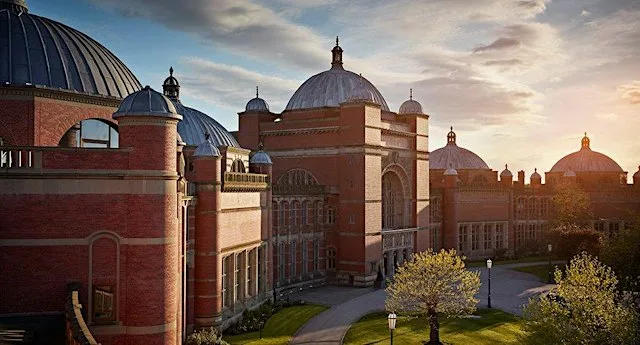
University of Birmingham Statistics and Data Science Day
5°C · 17% rain
Ask AI: is it for me?
Similar events
View allNot quite it? Try these
See all Fri, 20 Nov 2026
Arabic Language Pre-Intermadeiate Level
 Sat, 21 Nov 2026
The True Crime Sessions (Birmingham)
From £106.47
 Sat, 21 Nov 2026
Danielle L. Jensen Signing - Birmingham
 Sat, 21 Nov 2026
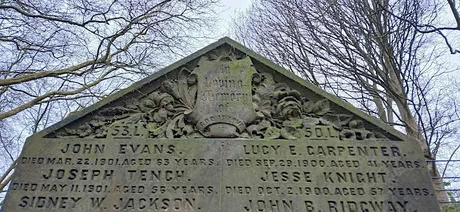
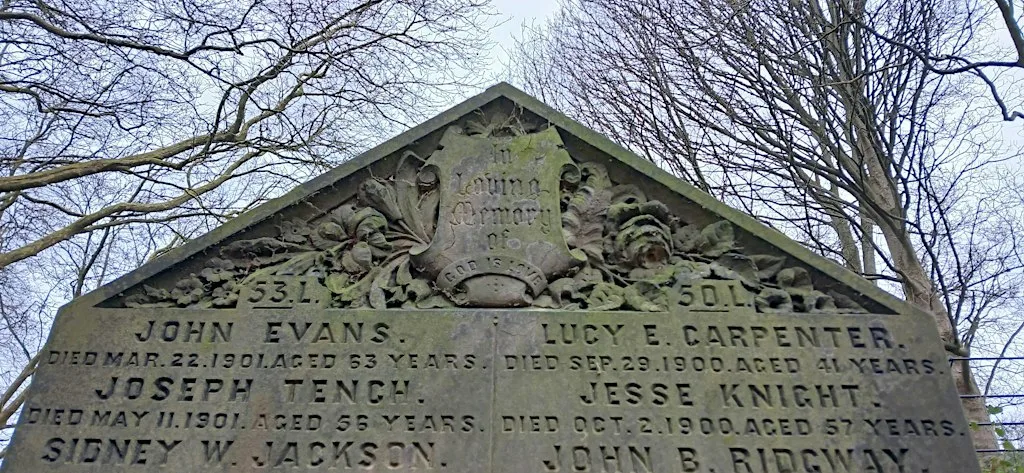
Stories to Remember: working class tales from Key Hill’s graves.
Free Entry
 Sat, 21 Nov 2026
The Anatomy of Betrayal - Birmingham
Free – £25
About This Event
The University of Birmingham Statistics and Data Science Day is scheduled for 1 December 2026, featuring talks on statistical theory, computational methods, data science, and their real-world applications. Admission is free.
An afternoon of talks spanning statistical theory, computational methods, data science, and real-world applications.
Join us at the University of Birmingham for Statistics and Data Science Day, an afternoon bringing together researchers from across the UK to share recent developments in statistical theory, computational methods, data science, and real-world applications.
The programme features four invited speakers from the Universities of Leeds, Lancaster, Bristol, and Liverpool, with talks spanning functional data analysis and brain imaging, computation-aware Gaussian processes, Markov chain Monte Carlo methods, and data-informed epidemic modelling.
The event is aimed at academics, postdoctoral researchers, PhD students and others interested in statistics, data science, probability, machine learning, applied mathematics, and related areas. The talks will showcase both methodological advances and applications, while remaining accessible to participants from a range of backgrounds.
There will also be opportunities throughout the afternoon to meet other researchers, exchange ideas, and make new connections.
Tentative Programme
13:00–13:45 — Haiyan Liu (University of Leeds)
Functional Data Analysis Beyond Curves: Methods and Applications to Brain Imaging
13:45–14:30 — Disha Hegde (Lancaster University)
Computation-aware Gaussian Process Inference: Calibration and Implementation
14:30–15:00 — Coffee break
15:00–15:45 — Sam Power (University of Bristol)
Sharp Contraction Bounds for Kinetic MCMC Samplers in the Log-Concave Setting
15:45–16:30 — Emily Nixon (University of Liverpool)
Data-informed Modelling for Sheep Scab Control
Talks
Haiyan Liu — University of Leeds
Functional Data Analysis Beyond Curves: Methods and Applications to Brain Imaging
Functional Data Analysis (FDA) provides a flexible statistical framework for analysing data that are naturally represented as functions, curves, surfaces, or images. In this talk, I will introduce the fundamental ideas of FDA and review two of its core methodologies: functional principal component analysis (FPCA) and functional linear regression. After outlining the mathematical foundations of these approaches, I will present our recent work on extending FPCA to accommodate more general functional data in the form of images.
These methodological advances are motivated by modern neuroimaging applications, where high-dimensional image data are routinely collected. I will illustrate the proposed methods using functional and structural MRI data from studies of decision-making and Alzheimer's disease, demonstrating how FDA can uncover meaningful patterns and provide interpretable representations of complex imaging data.
Disha Hegde — Lancaster University
Computation-aware Gaussian Process Inference: Calibration and Implementation
Gaussian processes are a powerful and flexible tool for Bayesian nonparametric regression, allowing a user to fit a wide array of possibly nonlinear phenomena using simple computational routines. However, they are notorious for scaling cubically with the size of the training set, preventing application to very large regression problems. Computation-aware Gaussian processes (CAGPs) tackle this scaling issue by exploiting probabilistic linear solvers to approximate an expensive linear solve, widening the posterior with additional computational uncertainty due to reduced computation. This talk introduces CAGPs and discusses the calibration of the uncertainty from the widened posterior. We then discuss choice of underlying probabilistic linear solver, and the resulting convergence-calibration tradeoff. We finally introduce affine tracing, a framework that automatically constructs probabilistic solvers from standard implementations of affine iterative methods, allowing more sophisticated solvers such as multigrid to be used for CAGPs while preserving calibration.
Sam Power — University of Bristol
Sharp Contraction Bounds for Kinetic MCMC Samplers in the Log-Concave Setting
Sampling from a complicated probability distribution is a central task in Bayesian statistics, where it allows us to estimate quantities of interest and quantify uncertainty. Popular sampling algorithms, such as Hamiltonian Monte Carlo, use ideas from particle dynamics to explore these distributions efficiently. A key question is how rapidly these algorithms forget their initial conditions and converge to equilibrium.
In this talk, I will explain how to study this question using the coupling method: running two trajectories with different starting positions but common underlying randomness. For strongly log-concave distributions with controlled curvature, we obtain sharp bounds on how closely the trajectories approach one another, yielding quantitative convergence guarantees. The central observation is that their contraction can be bounded by comparison with the same dynamics applied to suitable isotropic Gaussian targets. This provides a common approach to Hamiltonian Monte Carlo, u
Description supplied by the event organiser.
Staying overnight?
Hotels within walking distance of Lecture Theatre G33, Ground Floor, Aston Webb Building.
Ad · Stay22 affiliate link
Similar Events in Birmingham
View all →Fri, 20 Nov 2026
Arabic Language Pre-Intermadeiate Level
Damascena Coffee House Edgbaston
Sat, 21 Nov 2026
The True Crime Sessions (Birmingham)
Millennium Point
From £106.47
Sat, 21 Nov 2026
Danielle L. Jensen Signing - Birmingham
Waterstones
Sat, 21 Nov 2026
Stories to Remember: working class tales from Key Hill’s graves.
Wolfson Centre for Archival Research, Level 4, Library of Birmingham, Centenary Square, Birmingham
Free Entry
Sat, 21 Nov 2026
The Anatomy of Betrayal - Birmingham
Eidgah Academy
Free – £25
Sun, 22 Nov 2026
Bhagavad-Gītā As It Is - Reading and a Class
Birmingham Friends of the Earth, The Warehouse
Frequently asked questions
University of Birmingham Statistics and Data Science Day takes place on Tuesday, 1 December 2026 at 13:00.
University of Birmingham Statistics and Data Science Day is held at Lecture Theatre G33, Ground Floor, Aston Webb Building in Birmingham (Edgbaston, Birmingham, B15 2TT).
Entry to University of Birmingham Statistics and Data Science Day is free.
The forecast for University of Birmingham Statistics and Data Science Day is Overcast · 5°C.
Yes — hotels within walking distance of Lecture Theatre G33, Ground Floor, Aston Webb Building can be compared using the accommodation search further down this page.
Tickets for University of Birmingham Statistics and Data Science Day can be booked via Eventbrite using the "Check Tickets & Live Prices" button on this page, which opens the official booking site in a new tab.
Editorial summaryAbout this event
The University of Birmingham Statistics and Data Science Day is scheduled for 1 December 2026, featuring talks on statistical theory, computational methods, data science, and their real-world applications. Admission is free.
This summary was automatically generated from event data sourced from official ticketing providers.
An afternoon of talks spanning statistical theory, computational methods, data science, and real-world applications.
Join us at the University of Birmingham for Statistics and Data Science Day, an afternoon bringing together researchers from across the UK to share recent developments in statistical theory, computational methods, data science, and real-world applications.
The programme features four invited speakers from the Universities of Leeds, Lancaster, Bristol, and Liverpool, with talks spanning functional data analysis and brain imaging, computation-aware Gaussian processes, Markov chain Monte Carlo methods, and data-informed epidemic modelling.
The event is aimed at academics, postdoctoral researchers, PhD students and others interested in statistics, data science, probability, machine learning, applied mathematics, and related areas. The talks will showcase both methodological advances and applications, while remaining accessible to participants from a range of backgrounds.
There will also be opportunities throughout the afternoon to meet other researchers, exchange ideas, and make new connections.
Tentative Programme
13:00–13:45 — Haiyan Liu (University of Leeds)
Functional Data Analysis Beyond Curves: Methods and Applications to Brain Imaging
13:45–14:30 — Disha Hegde (Lancaster University)
Computation-aware Gaussian Process Inference: Calibration and Implementation
14:30–15:00 — Coffee break
15:00–15:45 — Sam Power (University of Bristol)
Sharp Contraction Bounds for Kinetic MCMC Samplers in the Log-Concave Setting
15:45–16:30 — Emily Nixon (University of Liverpool)
Data-informed Modelling for Sheep Scab Control
Talks
Haiyan Liu — University of Leeds
Functional Data Analysis Beyond Curves: Methods and Applications to Brain Imaging
Functional Data Analysis (FDA) provides a flexible statistical framework for analysing data that are naturally represented as functions, curves, surfaces, or images. In this talk, I will introduce the fundamental ideas of FDA and review two of its core methodologies: functional principal component analysis (FPCA) and functional linear regression. After outlining the mathematical foundations of these approaches, I will present our recent work on extending FPCA to accommodate more general functional data in the form of images.
These methodological advances are motivated by modern neuroimaging applications, where high-dimensional image data are routinely collected. I will illustrate the proposed methods using functional and structural MRI data from studies of decision-making and Alzheimer's disease, demonstrating how FDA can uncover meaningful patterns and provide interpretable representations of complex imaging data.
Disha Hegde — Lancaster University
Computation-aware Gaussian Process Inference: Calibration and Implementation
Gaussian processes are a powerful and flexible tool for Bayesian nonparametric regression, allowing a user to fit a wide array of possibly nonlinear phenomena using simple computational routines. However, they are notorious for scaling cubically with the size of the training set, preventing application to very large regression problems. Computation-aware Gaussian processes (CAGPs) tackle this scaling issue by exploiting probabilistic linear solvers to approximate an expensive linear solve, widening the posterior with additional computational uncertainty due to reduced computation. This talk introduces CAGPs and discusses the calibration of the uncertainty from the widened posterior. We then discuss choice of underlying probabilistic linear solver, and the resulting convergence-calibration tradeoff. We finally introduce affine tracing, a framework that automatically constructs probabilistic solvers from standard implementations of affine iterative methods, allowing more sophisticated solvers such as multigrid to be used for CAGPs while preserving calibration.
Sam Power — University of Bristol
Sharp Contraction Bounds for Kinetic MCMC Samplers in the Log-Concave Setting
Sampling from a complicated probability distribution is a central task in Bayesian statistics, where it allows us to estimate quantities of interest and quantify uncertainty. Popular sampling algorithms, such as Hamiltonian Monte Carlo, use ideas from particle dynamics to explore these distributions efficiently. A key question is how rapidly these algorithms forget their initial conditions and converge to equilibrium.
In this talk, I will explain how to study this question using the coupling method: running two trajectories with different starting positions but common underlying randomness. For strongly log-concave distributions with controlled curvature, we obtain sharp bounds on how closely the trajectories approach one another, yielding quantitative convergence guarantees. The central observation is that their contraction can be bounded by comparison with the same dynamics applied to suitable isotropic Gaussian targets. This provides a common approach to Hamiltonian Monte Carlo, u
Description supplied by the event organiser.
StayStaying overnight?
Hotels within walking distance of Lecture Theatre G33, Ground Floor, Aston Webb Building. Searching near Edgbaston, Birmingham, B15 2TT; check-in Tuesday, 1 December 2026.
Ad · Stay22 affiliate link
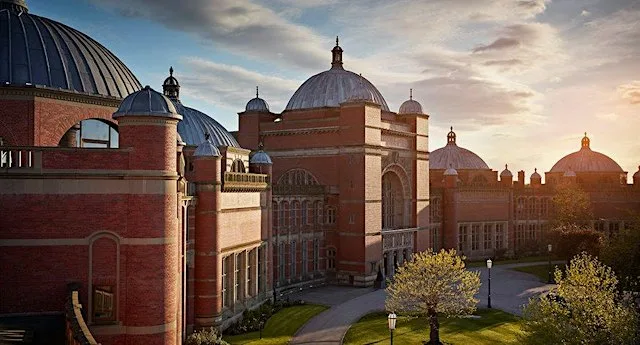
WhereLecture Theatre G33, Ground Floor, Aston Webb Building
Edgbaston, Birmingham, B15 2TT
Before you goFrequently asked questions
When is University of Birmingham Statistics and Data Science Day?
University of Birmingham Statistics and Data Science Day takes place on Tuesday, 1 December 2026 at 13:00.
Where is University of Birmingham Statistics and Data Science Day taking place?
University of Birmingham Statistics and Data Science Day is held at Lecture Theatre G33, Ground Floor, Aston Webb Building in Birmingham (Edgbaston, Birmingham, B15 2TT).
How much are tickets for University of Birmingham Statistics and Data Science Day?
Entry to University of Birmingham Statistics and Data Science Day is free.
What will the weather be like at University of Birmingham Statistics and Data Science Day?
The forecast for University of Birmingham Statistics and Data Science Day is Overcast · 5°C.
Is there anywhere to stay near University of Birmingham Statistics and Data Science Day?
Yes — hotels within walking distance of Lecture Theatre G33, Ground Floor, Aston Webb Building can be compared using the accommodation search further down this page.
How do I get tickets for University of Birmingham Statistics and Data Science Day?
Tickets for University of Birmingham Statistics and Data Science Day can be booked via Eventbrite using the "Check Tickets & Live Prices" button on this page, which opens the official booking site in a new tab.
Price
Free Entry
Date
Time
Weather
feels like 2°C · chance of rain 17% · wind 9 km/h
Venue
Edgbaston, Birmingham, B15 2TT
Secure checkout on Eventbrite — opens in a new tab
Ask AI: is it for me?
EventsList lists 209,000+ events across the UK. Tickets are sold by the venue or its authorised sellers, never by us.
Not this one?Similar events in Birmingham
View all


More things to do in Birmingham
- Book Boyfriend Bash UKSaturday, 20 March 2027
- Carl Chinn presents: Life & Death in Backstreet BirminghamMonday, 25 January 2027
- Communication in the Age of Social Media, AI & DatingMonday, 30 November 2026
- Carl Chinn - Many Peoples. One BirminghamThursday, 26 November 2026
- Being a Villager: Building Community in a Hectic WorldMonday, 30 November 2026
- Unspoken: A Conversation on Grief and HealingWednesday, 25 November 2026
- Bank of England - Autumn UpdateTuesday, 1 December 2026
- Harborne Disability Meet UpMonday, 30 November 2026
- SpeedQuizzing Christmas SpecialWednesday, 2 December 2026
- Bhagavad-Gītā As It Is - Reading and a ClassSunday, 29 November 2026
- BMC Winter Lecture Series: BirminghamThursday, 3 December 2026
- Is Justice Possible?Saturday, 28 November 2026
- SEMINAR BIRMINGHAM : TRAIN FOR AN AIRLINE PILOT CAREERSaturday, 5 December 2026
- Community Cohesion Forum & DinnerSaturday, 5 December 2026