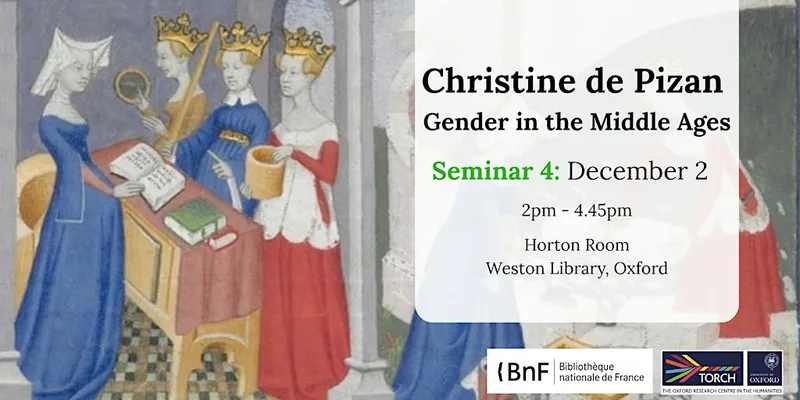
Christine de Pizan Seminar 4: L’Epîstre d’Othéa & La Ditié de Jehanne d’arc
Ask AI: is it for me?
Similar events
View allAbout This Event
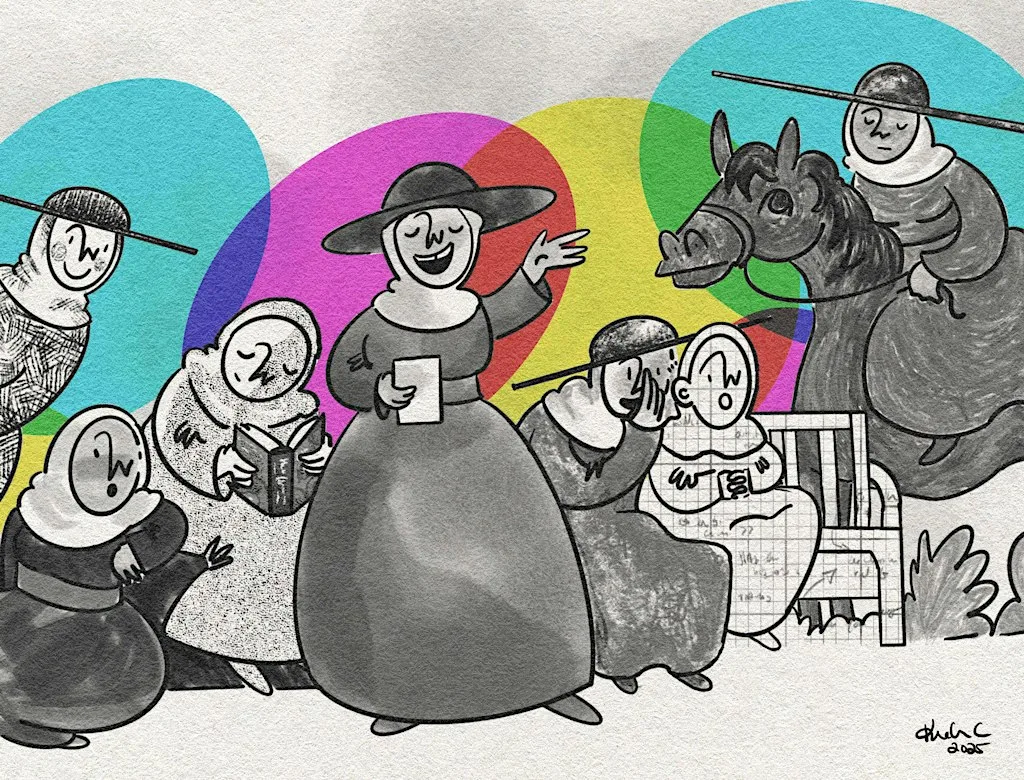
The fourth seminar in a series focused on Christine de Pizan will take place at Weston Library in Oxford. It will explore 'L’Epîstre d’Othéa' and 'La Ditié de Jehanne d’arc'. The event is co-organised by Charlotte Denoël and Nancy Thebaut.
The fourth in a special seminar series co-organized by Charlotte Denoël (Bibliothèque nationale de France) & Nancy Thebaut (Oxford)
Christine de Pizan & Gender in the Late Middle Ages
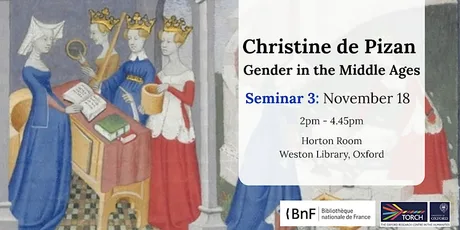
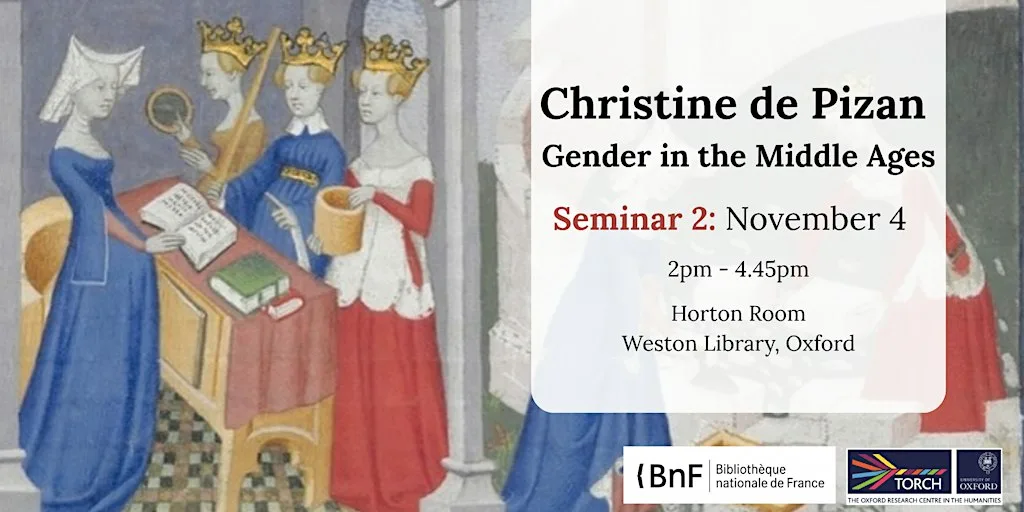
This interdisciplinary seminar will be an interactive forum for thinking about the work of the French author Christine de Pizan (d. 1429/30) in anticipation of a forthcoming exhibition at the Bibliothèque nationale de France to commemorate the 600th anniversary of her death. Speakers will give short presentations followed by group discussion. Please see next page for abstracts & readings.
MT 2026 / / Wednesdays, 2 - 4:45 pm, Horton Room, Weston Library
***note that attendees will require a Bodleian card to access the Horton Room and that space is limited: please sign up via Eventbrite for each session**
Seminar 4: Wednesday, Dec 2 (week 8) : L’Epîtsre d’Othéa & La Ditié de Jehanne d’arc
*Prof. Gervase Rosser (Oxford), “Beyond words: page layout and the generation of meaning in the Epistre d’Othéa”
*Prof. Hannah Skoda (Oxford), “Christine de Pisan’s Ditie de Jehanne d'Arc. What would Jehanne have thought?”
------------------------------------------
RECOMMENDED READINGS
Seminar 4: Wednesday, Dec 2 (week 8) L’Epîstre d’Othéa & La Ditié de Jehanne d’arc
*Prof. Gervase Rosser (Oxford), “Beyond words: page layout and the generation of meaning in the Epistre d’Othéa”
In the work she composed c.1400, Christine de Pizan was experimenting boldly with the potential of the manuscript page, not to relay information or to unfold an argument, but to use the juxtaposition of diverse visual and textual stimuli as a means to catalyse thought and reflection.
Christine shared with Boccaccio and other late-medieval writers the conviction that history – including the myths of Antiquity – contained poetic truths, discernible to the wise. Her composition of the Epistre d’Othéa was designed to assist the reader to perceive these truths, and to be morally improved by them.
This seminar discussion will focus (with the aid of photographs) on a copy of the text produced in the 1450s by Jean Miélot, who made many books for the duke of Burgundy, Philip the Good. Miélot appreciated the spiritual aspiration of Christine’s retelling of classical stories, and he emulated and refined her complex page layout.
In the event, these experiments with the manuscript page were marginalised by the triumph of a different standard format, that most familiar today, in which a single block of text delivers an argument sequentially across multiple pages. This model, already becoming dominant in the fifteenth century and consolidated by the emergent technology of print, has tended to occlude other possibilities. To reconsider the Epistre d’Othéa is to problematise this chapter in the history of the book, and to envisage different modes of knowledge production.
*Prof. Hannah Skoda (Oxford), “Christine de Pisan’s Ditie de Jehanne d'Arc. What would Jehanne have thought?”
In Christine de Pisan's Ditie de Jehanne d'Arc, she celebrates French victories, the possibility of peace, and - most importantly - the channeling of divine will and military victory through a woman. Joan herself remains voiceless throughout - all whilst the poem makes claims about women in the very grandest terms: not only are women superior to men, chosen by God, knowledge itself is claimed as female. I'll explore the implications of Joan's voiceless violence alongside the elevation of 'the female sex'.
Required reading:
Kennedy, A. J., & Varty, K. (1975). CHRISTINE DE PISAN'S "DITIE DE JEHANNE D'ARC". PART I (C15th French edition), PART II (English translation). Nottingham Mediaeval Studies, 19, 53. (available via SOLO)
----------------------------------------
A special seminar series co-organized by Charlotte Denoël (Bibliothèque nationale de France) & Nancy Thebaut (Oxford) // generously supported by TORCH
---------------------------------------
Description supplied by the event organiser.
Staying overnight?
Hotels within walking distance of Weston Library.
Ad · Stay22 affiliate link
Similar Events in Oxford
View all →
Tue, 27 Oct 2026
Teresa Bejan - How did Equality become an Egalitarian Ideal?
Noel Salter Room
Free Entry
Wed, 28 Oct 2026
China Lecture: Sichuan Cuisine, Food Culture and Folk Arts
John Henry Brookes Building
Free Entry
Wed, 28 Oct 2026
Ian Ramsey Centre Seminars | Trauma, Sin & Reconciliation
Lecture Theatre 1, The Stephen A. Schwarzman Centre for the Humanities
Free Entry
Wed, 28 Oct 2026
The Forms of Criticism: Creating Medieval Criticism Now network seminar
University College
Free Entry
Wed, 28 Oct 2026
Beyond Determinism and Submission
Kellogg College
Free Entry
Thu, 29 Oct 2026
COW Seminar
University of Oxford, , Oxford
Free Entry
More at Weston Library
View all →
Frequently asked questions
Christine de Pizan Seminar 4: L’Epîstre d’Othéa & La Ditié de Jehanne d’arc takes place on Wednesday, 2 December 2026 at 14:00.
Christine de Pizan Seminar 4: L’Epîstre d’Othéa & La Ditié de Jehanne d’arc is held at Weston Library in Oxford (Broad Street, Oxford, OX1 3BG).
Entry to Christine de Pizan Seminar 4: L’Epîstre d’Othéa & La Ditié de Jehanne d’arc is free.
Yes — hotels within walking distance of Weston Library can be compared using the accommodation search further down this page.
Tickets for Christine de Pizan Seminar 4: L’Epîstre d’Othéa & La Ditié de Jehanne d’arc can be booked via Eventbrite using the "Check Tickets & Live Prices" button on this page, which opens the official booking site in a new tab.
Editorial summaryAbout this event
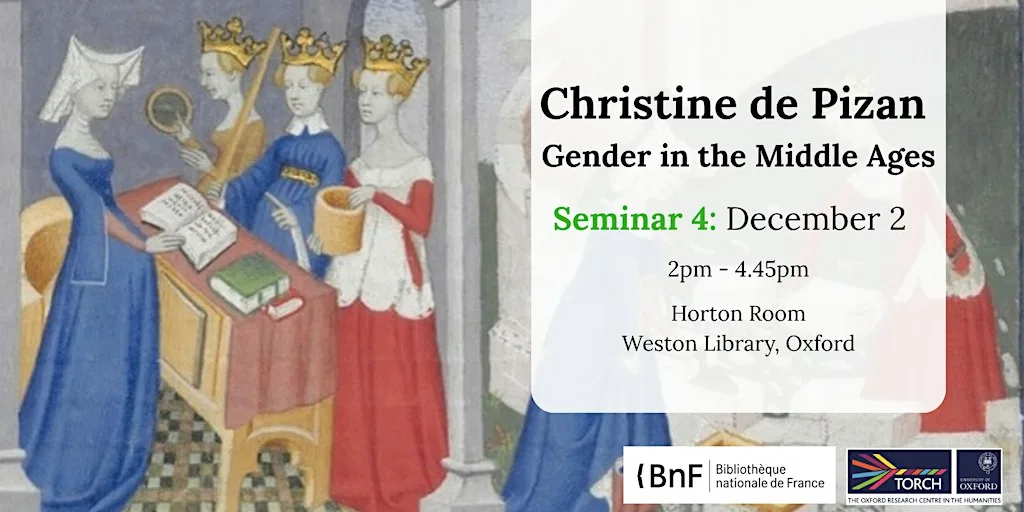
The fourth seminar in a series focused on Christine de Pizan will take place at Weston Library in Oxford. It will explore 'L’Epîstre d’Othéa' and 'La Ditié de Jehanne d’arc'. The event is co-organised by Charlotte Denoël and Nancy Thebaut.
This summary was automatically generated from event data sourced from official ticketing providers.
The fourth in a special seminar series co-organized by Charlotte Denoël (Bibliothèque nationale de France) & Nancy Thebaut (Oxford)
Christine de Pizan & Gender in the Late Middle Ages
This interdisciplinary seminar will be an interactive forum for thinking about the work of the French author Christine de Pizan (d. 1429/30) in anticipation of a forthcoming exhibition at the Bibliothèque nationale de France to commemorate the 600th anniversary of her death. Speakers will give short presentations followed by group discussion. Please see next page for abstracts & readings.
MT 2026 / / Wednesdays, 2 - 4:45 pm, Horton Room, Weston Library
***note that attendees will require a Bodleian card to access the Horton Room and that space is limited: please sign up via Eventbrite for each session**
Seminar 4: Wednesday, Dec 2 (week 8) : L’Epîtsre d’Othéa & La Ditié de Jehanne d’arc
*Prof. Gervase Rosser (Oxford), “Beyond words: page layout and the generation of meaning in the Epistre d’Othéa”
*Prof. Hannah Skoda (Oxford), “Christine de Pisan’s Ditie de Jehanne d'Arc. What would Jehanne have thought?”
------------------------------------------
RECOMMENDED READINGS
Seminar 4: Wednesday, Dec 2 (week 8) L’Epîstre d’Othéa & La Ditié de Jehanne d’arc
*Prof. Gervase Rosser (Oxford), “Beyond words: page layout and the generation of meaning in the Epistre d’Othéa”
In the work she composed c.1400, Christine de Pizan was experimenting boldly with the potential of the manuscript page, not to relay information or to unfold an argument, but to use the juxtaposition of diverse visual and textual stimuli as a means to catalyse thought and reflection.
Christine shared with Boccaccio and other late-medieval writers the conviction that history – including the myths of Antiquity – contained poetic truths, discernible to the wise. Her composition of the Epistre d’Othéa was designed to assist the reader to perceive these truths, and to be morally improved by them.
This seminar discussion will focus (with the aid of photographs) on a copy of the text produced in the 1450s by Jean Miélot, who made many books for the duke of Burgundy, Philip the Good. Miélot appreciated the spiritual aspiration of Christine’s retelling of classical stories, and he emulated and refined her complex page layout.
In the event, these experiments with the manuscript page were marginalised by the triumph of a different standard format, that most familiar today, in which a single block of text delivers an argument sequentially across multiple pages. This model, already becoming dominant in the fifteenth century and consolidated by the emergent technology of print, has tended to occlude other possibilities. To reconsider the Epistre d’Othéa is to problematise this chapter in the history of the book, and to envisage different modes of knowledge production.
*Prof. Hannah Skoda (Oxford), “Christine de Pisan’s Ditie de Jehanne d'Arc. What would Jehanne have thought?”
In Christine de Pisan's Ditie de Jehanne d'Arc, she celebrates French victories, the possibility of peace, and - most importantly - the channeling of divine will and military victory through a woman. Joan herself remains voiceless throughout - all whilst the poem makes claims about women in the very grandest terms: not only are women superior to men, chosen by God, knowledge itself is claimed as female. I'll explore the implications of Joan's voiceless violence alongside the elevation of 'the female sex'.
Required reading:
Kennedy, A. J., & Varty, K. (1975). CHRISTINE DE PISAN'S "DITIE DE JEHANNE D'ARC". PART I (C15th French edition), PART II (English translation). Nottingham Mediaeval Studies, 19, 53. (available via SOLO)
----------------------------------------
A special seminar series co-organized by Charlotte Denoël (Bibliothèque nationale de France) & Nancy Thebaut (Oxford) // generously supported by TORCH
---------------------------------------
Description supplied by the event organiser.
StayStaying overnight?
Hotels within walking distance of Weston Library. Searching near Broad Street, Oxford, OX1 3BG; check-in Wednesday, 2 December 2026.
Ad · Stay22 affiliate link
WhereWeston Library
Broad Street, Oxford, OX1 3BG
Before you goFrequently asked questions
When is Christine de Pizan Seminar 4: L’Epîstre d’Othéa & La Ditié de Jehanne d’arc?
Christine de Pizan Seminar 4: L’Epîstre d’Othéa & La Ditié de Jehanne d’arc takes place on Wednesday, 2 December 2026 at 14:00.
Where is Christine de Pizan Seminar 4: L’Epîstre d’Othéa & La Ditié de Jehanne d’arc taking place?
Christine de Pizan Seminar 4: L’Epîstre d’Othéa & La Ditié de Jehanne d’arc is held at Weston Library in Oxford (Broad Street, Oxford, OX1 3BG).
How much are tickets for Christine de Pizan Seminar 4: L’Epîstre d’Othéa & La Ditié de Jehanne d’arc?
Entry to Christine de Pizan Seminar 4: L’Epîstre d’Othéa & La Ditié de Jehanne d’arc is free.
Is there anywhere to stay near Christine de Pizan Seminar 4: L’Epîstre d’Othéa & La Ditié de Jehanne d’arc?
Yes — hotels within walking distance of Weston Library can be compared using the accommodation search further down this page.
How do I get tickets for Christine de Pizan Seminar 4: L’Epîstre d’Othéa & La Ditié de Jehanne d’arc?
Tickets for Christine de Pizan Seminar 4: L’Epîstre d’Othéa & La Ditié de Jehanne d’arc can be booked via Eventbrite using the "Check Tickets & Live Prices" button on this page, which opens the official booking site in a new tab.
Price
Free Entry
Secure checkout on Eventbrite — opens in a new tab
Ask AI: is it for me?
EventsList lists 224,000+ events across the UK. Tickets are sold by the venue or its authorised sellers, never by us.
Same venueMore at Weston Library
All at this venue
Not this one?Similar events in Oxford
View all
More things to do in Oxford
- Rhodes Forum on Technology & Society 2026Saturday, 7 November 2026
- Iphigenia at Aulis | Oxford Greek Play 2026 Pre-Show TalksThursday, 5 November 2026
- Richard House DISHONEST DAYSWednesday, 20 January 2027
- Translating the Bible: A Study AfternoonSaturday, 24 October 2026
- In Conversation: Elżbieta Moczarska & Sean Gasper Bye with Zoe WaxmanFriday, 13 November 2026
- Leading in an age of disinformationWednesday, 4 November 2026
- Distinguished Speaker Seminar: Aamer SheikhWednesday, 4 November 2026
- Owen Jones THE FALL OF THE WEST at The Examination SchoolsTuesday, 3 November 2026
- Dr Jean Menzies APHRODISIATuesday, 27 October 2026
- El Niño, and the birth and death of NeoliberalismWednesday, 2 December 2026
- New Frontiers: The Science & Technology of Space ExplorationWednesday, 2 December 2026
- Stressing cells to make them talkWednesday, 2 December 2026
- Distinguished Speaker Seminar: Gary HamelWednesday, 2 December 2026
- MHFA Refresher – 2nd DecWednesday, 2 December 2026