
Coinage in the Late Roman Empire & Early Medieval Europe
Sat 5 Sept · 10:00
Faculty of English
Venue events →
Similar events
View all →About This Event
Joining us on September 5th, in both online and physical venues in Cambridge, is a day dedicated to exploring the fascinating world of coinage during the transition period from the Late Roman Empire through early medieval Europe. The event features talks by various experts, covering this intersectional period that bridges millennia of historical development. Free entry or with an optional fee of £23.50, it promises insightful discussions for all who are interested in ancient monetary systems and their cultural and political impacts.
Join us in Online or in Cambridge for a day of talks on coins at the intersection of the Late Roman Empire & Early Medieval Europe.
Coinage in the Late Roman Empire & Early Medieval Europe
Join us at the Faculty of English or Online on September 5, 2026 at 10:00 AM (BST) for a symposuym on the world of coinage during the Late Roman Empire and Early Medieval Europe.
See below for an Agenda.
Abstracts
Kelly Clarke-Neish, New approaches to the study of Britain's “last” Roman hoards
Late Roman hoards are a crucial source of evidence to explore the transition from the late Roman to early medieval period in Britain. Collectively, they contain thousands of artefacts including jewellery and tableware, and some hoard containers also exist. Most hoards also contain small silver coins known as siliqua (siliquae pl.) and these coins frequently display evidence of the deliberate removal of silver (‘clipping’) from their edges. Clipping has long been recognised as a key phenomenon which occurred in late and post-Roman Britain (and elsewhere to a lesser degree) and the study of the tens of thousands of coins from the Hoxne hoard, the largest gold and silver late Roman hoard known from Britain, revealed that the practice was a long and drawn out process and coins underwent successive rounds of clipping (Guest, 2005).
Though our understanding of clipping has greatly improved, the exact chronology of clipping and whether it was a controlled act remains uncertain and no major study of clipping has been carried out since the study of Hoxne. This paper presents the key findings of an in-depth study of over 10,000 siliquae from over fifty late Roman hoards undertaken as part of the AHRC funded project ‘Britain’s last Roman hoards: wealth, power and culture in the fifth century’ (2024-2026). As well as examining and identifying the clipping of these coins first-hand, statistical techniques were applied to the coin hoard data to identify underlying patterns between these late Roman hoards. Coupled with the results of an independent study of artefacts, a revised chronology for the duration of clipping will be suggested.
Roger Bland, Why does Britain have so many coin hoards of the 4th and 5th centuries?
Britain has a uniquely rich record of coin hoards, and the hoards of the Roman period were the subject of an AHRC research project in 2014-20 which produced two books on the subject (Roger Bland, Coin hoards and hoarding in Roman Britain, AD 43 – c. 491, BNS Special Publication 13, 2018, and Bland et al., Iron Age and Roman Coin Hoards in Britain, Oxbow Books, 2020). That project sought to understand why there are so many hoards of the second half of the third century from Britain, but in fact it is in the 4th and 5th centuries that Britain has the greatest number of hoards. The online database of the Oxford Coin Hoards of the Roman Empire project now has over 3,900 hoards that close between 294 and 491 from across the Empire and beyond, 38% of which are from Britain, an extraordinary concentration. While the exceptional number of hoards of silver siliquae from Britain has long been recognised, Britain also has many hoards of bronze coins. This paper looks at possible reasons for this phenomenon and looks at developments in the immediate post-Roman period, into the sixth and seventh centuries.
Marcus Spencer-Brown, The demise of base-metal coinage as a political medium in the Late Roman period
A defining characteristic of Roman coinage was the variety of its designs and the diverse political messages they were intended to communicate. In marked contrast to much of the relatively static ‘Greek’ coinage that preceded it, Roman coin imagery was actively employed by elites of the late Republic and subsequent imperial regimes as an overtly political medium through which contributions to the res publica could be promoted and status negotiated. Scholarship has long connected episodes of rapid iconographic innovation with periods of instability and anxiety, while phases of relative monotony—such as the Antonine period—have been interpreted as indicative of imperial confidence and internal peace.
Yet this interpretative model is less readily applicable to the Late Roman period. Despite recurrent civil wars, religious conflict, and sustained external pressures, such turbulence was not matched by comparable innovation in coin design. Instead, increasingly repetitive and standardised types dominated issues from the empire’s many mints.
This paper argues that the apparent mismatch between fourth-century political instability and the genericised expressions of imperial competence on base-metal coinage reflects a fundamental shift in the medium’s political function. As emperors became more itinerant and autocratic, the imperial state recalibrated the communicative ambitions of base-metal coinage, gradually marginalising it as a primary vehicle of political negotiation. In its place, Late Roman regimes developed alternative mechanisms for articu
Description supplied by the event organiser.
Weather on the day
Drizzle · 16°C
Feels like 16°C · Chance of rain 13% · Wind 4 km/h
Forecast from Open-Meteo, updated 2 hours ago. Accuracy drops beyond a few days out.
Similar Events in Cambridge
View all → Free Entry
MaXwell Summit 2026
Mon, 7 Sept 2026
University of Cambridge, Maxwell Centre & Ray Dolby Centre
 Free – £200
Urological Cancers Symposium
Tue, 15 Sept 2026
Cancer Research UK Cambridge Institute
 £99
£99Assistants Together: East Anglia conference 2026
Thu, 17 Sept 2026
Cambridge Junction
 Free – £38.62
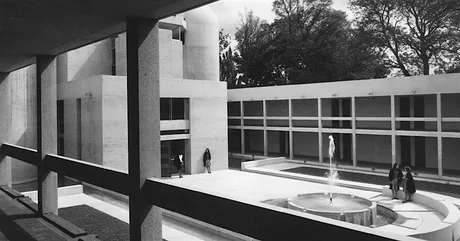
Sixties Renaissance: Architecture Symposium
Thu, 17 Sept 2026
Murray Edwards College, University of Cambridge
 £100
£100Centennial Celebration of the Harvard-Cambridge Scholarships
Fri, 18 Sept 2026
Trinity College Chapel, Cambridge
 From £11.44
Cambridge AI × Robotics Roundtable | Cambridge Tech Week Fringe Event
Fri, 18 Sept 2026
Cambridge Central Library
Frequently asked questions
Coinage in the Late Roman Empire & Early Medieval Europe takes place on Saturday, 5 September 2026 at 10:00.
Coinage in the Late Roman Empire & Early Medieval Europe is held at Faculty of English in Cambridge (9 West Road, Cambridge, CB3 9DP).
Tickets for Coinage in the Late Roman Empire & Early Medieval Europe range from £0 to £23.50. Live prices and availability are shown on Eventbrite.
Tickets for Coinage in the Late Roman Empire & Early Medieval Europe can be booked via Eventbrite using the "Check Tickets & Live Prices" button on this page, which opens the official booking site in a new tab.
Staying overnight?
Hotels within walking distance of Faculty of English.
Ad · Booking.com affiliate link

Coinage in the Late Roman Empire & Early Medieval Europe
Editorial Summary
Joining us on September 5th, in both online and physical venues in Cambridge, is a day dedicated to exploring the fascinating world of coinage during the transition period from the Late Roman Empire through early medieval Europe. The event features talks by various experts, covering this intersectional period that bridges millennia of historical development. Free entry or with an optional fee of £23.50, it promises insightful discussions for all who are interested in ancient monetary systems and their cultural and political impacts.
This summary was automatically generated from event data sourced from official ticketing providers.
Organiser’s full description
Join us in Online or in Cambridge for a day of talks on coins at the intersection of the Late Roman Empire & Early Medieval Europe.
Coinage in the Late Roman Empire & Early Medieval Europe
Join us at the Faculty of English or Online on September 5, 2026 at 10:00 AM (BST) for a symposuym on the world of coinage during the Late Roman Empire and Early Medieval Europe.
See below for an Agenda.
Abstracts
Kelly Clarke-Neish, New approaches to the study of Britain's “last” Roman hoards
Late Roman hoards are a crucial source of evidence to explore the transition from the late Roman to early medieval period in Britain. Collectively, they contain thousands of artefacts including jewellery and tableware, and some hoard containers also exist. Most hoards also contain small silver coins known as siliqua (siliquae pl.) and these coins frequently display evidence of the deliberate removal of silver (‘clipping’) from their edges. Clipping has long been recognised as a key phenomenon which occurred in late and post-Roman Britain (and elsewhere to a lesser degree) and the study of the tens of thousands of coins from the Hoxne hoard, the largest gold and silver late Roman hoard known from Britain, revealed that the practice was a long and drawn out process and coins underwent successive rounds of clipping (Guest, 2005).
Though our understanding of clipping has greatly improved, the exact chronology of clipping and whether it was a controlled act remains uncertain and no major study of clipping has been carried out since the study of Hoxne. This paper presents the key findings of an in-depth study of over 10,000 siliquae from over fifty late Roman hoards undertaken as part of the AHRC funded project ‘Britain’s last Roman hoards: wealth, power and culture in the fifth century’ (2024-2026). As well as examining and identifying the clipping of these coins first-hand, statistical techniques were applied to the coin hoard data to identify underlying patterns between these late Roman hoards. Coupled with the results of an independent study of artefacts, a revised chronology for the duration of clipping will be suggested.
Roger Bland, Why does Britain have so many coin hoards of the 4th and 5th centuries?
Britain has a uniquely rich record of coin hoards, and the hoards of the Roman period were the subject of an AHRC research project in 2014-20 which produced two books on the subject (Roger Bland, Coin hoards and hoarding in Roman Britain, AD 43 – c. 491, BNS Special Publication 13, 2018, and Bland et al., Iron Age and Roman Coin Hoards in Britain, Oxbow Books, 2020). That project sought to understand why there are so many hoards of the second half of the third century from Britain, but in fact it is in the 4th and 5th centuries that Britain has the greatest number of hoards. The online database of the Oxford Coin Hoards of the Roman Empire project now has over 3,900 hoards that close between 294 and 491 from across the Empire and beyond, 38% of which are from Britain, an extraordinary concentration. While the exceptional number of hoards of silver siliquae from Britain has long been recognised, Britain also has many hoards of bronze coins. This paper looks at possible reasons for this phenomenon and looks at developments in the immediate post-Roman period, into the sixth and seventh centuries.
Marcus Spencer-Brown, The demise of base-metal coinage as a political medium in the Late Roman period
A defining characteristic of Roman coinage was the variety of its designs and the diverse political messages they were intended to communicate. In marked contrast to much of the relatively static ‘Greek’ coinage that preceded it, Roman coin imagery was actively employed by elites of the late Republic and subsequent imperial regimes as an overtly political medium through which contributions to the res publica could be promoted and status negotiated. Scholarship has long connected episodes of rapid iconographic innovation with periods of instability and anxiety, while phases of relative monotony—such as the Antonine period—have been interpreted as indicative of imperial confidence and internal peace.
Yet this interpretative model is less readily applicable to the Late Roman period. Despite recurrent civil wars, religious conflict, and sustained external pressures, such turbulence was not matched by comparable innovation in coin design. Instead, increasingly repetitive and standardised types dominated issues from the empire’s many mints.
This paper argues that the apparent mismatch between fourth-century political instability and the genericised expressions of imperial competence on base-metal coinage reflects a fundamental shift in the medium’s political function. As emperors became more itinerant and autocratic, the imperial state recalibrated the communicative ambitions of base-metal coinage, gradually marginalising it as a primary vehicle of political negotiation. In its place, Late Roman regimes developed alternative mechanisms for articu
Description supplied by the event organiser.
❓ Frequently asked questions
When is Coinage in the Late Roman Empire & Early Medieval Europe?
Coinage in the Late Roman Empire & Early Medieval Europe takes place on Saturday, 5 September 2026 at 10:00.
Where is Coinage in the Late Roman Empire & Early Medieval Europe taking place?
Coinage in the Late Roman Empire & Early Medieval Europe is held at Faculty of English in Cambridge (9 West Road, Cambridge, CB3 9DP).
How much are tickets for Coinage in the Late Roman Empire & Early Medieval Europe?
Tickets for Coinage in the Late Roman Empire & Early Medieval Europe range from £0 to £23.50. Live prices and availability are shown on Eventbrite.
How do I get tickets for Coinage in the Late Roman Empire & Early Medieval Europe?
Tickets for Coinage in the Late Roman Empire & Early Medieval Europe can be booked via Eventbrite using the "Check Tickets & Live Prices" button on this page, which opens the official booking site in a new tab.
🏨 Staying overnight?
Hotels within walking distance of Faculty of English
Ad · Stay22 affiliate link
Price
Free – £23.50
Date
Until Saturday, 5 September 2026
Time
Weather
feels like 16°C · chance of rain 13% · wind 4 km/h
EventsList curates 159,000+ events across the UK. Tickets purchased via the venue or authorised sellers only.
Similar Events in Cambridge
View all → FREE
FREEMaXwell Summit 2026
📍 University of Cambridge, Maxwell Centre & Ray Dolby Centre

Urological Cancers Symposium
📍 Cancer Research UK Cambridge Institute
Free - £200.00
Assistants Together: East Anglia conference 2026
📍 Cambridge Junction
£99.00
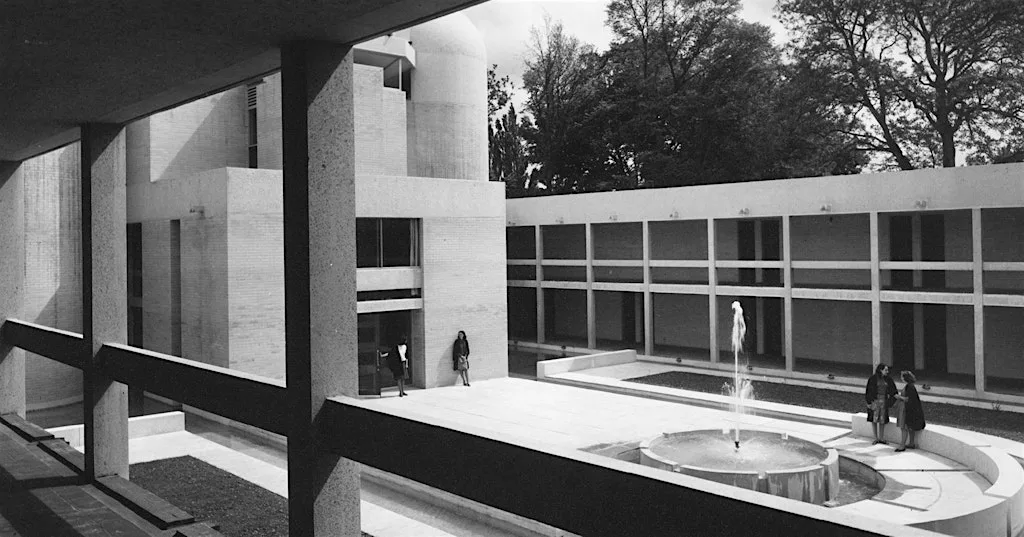
Sixties Renaissance: Architecture Symposium
📍 Murray Edwards College, University of Cambridge
Free - £38.62

—
Centennial Celebration of the Harvard-Cambridge Scholarships
📍 Trinity College Chapel, Cambridge
£100

Cambridge AI × Robotics Roundtable | Cambridge Tech Week Fringe Event
📍 Cambridge Central Library
£11.44 - £22.26
More things to do in Cambridge
- For Lancelot Andrewes· Wednesday, 23 September 2026
- UPNAT Node Annual Symposium 2026 (Cambridge)· Monday, 23 November 2026
- 3rd Conference on IM, IT & AI for Business, Finance, Industries & Education· Saturday, 5 December 2026
- The Rise Leaders Rise Summit 2026· Saturday, 14 November 2026
- 28th World Dermatology and Aesthetic Congress· Thursday, 3 December 2026
- International Conference on Environment and Life Science ICELS on October 26-27, 2026 in Cambridge, United Kingdom· Monday, 26 October 2026
- Between War and Peace. Mongolia and the Making of Eurasian Order· Thursday, 24 September 2026
- International Conference on Advanced Energy Materials and Research (ICAEMR - 2026) ICAEMR on November 19-20, 2026 in Cambridge, United Kingdom· Thursday, 19 November 2026
- International Conference on Information Communication and Applications ICICA on August 27-29, 2026 in Cambridge, United Kingdom· Thursday, 27 August 2026
- International Conference on Information Science and Systems ICISS on August 27-29, 2026 in Cambridge, United Kingdom· Thursday, 27 August 2026
- International Conference: Grazia Deledda’s Waves· Friday, 25 September 2026
- Biochemistry Postdoc Symposium 2026· Wednesday, 30 September 2026