
When More Talking isn't More Learning
Ask AI: is it for me?
Similar events
View allAbout This Event
The workshop 'When More Talking isn't More Learning' will be held at Cambridge Digital Humanities, focusing on Technology Mediated Dialogue Coding. Participants will engage in discussions aimed at enhancing learning through technology.
Join this afternoon workshop about Technology Mediated Dialogue Coding
Convenor: Sarah Fitri
Sarah Fitri is a doctoral student in the Faculty of Education at the University of Cambridge. Her doctoral research plans, designs, implements, and evaluates a collaborative, participatory, and contextualized design-based teacher professional development program in a limited resource setting in Indonesia. Her research and teaching expertise spans teacher professional development, English as a Foreign Language instruction, digital education, educational dialogue, and design-based and mixed-methods research.
Description
Online dialogic exchanges, forum threads, messaging histories, collaborative annotations, and email correspondence, are increasingly treated as primary sources for understanding how communities construct knowledge. However, common approaches often focus on volume, sentiment, or participation rather than what dialogue actually produces intellectually. This four-hour hands-on workshop introduces Tech-SEDA, a technology-mediated dialogic framework developed by Hennessy (2025) at the University of Cambridge, for systematically analysing text-based interaction.
Participants learn to identify dialogue moves such as Building on Ideas, Challenge, Reasoning, Inquiry Invitation, Reference Back, Reasoned Coordination, and Reflection on Dialogue, distinguishing exchanges that cumulatively develop ideas from those that primarily circulate information. Participants bring a short exchange from their own research or work with a provided extract. Through worked examples, individual coding, paired comparison, and calibration of disagreements, they develop practical and defensible coding judgements. The workshop concludes with participants producing a code-frequency table and short interpretive paragraph from their coded extract; portable analytical outputs they can immediately apply to their own research.
Is any equipment or Software required?
Participants will need to bring their own laptop.
Target Audience
Our CDH Methods workshops have limited places and are prioritised for students and staff at the University of Cambridge. However, if space is available, we welcome all participants who want to learn and apply digital methods and use digital tools in their research.
This session may be of particular interest to:
PhD students in the Arts, Humanities and Social Sciences
Early Career Researchers in the Arts, Humanities and Social Sciences
Contact CDH
If you have specific accessibility needs for this event, please get in touch. We will do our best to accommodate any requests, however please note that the building is grade 2 listed and has 4 steps into the building so unfortunately wheelchair access is not available.
This workshop is part of our Methods Fellowship programme, which develops and delivers innovative teaching in digital methods. You can read more about the programme here (https://www.cdh.cam.ac.uk/methods/methods-fellowships-2026-27/)and view the complete series of workshops here (https://www.cdh.cam.ac.uk/events/?type=1813&range=upcoming).
Description supplied by the event organiser.
Staying overnight?
Hotels within walking distance of Cambridge Digital Humanities, 2 Trumpington Street, Cambridge.
Ad · Stay22 affiliate link
Similar Events in Cambridge
View all →
Wed, 28 Oct 2026
Martial art & Self-Defense
Pa-Kua Cambridge
Free Entry
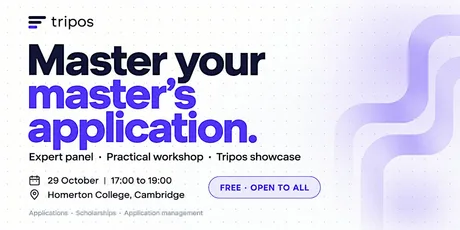
Thu, 29 Oct 2026
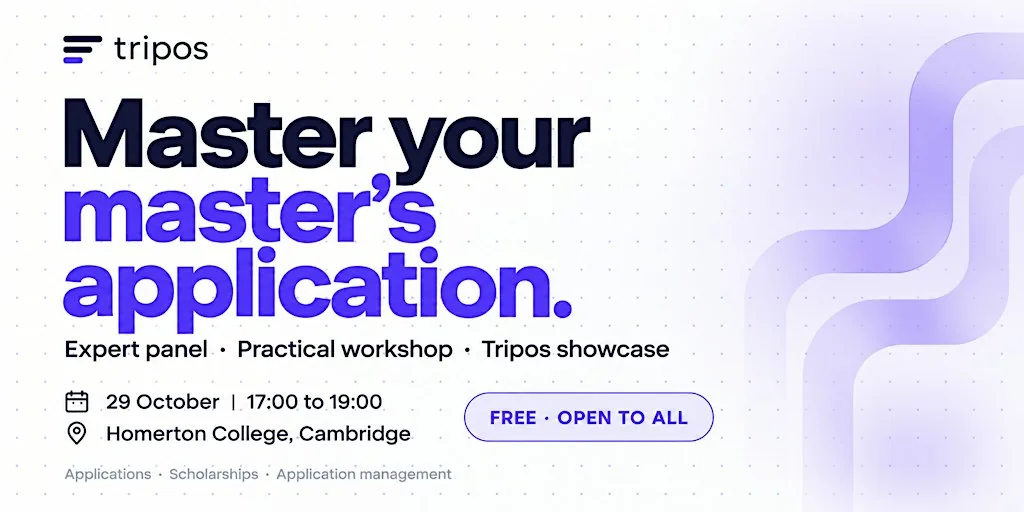
Master Your Masters Application with Tripos
Homerton College
Free Entry
Thu, 29 Oct 2026
Practise Public Speaking with Confidence | Cambridge Toastmasters
Friends Meeting House
Sat, 31 Oct 2026
Ghusl Workshop
Cambridge Central Mosque
£0.00
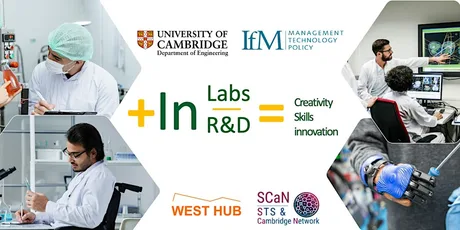
Thu, 5 Nov 2026
Towards more inclusive Labs and R&D settings
West Hub
Free Entry
Sat, 14 Nov 2026
Stronger Bones for Life
Orwell Pavillion
£65
More at Cambridge Digital Humanities, 2 Trumpington Street, Cambridge
View all →
Mon, 26 Oct 2026
Too Many; Didn't Read? Classifying Large Datasets with LLMs
Cambridge Digital Humanities, 2 Trumpington Street, Cambridge
Free Entry
Mon, 26 Oct 2026
Gerhard Richter and the Technological Condition of Painting
Cambridge Digital Humanities, 2 Trumpington Street, Cambridge
Free Entry

Mon, 2 Nov 2026
Mapping Historical Networks
Cambridge Digital Humanities, 2 Trumpington Street, Cambridge
Free Entry
Mon, 30 Nov 2026
Data Centres and the City: A Critical Mapping Workshop
Cambridge Digital Humanities, 2 Trumpington Street, Cambridge
Free Entry

Mon, 7 Dec 2026
Before the Answer: Visual Methods and the Preservation of Judgement
Cambridge Digital Humanities, 2 Trumpington Street, Cambridge
Free Entry
Mon, 14 Dec 2026
Acoustic Evidence in Context
Cambridge Digital Humanities, 2 Trumpington Street, Cambridge
Free Entry
Frequently asked questions
When More Talking isn't More Learning takes place on Monday, 23 November 2026 at 13:00.
When More Talking isn't More Learning is held at Cambridge Digital Humanities, 2 Trumpington Street, Cambridge in Cambridge (2 Trumpington Street, Cambridge, CB2 1QA).
Entry to When More Talking isn't More Learning is free.
Yes — hotels within walking distance of Cambridge Digital Humanities, 2 Trumpington Street, Cambridge can be compared using the accommodation search further down this page.
Tickets for When More Talking isn't More Learning can be booked via Eventbrite using the "Check Tickets & Live Prices" button on this page, which opens the official booking site in a new tab.

Editorial summaryAbout this event
The workshop 'When More Talking isn't More Learning' will be held at Cambridge Digital Humanities, focusing on Technology Mediated Dialogue Coding. Participants will engage in discussions aimed at enhancing learning through technology.
This summary was automatically generated from event data sourced from official ticketing providers.
Join this afternoon workshop about Technology Mediated Dialogue Coding
Convenor: Sarah Fitri
Sarah Fitri is a doctoral student in the Faculty of Education at the University of Cambridge. Her doctoral research plans, designs, implements, and evaluates a collaborative, participatory, and contextualized design-based teacher professional development program in a limited resource setting in Indonesia. Her research and teaching expertise spans teacher professional development, English as a Foreign Language instruction, digital education, educational dialogue, and design-based and mixed-methods research.
Description
Online dialogic exchanges, forum threads, messaging histories, collaborative annotations, and email correspondence, are increasingly treated as primary sources for understanding how communities construct knowledge. However, common approaches often focus on volume, sentiment, or participation rather than what dialogue actually produces intellectually. This four-hour hands-on workshop introduces Tech-SEDA, a technology-mediated dialogic framework developed by Hennessy (2025) at the University of Cambridge, for systematically analysing text-based interaction.
Participants learn to identify dialogue moves such as Building on Ideas, Challenge, Reasoning, Inquiry Invitation, Reference Back, Reasoned Coordination, and Reflection on Dialogue, distinguishing exchanges that cumulatively develop ideas from those that primarily circulate information. Participants bring a short exchange from their own research or work with a provided extract. Through worked examples, individual coding, paired comparison, and calibration of disagreements, they develop practical and defensible coding judgements. The workshop concludes with participants producing a code-frequency table and short interpretive paragraph from their coded extract; portable analytical outputs they can immediately apply to their own research.
Is any equipment or Software required?
Participants will need to bring their own laptop.
Target Audience
Our CDH Methods workshops have limited places and are prioritised for students and staff at the University of Cambridge. However, if space is available, we welcome all participants who want to learn and apply digital methods and use digital tools in their research.
This session may be of particular interest to:
PhD students in the Arts, Humanities and Social Sciences
Early Career Researchers in the Arts, Humanities and Social Sciences
Contact CDH
If you have specific accessibility needs for this event, please get in touch. We will do our best to accommodate any requests, however please note that the building is grade 2 listed and has 4 steps into the building so unfortunately wheelchair access is not available.
This workshop is part of our Methods Fellowship programme, which develops and delivers innovative teaching in digital methods. You can read more about the programme here (https://www.cdh.cam.ac.uk/methods/methods-fellowships-2026-27/)and view the complete series of workshops here (https://www.cdh.cam.ac.uk/events/?type=1813&range=upcoming).
Description supplied by the event organiser.
StayStaying overnight?
Hotels within walking distance of Cambridge Digital Humanities, 2 Trumpington Street, Cambridge. Searching near 2 Trumpington Street, Cambridge, CB2 1QA; check-in Monday, 23 November 2026.
Ad · Stay22 affiliate link
WhereCambridge Digital Humanities, 2 Trumpington Street, Cambridge
Before you goFrequently asked questions
When is When More Talking isn't More Learning?
When More Talking isn't More Learning takes place on Monday, 23 November 2026 at 13:00.
Where is When More Talking isn't More Learning taking place?
When More Talking isn't More Learning is held at Cambridge Digital Humanities, 2 Trumpington Street, Cambridge in Cambridge (2 Trumpington Street, Cambridge, CB2 1QA).
How much are tickets for When More Talking isn't More Learning?
Entry to When More Talking isn't More Learning is free.
Is there anywhere to stay near When More Talking isn't More Learning?
Yes — hotels within walking distance of Cambridge Digital Humanities, 2 Trumpington Street, Cambridge can be compared using the accommodation search further down this page.
How do I get tickets for When More Talking isn't More Learning?
Tickets for When More Talking isn't More Learning can be booked via Eventbrite using the "Check Tickets & Live Prices" button on this page, which opens the official booking site in a new tab.
Price
Free Entry
Date
Time
Venue
2 Trumpington Street, Cambridge, CB2 1QA
Secure checkout on Eventbrite — opens in a new tab
Ask AI: is it for me?
EventsList lists 224,000+ events across the UK. Tickets are sold by the venue or its authorised sellers, never by us.
Same venueMore at Cambridge Digital Humanities, 2 Trumpington Street, Cambridge
All at this venue

Not this one?Similar events in Cambridge
View all
More things to do in Cambridge
- Quilt showThursday, 5 November 2026
- Workshop: Crocheting for BeginnersSunday, 25 October 2026
- Little Acorns at the FarmTuesday, 3 November 2026
- Florey x Square Mile Coffee CuppingWednesday, 28 October 2026
- Christmas wreath workshopSaturday, 12 December 2026
- Life Drawing ClassMonday, 2 November 2026
- Yorkshire Tatreez - Palestinian Embroidery WorkshopFriday, 27 November 2026
- Harmonic Mandalas workshop.Sunday, 25 October 2026
- Christmas Wreath Workshops!Tuesday, 24 November 2026
- The Islamic Garden as Sacred ArtMonday, 23 November 2026
- Make a Tile: Gypsum Carving WorkshopMonday, 23 November 2026
- The Art of Islamic IlluminationMonday, 23 November 2026
- Pa-Kua Edged WeaponsMonday, 23 November 2026
- Drama Therapist Led Workshop: the Stories of the ProphetsSunday, 22 November 2026