Raisa Kabir
Ask AI: is it for me?
Similar events
View allAbout This Event
An interdisciplinary solo exhibition by Raisa Kabir opens on 20 November 2026 at Tramway in Glasgow. The show presents textiles, sculpture, video and performance that explore the cultural politics of cloth and colonial geographies. Entry is free and does not require a ticket.
Opening 20 November Raisa Kabir is an interdisciplinary artist and weaver whose work utilises textiles, sculpture, video and performance to materialise and explore concepts relating to the cultural politics of cloth, textile archives, and colonial geographies. In this newly commissioned solo exhibition at Tramway, Kabir explores the intertwined textile legacies of Scotland and South Asia, responding to the cavernous scale of the venue with an ambitious, theatrical installation comprising multiple textile and sculptural works. For Kabir, textile archives act as both the physical raw material and the conceptual foundation of her work, which approaches archives as repositories of global politics, migration, and colonial memory. Through her weaving and research, Kabir explores how Eastern, Central, and South Asian textile technologies directly shaped Western weaving knowledge and industrial production. By unpicking these material links, she exposes the migration, displacement, and industrial appropriation of ancient South Asian craft traditions, and how patterns and designs have been claimed by nations. Reflecting on Glasgow’s legacy as a colonial merchant city and trading port, the immersive, site-specific installation House of The Stolen Weavers features a series of new sculptures that simultaneously evoke loom architectures, maritime boats, ships and sails. These works are suspended, balanced, weighted or anchored across the space, evoking feelings of tension, weight, precarity, balance and release. Kabir’s new large scale ‘loom-house-boat’ sculptures evoke hybridised forms that move between shelter, vessel and weaving apparatus. Two large central sculptures combine the anatomy of a traditional hand loom with the silhouettes of colonial sugar ships that once sailed the River Clyde, as well as traditional Bangladeshi boats. Multiple large-scale hand-woven and digitally woven tapestries are suspended throughout the gallery, incorporating motifs and references to South Asian delta and flood maps. Elsewhere, Kabir works with found objects, including coracles—woven circular boats which she has filled with cotton, silk, indigo, cochineal, jute and flax—bringing the materials and vessels of global textile histories into the installation. The coracles also feature in a new film featuring a performance by Kabir projected in the space, extending the themes and material language of the installation. In this exhibition, Kabir continues their research into the textile geographies of labour connecting Kashmiri woven shawls with the silk-weaving industry in Paisley, Scotland. The Buta, Boteh or Ambi design, later known as Paisley originated in the Kashmir region of India, and gained prominence during the 18th and 19th centuries through the British East India Company’s trade. As demand for Kashmir shawls increased, European manufacturers imitated and mass-produced the design using new technologies such as the Jacquard loom. This appropriation, together with colonial policies, led to declining sales for Indian craftspeople and negatively affected the Indian textile industry. Kabir’s work also explores the history of partition in South Asia and the intertwined textile heritages of centuries-old patterns that moved across geographies before present-day borders existed. These histories are further complicated by post-war migration from South Asia, which supplied labour to British textile factories in Scotland and Northern England. Across the exhibition, Kabir draws on these colonial histories to uncover the global mobility of textile production and technology, whilst also celebrating the rich craft practices and traditions of the Bengal delta, including those of Kabir’s ancestral land in Barisal. Image: Raisa Kabir, Tiger, Tiger. Silk Throat…, 2023.
Description supplied by the event organiser.
Staying overnight?
Hotels within walking distance of Tramway.
Ad · Stay22 affiliate link
Similar Events in Glasgow
View all →
Tue, 3 Nov 2026
ATYN & Genuine Quirk • Nude Sculpt @ HOT
House of Toad CIC

Sat, 17 Oct 2026
Kelvingrove: A Museum of Empire
Kelvingrove Art Gallery and Museum
Free Entry
Sun, 18 Oct 2026
Halloween Lanterns
Kelvingrove Art Gallery and Museum
Free Entry
Sun, 18 Oct 2026
Video Game Market - Glasgow
Club Bellahouston
Sun, 18 Oct 2026
Replay Events' Video Game Markets - Glasgow
Club Bellahouston
Sun, 18 Oct 2026
Replay Events' Video Game Markets
Club Bellahouston
More at Tramway
View all →
Sat, 17 Oct 2026
Al Seed Productions - Thrice
Tramway
£18/£12 Buy tickets now
Sun, 18 Oct 2026
Greater Govanhill presents MUMS - A Shared Story of Motherhood
Tramway
Free Entry

Fri, 30 Oct 2026
Cade & MacAskill and Spooner & Clarke - NOW NOT NOW
Tramway

Sat, 31 Oct 2026
Cade & MacAskill with Yas Clarke & Tim Spooner - NOW NOT NOW
Tramway

Wed, 11 Nov 2026
Arika Episode 12: From the Rivers to the Seas | Wed 11 Nov
Tramway

Thu, 12 Nov 2026
Arika Episode 12: From the Rivers to the Seas | Thu 12 Nov
Tramway
Frequently asked questions
Raisa Kabir takes place on Friday, 20 November 2026.
Raisa Kabir is held at Tramway in Glasgow.
Entry to Raisa Kabir is free.
Yes — hotels within walking distance of Tramway can be compared using the accommodation search further down this page.
Tickets for Raisa Kabir can be booked via glasgowlife.org.uk using the "Check Tickets & Live Prices" button on this page, which opens the official booking site in a new tab.
Editorial summaryAbout this event
An interdisciplinary solo exhibition by Raisa Kabir opens on 20 November 2026 at Tramway in Glasgow. The show presents textiles, sculpture, video and performance that explore the cultural politics of cloth and colonial geographies. Entry is free and does not require a ticket.
This summary was automatically generated from event data sourced from official ticketing providers.
Opening 20 November Raisa Kabir is an interdisciplinary artist and weaver whose work utilises textiles, sculpture, video and performance to materialise and explore concepts relating to the cultural politics of cloth, textile archives, and colonial geographies. In this newly commissioned solo exhibition at Tramway, Kabir explores the intertwined textile legacies of Scotland and South Asia, responding to the cavernous scale of the venue with an ambitious, theatrical installation comprising multiple textile and sculptural works. For Kabir, textile archives act as both the physical raw material and the conceptual foundation of her work, which approaches archives as repositories of global politics, migration, and colonial memory. Through her weaving and research, Kabir explores how Eastern, Central, and South Asian textile technologies directly shaped Western weaving knowledge and industrial production. By unpicking these material links, she exposes the migration, displacement, and industrial appropriation of ancient South Asian craft traditions, and how patterns and designs have been claimed by nations. Reflecting on Glasgow’s legacy as a colonial merchant city and trading port, the immersive, site-specific installation House of The Stolen Weavers features a series of new sculptures that simultaneously evoke loom architectures, maritime boats, ships and sails. These works are suspended, balanced, weighted or anchored across the space, evoking feelings of tension, weight, precarity, balance and release. Kabir’s new large scale ‘loom-house-boat’ sculptures evoke hybridised forms that move between shelter, vessel and weaving apparatus. Two large central sculptures combine the anatomy of a traditional hand loom with the silhouettes of colonial sugar ships that once sailed the River Clyde, as well as traditional Bangladeshi boats. Multiple large-scale hand-woven and digitally woven tapestries are suspended throughout the gallery, incorporating motifs and references to South Asian delta and flood maps. Elsewhere, Kabir works with found objects, including coracles—woven circular boats which she has filled with cotton, silk, indigo, cochineal, jute and flax—bringing the materials and vessels of global textile histories into the installation. The coracles also feature in a new film featuring a performance by Kabir projected in the space, extending the themes and material language of the installation. In this exhibition, Kabir continues their research into the textile geographies of labour connecting Kashmiri woven shawls with the silk-weaving industry in Paisley, Scotland. The Buta, Boteh or Ambi design, later known as Paisley originated in the Kashmir region of India, and gained prominence during the 18th and 19th centuries through the British East India Company’s trade. As demand for Kashmir shawls increased, European manufacturers imitated and mass-produced the design using new technologies such as the Jacquard loom. This appropriation, together with colonial policies, led to declining sales for Indian craftspeople and negatively affected the Indian textile industry. Kabir’s work also explores the history of partition in South Asia and the intertwined textile heritages of centuries-old patterns that moved across geographies before present-day borders existed. These histories are further complicated by post-war migration from South Asia, which supplied labour to British textile factories in Scotland and Northern England. Across the exhibition, Kabir draws on these colonial histories to uncover the global mobility of textile production and technology, whilst also celebrating the rich craft practices and traditions of the Bengal delta, including those of Kabir’s ancestral land in Barisal. Image: Raisa Kabir, Tiger, Tiger. Silk Throat…, 2023.
Description supplied by the event organiser.
StayStaying overnight?
Hotels within walking distance of Tramway. Searching near Tramway; check-in Friday, 20 November 2026.
Ad · Stay22 affiliate link
WhereTramway
Pollokshields, Glasgow
Before you goFrequently asked questions
When is Raisa Kabir?
Raisa Kabir takes place on Friday, 20 November 2026.
Where is Raisa Kabir taking place?
Raisa Kabir is held at Tramway in Glasgow.
How much are tickets for Raisa Kabir?
Entry to Raisa Kabir is free.
Is there anywhere to stay near Raisa Kabir?
Yes — hotels within walking distance of Tramway can be compared using the accommodation search further down this page.
How do I get tickets for Raisa Kabir?
Tickets for Raisa Kabir can be booked via glasgowlife.org.uk using the "Check Tickets & Live Prices" button on this page, which opens the official booking site in a new tab.
Price
Free Entry
Date
Venue
Secure checkout on glasgowlife.org.uk — opens in a new tab
Ask AI: is it for me?
EventsList lists 223,000+ events across the UK. Tickets are sold by the venue or its authorised sellers, never by us.
Same venueMore at Tramway
All at this venue
Not this one?Similar events in Glasgow
View all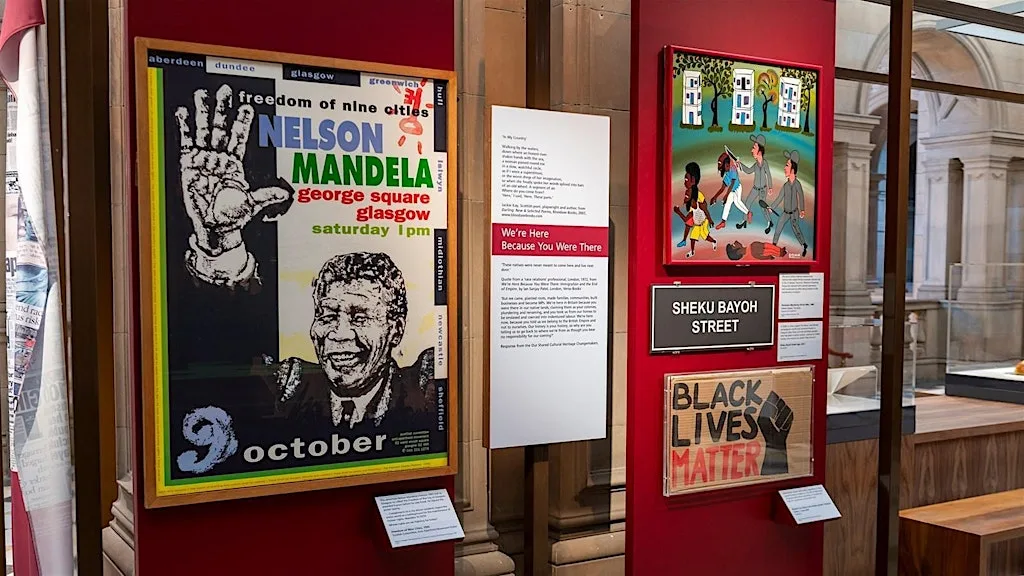
More things to do in Glasgow
- Duncan Campbell: A New NoSaturday, 10 October 2026
- Cathcart Model Railway ExhibitionSaturday, 24 October 2026
- Tea Green Winter Market: Kelvingrove Art Gallery & MuseumSaturday, 5 December 2026
- Karine Polwart's Curiosity CabinetSaturday, 30 January 2027
- Hampden Park Stadium and Museum TourFriday, 14 August 2026
- Glasgow Card Show 2026 | Trades Hall (Free Entry)Sunday, 29 November 2026
- 8 Business Networking Coffee Morning NOVWednesday, 18 November 2026
- Drawing Inspiration: Curatorial Talk with Freya Spoor, Curator of European ArtWednesday, 25 November 2026
- Wintering AnimalsSunday, 15 November 2026
- Dissonance Art ExhibitionSaturday, 14 November 2026
- Drawing Inspiration: Curatorial Talk | People Watching: Drawing and ImpressionismWednesday, 25 November 2026
- Burrell Bites BonanzaSaturday, 14 November 2026
- Autism-Friendly Quiet OpeningFriday, 13 November 2026
- Glasgow Women’s Art Collective Exhibition Of PaintingsFriday, 27 November 2026