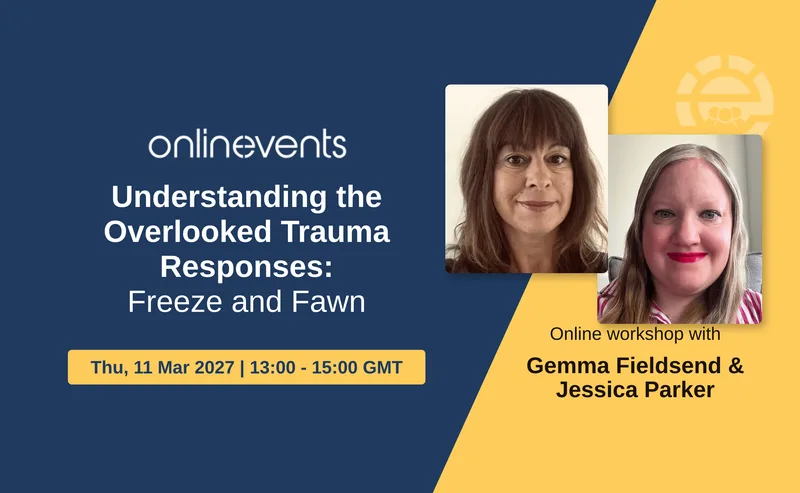
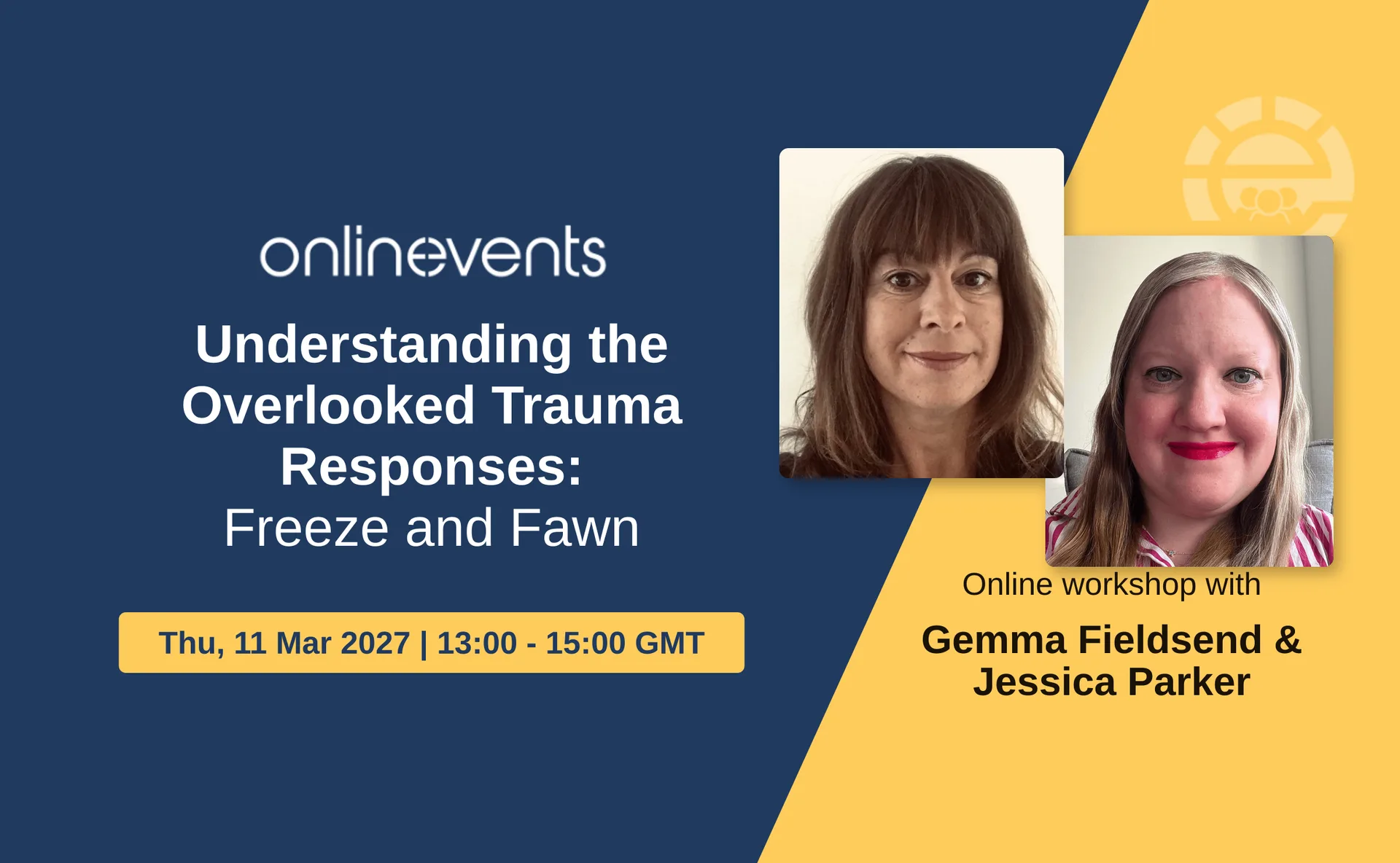
Understanding the Overlooked Trauma Responses: Freeze and Fawn
Thu 11 Mar · 13:00
Date & time
Ask AI: is it for me?
Similar events
View allNot quite it? Try these
See all Thu, 19 Nov 2026
Working with Archetypal Shadow at the Menopausal Threshold
£1
 Fri, 20 Nov 2026
Feldenkrais: Move Better, Feel Better, Perform Better
Free Entry
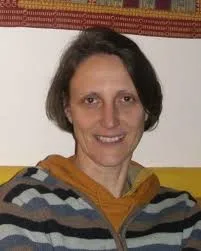 Sun, 22 Nov 2026
A HEALING JOURNEY FROM TRAUMA TO GENTLE REINTEGRATION AND CONNECTION - Sabine Dahn
 Mon, 30 Nov 2026
The Listening Circle. An intentional space for radical presence.
£1
 Mon, 30 Nov 2026
How To Work With Male Clients Impacted by Chemsex or Sexualised Drug Use
£1
About This Event
Understanding the Overlooked Trauma Responses: Freeze and Fawn is an online wellness session led by Gemma Fieldsend. This event will delve into less visible trauma responses and how they affect individuals' behaviour in perceived threat situations. Tickets start from £1.00.
What happens when someone's response to feeling unsafe is not to fight or flee, but to become quiet, compliant, agreeable or seemingly disconnected?
When we think about trauma responses, fight and flight are often the most familiar. Yet for many people, responses to perceived threat may be far less visible. They may become still, struggle to speak or make decisions, withdraw emotionally, or prioritise the needs and feelings of others in an attempt to maintain safety.
These experiences are often described as _freeze_ and _fawn_ responses. Although they can look very different, both invite us to consider how the nervous system, previous experiences and relationships can influence the ways people respond to perceived threat.
A child who becomes silent when overwhelmed may be perceived as disengaged. A young person who consistently agrees with adults may appear confident and cooperative, while struggling to express their own needs or boundaries. An adult who finds it difficult to say no may have developed patterns of prioritising others as a way of navigating relationships that have previously felt unpredictable or unsafe.
How do we recognise distress when it does not look like distress? What happens when behaviours that appear helpful, compliant or calm may actually reflect attempts to maintain safety? And how can practitioners respond without unintentionally reinforcing the very patterns they are hoping to support?
In this compassionate, trauma-informed webinar, Gemma Fieldsend and Jessica Parker explore the often-overlooked experiences of freeze and fawn, considering how these responses may develop, how they can present across different ages and environments, and what they may mean for emotional wellbeing, relationships and a person's sense of safety.
Drawing on an understanding of stress responses, attachment, relational experiences and trauma-informed practice, we will explore how freeze may involve immobility, emotional numbing, difficulty processing information or feeling unable to respond, while fawn may involve people-pleasing, appeasement, conflict avoidance and prioritising others' needs over one's own.
A central focus will be the importance of looking beyond outward presentation. Someone who appears calm may be experiencing significant internal distress, while someone who is consistently accommodating may be finding it difficult to communicate disagreement, discomfort or personal boundaries.
We will also consider how these responses can be misunderstood within education, therapeutic relationships, families and workplaces, particularly when quietness is interpreted as disengagement, agreement as consent, or compliance as evidence of emotional safety.
Through practical examples and reflective discussion, we will explore how practitioners can recognise possible indicators of freeze and fawn, respond with curiosity rather than assumptions, and create environments that strengthen emotional safety, choice, autonomy and connection.
Importantly, we will acknowledge that these responses are not always conscious choices, nor should they automatically be interpreted as evidence of trauma. Understanding the context, individual experience and meaning behind a response is essential.
Throughout, we will encourage reflection on how our own communication, expectations and professional approaches can either increase pressure or create opportunities for individuals to feel safer expressing their needs.
This workshop offers an opportunity to deepen understanding of responses that can easily go unnoticed, recognising that sometimes the people who appear to be coping, cooperating or causing the least concern may also be experiencing significant distress.
We will also explore the relationship between safety, choice and power, considering how previous experiences may influence a person's ability to express disagreement, establish boundaries or communicate discomfort. Particular attention will be given to the difference between appearing agreeable and genuinely feeling able to make a choice, and how practitioners can create relationships in which individuals feel safe enough to say no, ask for help or express their needs.
Description supplied by the event organiser.
Similar Events in Online
View all →Thu, 19 Nov 2026
Working with Archetypal Shadow at the Menopausal Threshold
£1
Fri, 20 Nov 2026
Feldenkrais: Move Better, Feel Better, Perform Better
Online (Musicians' Union)
Free Entry
Sun, 22 Nov 2026
A HEALING JOURNEY FROM TRAUMA TO GENTLE REINTEGRATION AND CONNECTION - Sabine Dahn
Mon, 30 Nov 2026
The Listening Circle. An intentional space for radical presence.
£1
Mon, 30 Nov 2026
How To Work With Male Clients Impacted by Chemsex or Sexualised Drug Use
£1

Tue, 1 Dec 2026
Beyond Shame: Practical Self-Compassion Skills for Therapists - Maureen Cooper
£1
Frequently asked questions
Understanding the Overlooked Trauma Responses: Freeze and Fawn takes place on Thursday, 11 March 2027 at 13:00.
Understanding the Overlooked Trauma Responses: Freeze and Fawn is held at Online.
Tickets for Understanding the Overlooked Trauma Responses: Freeze and Fawn are priced at £1. Live prices and availability are shown on app.onlinevents.co.uk.
Tickets for Understanding the Overlooked Trauma Responses: Freeze and Fawn can be booked via app.onlinevents.co.uk using the "Check Tickets & Live Prices" button on this page, which opens the official booking site in a new tab.
Editorial summaryAbout this event
Understanding the Overlooked Trauma Responses: Freeze and Fawn is an online wellness session led by Gemma Fieldsend. This event will delve into less visible trauma responses and how they affect individuals' behaviour in perceived threat situations. Tickets start from £1.00.
This summary was automatically generated from event data sourced from official ticketing providers.
What happens when someone's response to feeling unsafe is not to fight or flee, but to become quiet, compliant, agreeable or seemingly disconnected?
When we think about trauma responses, fight and flight are often the most familiar. Yet for many people, responses to perceived threat may be far less visible. They may become still, struggle to speak or make decisions, withdraw emotionally, or prioritise the needs and feelings of others in an attempt to maintain safety.
These experiences are often described as _freeze_ and _fawn_ responses. Although they can look very different, both invite us to consider how the nervous system, previous experiences and relationships can influence the ways people respond to perceived threat.
A child who becomes silent when overwhelmed may be perceived as disengaged. A young person who consistently agrees with adults may appear confident and cooperative, while struggling to express their own needs or boundaries. An adult who finds it difficult to say no may have developed patterns of prioritising others as a way of navigating relationships that have previously felt unpredictable or unsafe.
How do we recognise distress when it does not look like distress? What happens when behaviours that appear helpful, compliant or calm may actually reflect attempts to maintain safety? And how can practitioners respond without unintentionally reinforcing the very patterns they are hoping to support?
In this compassionate, trauma-informed webinar, Gemma Fieldsend and Jessica Parker explore the often-overlooked experiences of freeze and fawn, considering how these responses may develop, how they can present across different ages and environments, and what they may mean for emotional wellbeing, relationships and a person's sense of safety.
Drawing on an understanding of stress responses, attachment, relational experiences and trauma-informed practice, we will explore how freeze may involve immobility, emotional numbing, difficulty processing information or feeling unable to respond, while fawn may involve people-pleasing, appeasement, conflict avoidance and prioritising others' needs over one's own.
A central focus will be the importance of looking beyond outward presentation. Someone who appears calm may be experiencing significant internal distress, while someone who is consistently accommodating may be finding it difficult to communicate disagreement, discomfort or personal boundaries.
We will also consider how these responses can be misunderstood within education, therapeutic relationships, families and workplaces, particularly when quietness is interpreted as disengagement, agreement as consent, or compliance as evidence of emotional safety.
Through practical examples and reflective discussion, we will explore how practitioners can recognise possible indicators of freeze and fawn, respond with curiosity rather than assumptions, and create environments that strengthen emotional safety, choice, autonomy and connection.
Importantly, we will acknowledge that these responses are not always conscious choices, nor should they automatically be interpreted as evidence of trauma. Understanding the context, individual experience and meaning behind a response is essential.
Throughout, we will encourage reflection on how our own communication, expectations and professional approaches can either increase pressure or create opportunities for individuals to feel safer expressing their needs.
This workshop offers an opportunity to deepen understanding of responses that can easily go unnoticed, recognising that sometimes the people who appear to be coping, cooperating or causing the least concern may also be experiencing significant distress.
We will also explore the relationship between safety, choice and power, considering how previous experiences may influence a person's ability to express disagreement, establish boundaries or communicate discomfort. Particular attention will be given to the difference between appearing agreeable and genuinely feeling able to make a choice, and how practitioners can create relationships in which individuals feel safe enough to say no, ask for help or express their needs.
Description supplied by the event organiser.
Before you goFrequently asked questions
When is Understanding the Overlooked Trauma Responses: Freeze and Fawn?
Understanding the Overlooked Trauma Responses: Freeze and Fawn takes place on Thursday, 11 March 2027 at 13:00.
Where is Understanding the Overlooked Trauma Responses: Freeze and Fawn taking place?
Understanding the Overlooked Trauma Responses: Freeze and Fawn is held at Online.
How much are tickets for Understanding the Overlooked Trauma Responses: Freeze and Fawn?
Tickets for Understanding the Overlooked Trauma Responses: Freeze and Fawn are priced at £1. Live prices and availability are shown on app.onlinevents.co.uk.
How do I get tickets for Understanding the Overlooked Trauma Responses: Freeze and Fawn?
Tickets for Understanding the Overlooked Trauma Responses: Freeze and Fawn can be booked via app.onlinevents.co.uk using the "Check Tickets & Live Prices" button on this page, which opens the official booking site in a new tab.
Price
£1
Date
Time
Secure checkout on app.onlinevents.co.uk — opens in a new tab
Ask AI: is it for me?
EventsList lists 212,000+ events across the UK. Tickets are sold by the venue or its authorised sellers, never by us.
Not this one?Similar events in Online
View all

More things to do in Online
- Winter Solstice Yoga FestivalFriday, 18 December 2026
- Support for Neurodivergent Therapists and Counsellors: A Community Space - Matt BoltonFriday, 4 December 2026
- EXPLORING SURYA NAMASKARSunday, 29 November 2026
- Mick Cooper, Bill Miller & Co-authors: Person-Centered Practices LaunchThursday, 3 December 2026
- Understanding Masking and Mental Health in Neurodivergent ChildrenThursday, 11 March 2027
- Moral Injury on the Frontline: Distress and Moral Repair for TherapistsFriday, 12 March 2027
- Ayurvedic approach to mental health CPD - Tarik DervishSaturday, 13 March 2027
- AYURVEDIC APPROACH TO MENTAL HEALTH CPDSaturday, 6 March 2027
- Peer Group Supervision: Independent Supervisors Network (ISN) - Joan Wilmot and John WilsonTuesday, 16 March 2027
- The Journey Towards Supported HANDSTAND with Zoe KnottSaturday, 20 March 2027
- Kaya Sthairyam - Finding Stillness - TulsiSaturday, 20 March 2027
- Pranayama and the Chakras - CPD with Philip XerriSaturday, 20 March 2027
- Working with Neurodiversity CPDSunday, 28 February 2027
- Balance and Equilibrium: Poise in Body and MindSunday, 28 February 2027