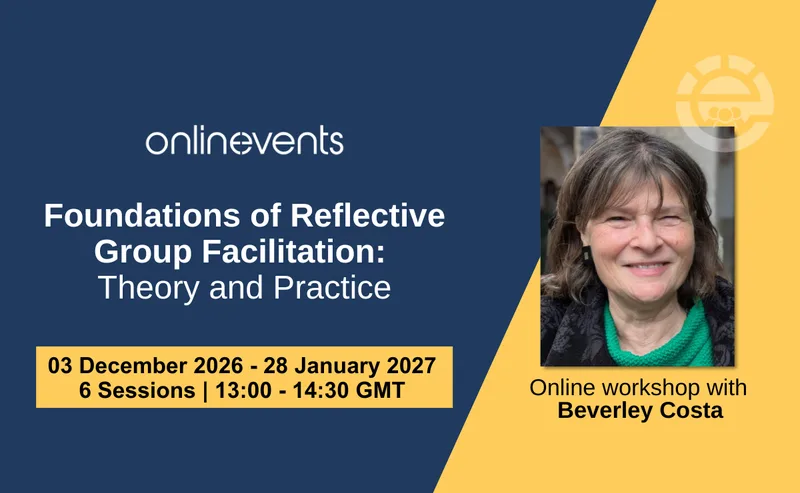
Foundations of Reflective Group Facilitation: Theory and Practice - Beverley Costa
Thu 3 Dec · 13:00
Date & time
Ask AI: is it for me?
Similar events
View allAbout This Event
Beverley Costa will lead a six-session online course on foundations of reflective group facilitation, running across six Thursdays from December 2026 to January 2027. The course addresses the need for compassionate facilitation that helps groups communicate honestly and constructively across differences. It focuses on managing group dynamics to ensure difficult issues and conflicts are explored together rather than avoided.
_A six-session online course with Beverley Costa_
Hosted by Onlinevents · Live on Zoom · Six Thursdays, December 2026 – January 2027
# About this course
There is an urgent need for compassionate, thoughtful and containing facilitation — facilitation that helps people communicate honestly, ethically and constructively across the margins and the mainstream, across difficulty and difference. Divisions are deepening: not only between individuals, communities and nations, but increasingly between people who appear to share the same values. Passions run high. And so does fear.
Many of us want to belong to groups where difficult issues, misunderstandings and conflict can be explored together rather than avoided. But when a group is not carefully held, those same passions and fears can quickly boil over and overwhelm it. Most of us have been in a group where that happened — and we know how long the effects can last. Constructive groups rarely happen by chance. Far more often, they depend on thoughtful, reflective facilitation.
So who are these facilitators? Are they a rare breed? If they are, then we need many more of them — more people willing to step forward, and hold groups well. But facilitating a group isn’t easy. It takes courage, and it can be a lonely job. That is exactly why experiential learning, grounded in theory and offered alongside genuine support, matters so much.
This online course is the first step on that path. Across six live sessions, Beverley Costa presents the key ideas, concepts and approaches that underpin skilled group facilitation. Each session presents a distinct piece of theory — theory that applies across all group facilitation contexts, whatever kind of group you lead or hope to lead. The practical discussions then draw on Beverley’s deep experience of facilitating reflective practice groups, so that the ideas are illustrated through real-world facilitation rather than abstraction alone.
In short: **the theory in each session is for every group facilitator; the practice examples and reflective discussion are rooted in the world of reflective practice groups.** That combination — widely applicable theory, grounded in one facilitator’s rich practice — is what makes this course distinctive.
This first stage can be taken entirely on its own. For those who want to go further, it also opens the door to a practical, experiential training programme at Temenos in Spring 2027 (described at the end of this document).
# Why learn with Beverley Costa
Beverley Costa brings a wealth of experience as both a reflective group facilitator and an educator of group facilitators. Across many years of practice she has developed, held and reflected on groups in which difficult conversations were achieved rather than avoided — groups where the space felt safe enough for members to stay with discomfort and learn from it. She knows, from the inside, what it takes to help a group become a constructive container rather than a place people retreat from.
Just as importantly, Beverley has spent years helping other facilitators find their feet: offering the scaffolding, theory and support that turn courage into competence. This course distils that experience into six accessible sessions, generously illustrated with examples from her own facilitation.
Beverley Costa is a psychotherapist, trainer, and founder of Mothertongue multi-ethnic counselling service and The Pásalo Project. For over two decades, she has practised as a psychotherapist and supervisor, working therapeutically across diverse languages, with and without interpreters, with people who have a history of migration. She has facilitated and trained facilitators of reflective practice groups, pioneering therapeutic work across languages and training thousands of professionals internationally. She is a Senior Practitioner Fellow at Birkbeck, University of London, and a Senior Visiting Research Fellow at the University of Reading. She has written numerous papers and chapters and she is the author of Other Tongues — psychological therapies in a multilingual world (PCCS Books). Her latest book, The Art of Group Facilitation: Difficult Conversations and Reflective Practice, is due to be published by Routledge in the autumn of 2026.
Website: [www.pasaloproject.org](https://www.pasaloproject.org)
# Who this course is for
Everyone who is currently practising as a group facilitator — or who is interested in becoming one — is warmly welcome.
• Practitioners who already facilitate groups and want to deepen and refresh the theory beneath their work.
• Those who are drawn to facilitation and want a thoughtful, supported way in.
• Counsellors, psychotherapists, supervisors, team leaders and others who work with groups in any setting — education, healthcare, social care, law, journalism, community and humanitarian work, and other relational fields. Anyone who recognises the power of people thinking together.
The theory Beverley presents in each session is applicable to all group facilitation contexts. The discussions of practice are focused specifically on the experiences of reflective practice group facilitators — a particularly rich source of learning, whatever kind of group you work with.
The course begins with theory that spans many group settings and gradually focuses in on more structured, reflective group work, so you can take what you need into your own context.
# Dates and format
Six live sessions on Zoom, all on Thursdays, 13:00–14:30 (London time):
• Session 1 — Thursday 3 December 2026
• Session 2 — Thursday 10 December 2026
• Session 3 — Thursday 7 January 2027
• Session 4 — Thursday 14 January 2027
• Session 5 — Thursday 21 January 2027
• Session 6 — Thursday 28 January 2027
# Booking and pricing
**Attend live — pay what you can (from £1).** Registration to join the live Zoom sessions is on a pay-what-you-can basis, in keeping with Onlinevents’ commitment to making learning as accessible as possible. You choose the amount that is right for you.
**Access all six recordings — £47.** A single ticket of £47 gives you access to the recordings of all six sessions, to watch in your own time.
**One registration, open throughout.** The six sessions are grouped as a single registration that stays open right through to the final session — so you can join part-way through and still receive the recordings of every session.
**Certificate of Professional Development.** Everyone who takes part receives an Onlinevents Certificate of Professional Development, confirming the CPD hours completed.
# The six sessions
_Each session introduces a distinct piece of group facilitation theory, then illustrates how it comes to life in practice through the lens of reflective practice group facilitation._
## Session One — Anatomy of a Reflective Group Facilitator
_What effective facilitation is, what it is not, and why it matters._
In this opening session we consider:
• the personal characteristics and qualities of an effective facilitator;
• the role of the facilitator in holding the group frame for safety, trust and group effectiveness;
• how a facilitator can help groups become spaces for learning, generosity and hope rather than defensiveness, polarisation or fragmentation;
• how a facilitator contributes to a healthier society by enabling people to engage with complexity.
## Session Two — A Facilitator’s Compendium: The Concepts That Shape Every Group
_Key themes, terms and concepts for group facilitators, examined and illustrated with practical examples._
In this session we consider:
• the task of a group
• the group-as-a-whole
• containment, holding and boundaries
• authoritative v authoritarian approaches
• transference and projection in groups
• shifting focus
• cultural shame
• cohesion and coherency
• co-facilitation
• metacommunication
## Session Three — Supportive Leadership: Holding Authority with Courage and Care
_Introducing the theory: what it means to lead a group well — authority, containment and the facilitator’s presence._
In this session we consider:
• how traditional forms of authority have fallen into disrepute, and what that means for leadership and facilitation;
• the difference between leading a group and dominating it;
• if and how authority can be trustworthy and benign;
• how a facilitator can hold authority while staying genuinely alongside the group;
• balancing support and challenge so that members feel both held and stretched;
• how to recognise and work through ethical dilemmas in facilitation;
• the courage it takes to stay with discomfort and to act with integrity;
• how to model the very qualities — honest self-reflection, steadiness, openness — that we hope the group will develop;
• how to exercise accountability — to the group, to the work and to ourselves — through ongoing, scrupulous self-awareness;
• how to look after ourselves as facilitators through support and supervision structures;
• in reflective practice groups: how supportive leadership enables respectful personal and professional reflection and perspective-taking.
## Session Four — Group and Power Dynamics: Working with What Lies Beneath
_Introducing the theory: how power, role and relationship move through a group, often beneath the surface._
In this session we consider:
• the sources of different types of power;
• visible and invisible inter- and intra-group power, and how it shapes what can and cannot be said;
• difference and belonging — tensions between individual and group identities;
• recognising and working with conflict, alliances, scapegoating and exclusion;
• the facilitator’s own relationship to power and authority, and how a facilitator establishes and holds authority within a group;
• in reflective practice groups: noticing and tending to the dynamics that affect reflection and learning.
## Session Five — The Life Cycle of a Group, Part 1: Strong Beginnings
_Introducing the theory: the frame, the contract and the groundwork that make a group possible._
In this session we consider:
• the practical and ethical preparation that happens before a group begins;
• membership, size and the question of who is in the room;
• establishing the group frame and a working agreement;
• creating the conditions for safety and trust from the very first meeting;
• in reflective practice groups: setting up a group that can hold professional vulnerability.
## Session Six — The Life Cycle of a Group, Part 2: Growth, Rupture, Repair and Ending
_Introducing the theory: how groups develop, change and end over time._
In this session we consider:
• the phases a group moves through, from beginnings to endings;
• working purposefully with beginnings, transitions and endings;
• rupture and repair — staying with difficulty rather than avoiding it;
• sustaining safety and trust as the group matures and is tested;
• in reflective practice groups: holding continuity, membership change and closure.
# The next step: the Foundation Certificate in Reflective Practice Group Facilitation Skills
This six-session course is an introduction — the theory and the concepts. The next part of the learning pathway is the Foundation Certificate in Reflective Practice Group Facilitation Skills: a practical, experiential training programme hosted by Temenos and delivered live online in Spring 2027, for those who wish to deepen their learning and develop their facilitation in a supported setting.
**What it is.** A training in reflective practice group facilitation, focused specifically on preparing and supporting facilitators to lead reflective practice groups, and oriented towards improving professional practice rather than personal development. Where the introductory sessions present theory that applies across all contexts, the Temenos training narrows in on the discipline of reflective practice group work and develops it through experience, participants’ critical participation, practice and reflection.
**Who it’s for.** It is designed for those who want to facilitate reflective practice groups — and it is also open to colleagues who work in other group facilitation contexts. It is for people from the world of psychological therapy, and from education, healthcare, social care, law, journalism, community and humanitarian work, and other relational fields. The skills and discipline cultivated in reflective practice group work are demanding and transferable; once developed, they become a resource you can draw on in many other kinds of group.
**What it is not.** To be clear, the training at Temenos, although transferable to other contexts, is focused on reflective practice group facilitation. It is not a training in other specific styles or models of group facilitation.
**Certificate and pathway.** Everyone who books the Temenos course also receives a complimentary Foundation Certificate (knowledge level), reflecting a clear progression of learning — this sits alongside the Onlinevents Certificate of Professional Development earned from the online sessions. On finishing the training, participants receive a Foundation Certificate in Reflective Practice Group Facilitation Skills, confirming they have completed the training and are ready to begin facilitating reflective practice groups, with support.
**The shape of the training:**
• A two-day training weekend, hosted by Temenos and delivered live online — two full days of around seven hours each — Saturday–Sunday 10–11 April 2027.
• Three half-day supervision sessions of around 2.5 hours each, live online (2:00–4:30pm), on 24 June, 9 September and 11 November 2027, acting as bookends that hold the group across the year.
• Around 21.5 hours of contact time in total.
• A small group: minimum 6 and maximum 10 participants.
• £775 per person, with places offered following a short assessment conversation with Beverley.
**What comes next.** By the end of the course, participants will have reached a foundational skill level in reflective practice group facilitation. Where you go from there depends on your starting point: some will feel ready to set up their own reflective practice group; others may choose to co-facilitate alongside a more experienced colleague; and some will want more practice and training before facilitating a group of their own.
Description supplied by the event organiser.
Similar Events in Online
View all →
Sat, 14 Nov 2026
The Pluralistic Approach: How to Personalise Therapy to Client Needs
£1
Tue, 21 Dec 2027
Google Ads & Meta Ads Growth Workshop – Lead Generation & Paid Advertising
£44
Thu, 22 Oct 2026
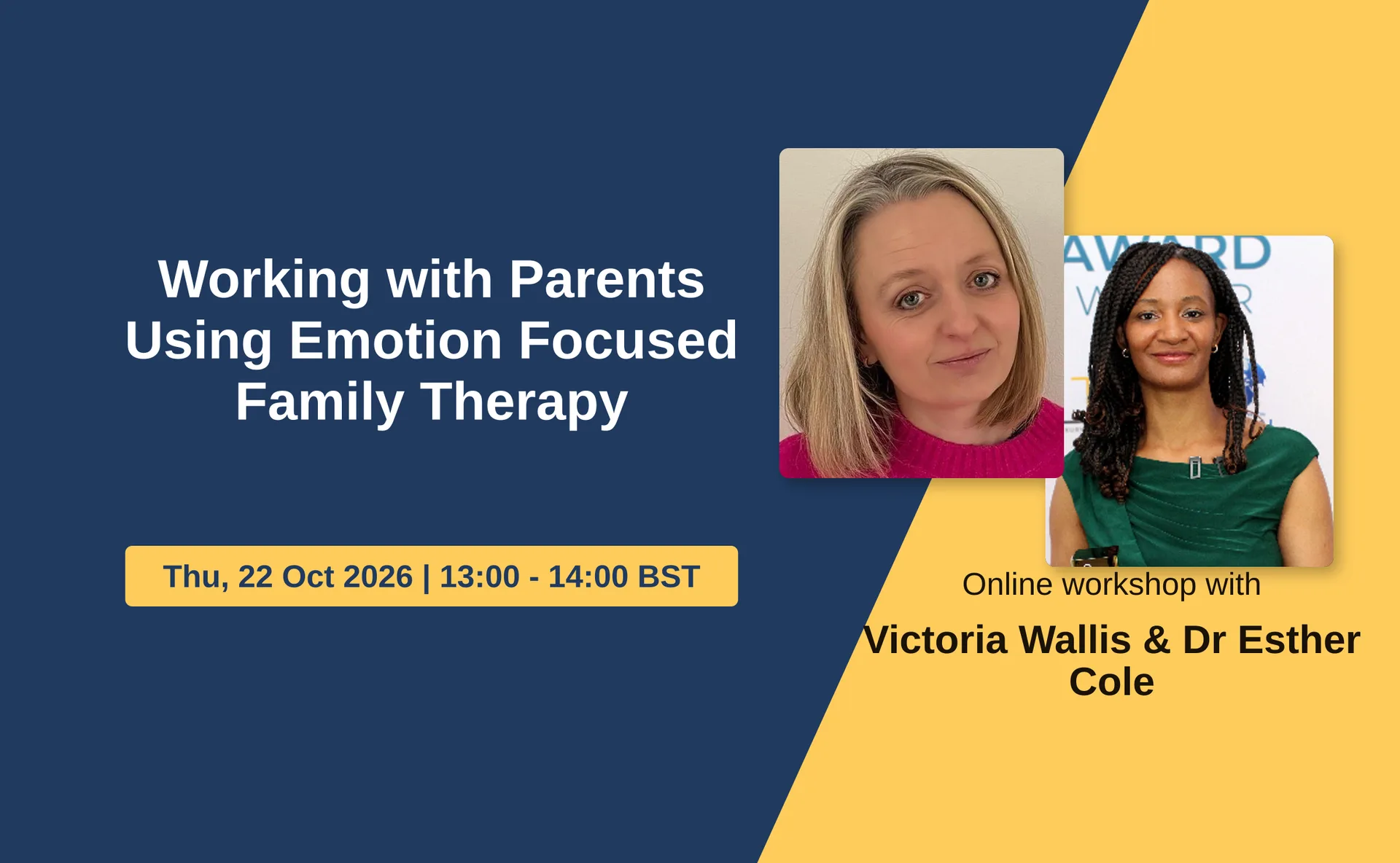
Working with Parents Using Emotion Focused Family Therapy
£1
Thu, 22 Oct 2026
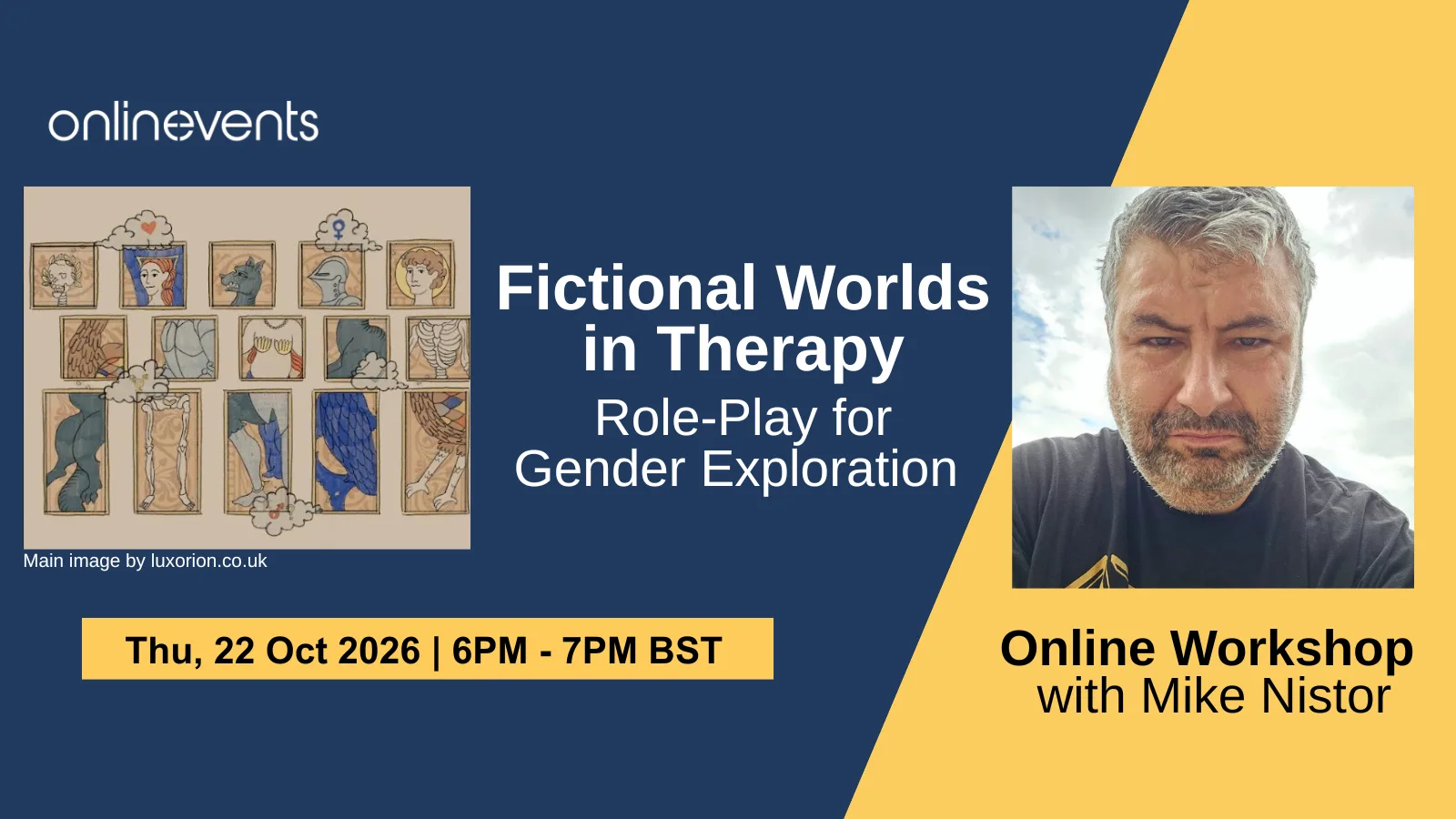
Fictional Worlds in Therapy: Role-Play for Gender Exploration - Mike Nistor
£1
Thu, 22 Oct 2026
How to Build a Counselling Website for Private Practice
£1
Tue, 27 Oct 2026
Accessing digital readings & sources
Frequently asked questions
Foundations of Reflective Group Facilitation: Theory and Practice - Beverley Costa takes place on Thursday, 3 December 2026 at 13:00. The event runs until Thursday, 28 January 2027.
Foundations of Reflective Group Facilitation: Theory and Practice - Beverley Costa is held at Online.
Tickets for Foundations of Reflective Group Facilitation: Theory and Practice - Beverley Costa are priced at £1. Live prices and availability are shown on app.onlinevents.co.uk.
Tickets for Foundations of Reflective Group Facilitation: Theory and Practice - Beverley Costa can be booked via app.onlinevents.co.uk using the "Check Tickets & Live Prices" button on this page, which opens the official booking site in a new tab.
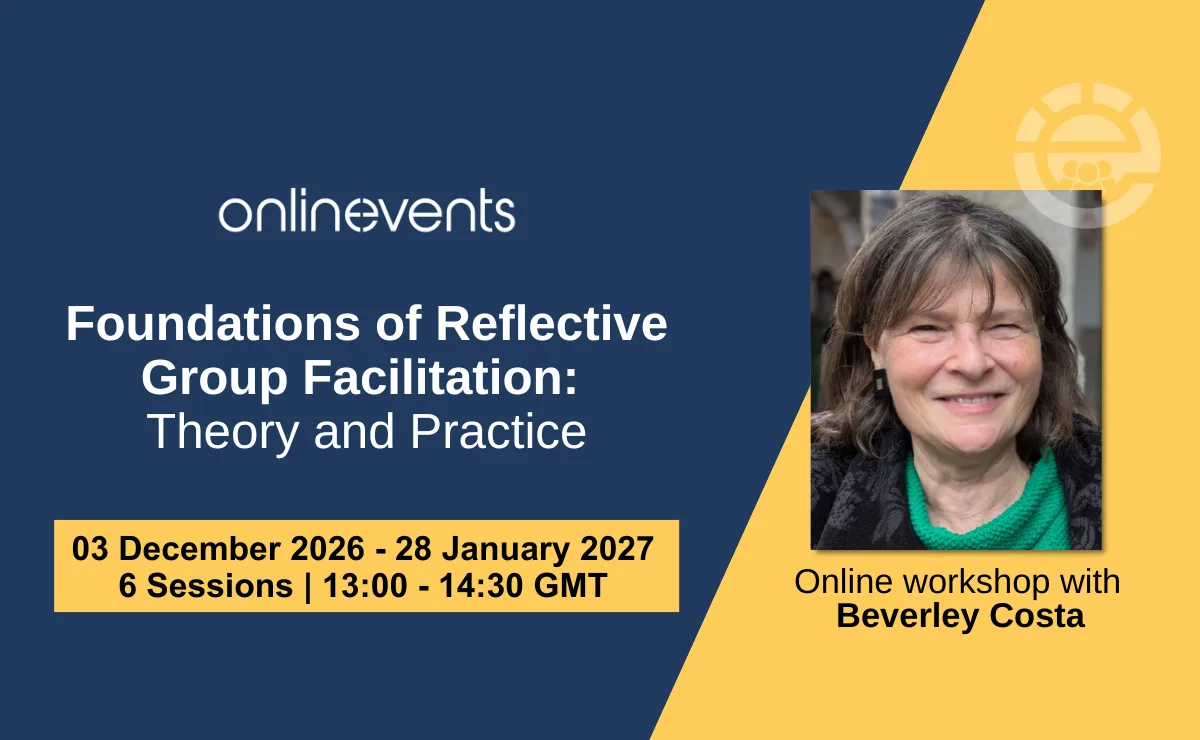
Foundations of Reflective Group Facilitation: Theory and Practice - Beverley Costa
13:00until Thursday, 28 January 2027
Editorial summaryAbout this event
Beverley Costa will lead a six-session online course on foundations of reflective group facilitation, running across six Thursdays from December 2026 to January 2027. The course addresses the need for compassionate facilitation that helps groups communicate honestly and constructively across differences. It focuses on managing group dynamics to ensure difficult issues and conflicts are explored together rather than avoided.
This summary was automatically generated from event data sourced from official ticketing providers.
_A six-session online course with Beverley Costa_
Hosted by Onlinevents · Live on Zoom · Six Thursdays, December 2026 – January 2027
# About this course
There is an urgent need for compassionate, thoughtful and containing facilitation — facilitation that helps people communicate honestly, ethically and constructively across the margins and the mainstream, across difficulty and difference. Divisions are deepening: not only between individuals, communities and nations, but increasingly between people who appear to share the same values. Passions run high. And so does fear.
Many of us want to belong to groups where difficult issues, misunderstandings and conflict can be explored together rather than avoided. But when a group is not carefully held, those same passions and fears can quickly boil over and overwhelm it. Most of us have been in a group where that happened — and we know how long the effects can last. Constructive groups rarely happen by chance. Far more often, they depend on thoughtful, reflective facilitation.
So who are these facilitators? Are they a rare breed? If they are, then we need many more of them — more people willing to step forward, and hold groups well. But facilitating a group isn’t easy. It takes courage, and it can be a lonely job. That is exactly why experiential learning, grounded in theory and offered alongside genuine support, matters so much.
This online course is the first step on that path. Across six live sessions, Beverley Costa presents the key ideas, concepts and approaches that underpin skilled group facilitation. Each session presents a distinct piece of theory — theory that applies across all group facilitation contexts, whatever kind of group you lead or hope to lead. The practical discussions then draw on Beverley’s deep experience of facilitating reflective practice groups, so that the ideas are illustrated through real-world facilitation rather than abstraction alone.
In short: **the theory in each session is for every group facilitator; the practice examples and reflective discussion are rooted in the world of reflective practice groups.** That combination — widely applicable theory, grounded in one facilitator’s rich practice — is what makes this course distinctive.
This first stage can be taken entirely on its own. For those who want to go further, it also opens the door to a practical, experiential training programme at Temenos in Spring 2027 (described at the end of this document).
# Why learn with Beverley Costa
Beverley Costa brings a wealth of experience as both a reflective group facilitator and an educator of group facilitators. Across many years of practice she has developed, held and reflected on groups in which difficult conversations were achieved rather than avoided — groups where the space felt safe enough for members to stay with discomfort and learn from it. She knows, from the inside, what it takes to help a group become a constructive container rather than a place people retreat from.
Just as importantly, Beverley has spent years helping other facilitators find their feet: offering the scaffolding, theory and support that turn courage into competence. This course distils that experience into six accessible sessions, generously illustrated with examples from her own facilitation.
Beverley Costa is a psychotherapist, trainer, and founder of Mothertongue multi-ethnic counselling service and The Pásalo Project. For over two decades, she has practised as a psychotherapist and supervisor, working therapeutically across diverse languages, with and without interpreters, with people who have a history of migration. She has facilitated and trained facilitators of reflective practice groups, pioneering therapeutic work across languages and training thousands of professionals internationally. She is a Senior Practitioner Fellow at Birkbeck, University of London, and a Senior Visiting Research Fellow at the University of Reading. She has written numerous papers and chapters and she is the author of Other Tongues — psychological therapies in a multilingual world (PCCS Books). Her latest book, The Art of Group Facilitation: Difficult Conversations and Reflective Practice, is due to be published by Routledge in the autumn of 2026.
Website: [www.pasaloproject.org](https://www.pasaloproject.org)
# Who this course is for
Everyone who is currently practising as a group facilitator — or who is interested in becoming one — is warmly welcome.
• Practitioners who already facilitate groups and want to deepen and refresh the theory beneath their work.
• Those who are drawn to facilitation and want a thoughtful, supported way in.
• Counsellors, psychotherapists, supervisors, team leaders and others who work with groups in any setting — education, healthcare, social care, law, journalism, community and humanitarian work, and other relational fields. Anyone who recognises the power of people thinking together.
The theory Beverley presents in each session is applicable to all group facilitation contexts. The discussions of practice are focused specifically on the experiences of reflective practice group facilitators — a particularly rich source of learning, whatever kind of group you work with.
The course begins with theory that spans many group settings and gradually focuses in on more structured, reflective group work, so you can take what you need into your own context.
# Dates and format
Six live sessions on Zoom, all on Thursdays, 13:00–14:30 (London time):
• Session 1 — Thursday 3 December 2026
• Session 2 — Thursday 10 December 2026
• Session 3 — Thursday 7 January 2027
• Session 4 — Thursday 14 January 2027
• Session 5 — Thursday 21 January 2027
• Session 6 — Thursday 28 January 2027
# Booking and pricing
**Attend live — pay what you can (from £1).** Registration to join the live Zoom sessions is on a pay-what-you-can basis, in keeping with Onlinevents’ commitment to making learning as accessible as possible. You choose the amount that is right for you.
**Access all six recordings — £47.** A single ticket of £47 gives you access to the recordings of all six sessions, to watch in your own time.
**One registration, open throughout.** The six sessions are grouped as a single registration that stays open right through to the final session — so you can join part-way through and still receive the recordings of every session.
**Certificate of Professional Development.** Everyone who takes part receives an Onlinevents Certificate of Professional Development, confirming the CPD hours completed.
# The six sessions
_Each session introduces a distinct piece of group facilitation theory, then illustrates how it comes to life in practice through the lens of reflective practice group facilitation._
## Session One — Anatomy of a Reflective Group Facilitator
_What effective facilitation is, what it is not, and why it matters._
In this opening session we consider:
• the personal characteristics and qualities of an effective facilitator;
• the role of the facilitator in holding the group frame for safety, trust and group effectiveness;
• how a facilitator can help groups become spaces for learning, generosity and hope rather than defensiveness, polarisation or fragmentation;
• how a facilitator contributes to a healthier society by enabling people to engage with complexity.
## Session Two — A Facilitator’s Compendium: The Concepts That Shape Every Group
_Key themes, terms and concepts for group facilitators, examined and illustrated with practical examples._
In this session we consider:
• the task of a group
• the group-as-a-whole
• containment, holding and boundaries
• authoritative v authoritarian approaches
• transference and projection in groups
• shifting focus
• cultural shame
• cohesion and coherency
• co-facilitation
• metacommunication
## Session Three — Supportive Leadership: Holding Authority with Courage and Care
_Introducing the theory: what it means to lead a group well — authority, containment and the facilitator’s presence._
In this session we consider:
• how traditional forms of authority have fallen into disrepute, and what that means for leadership and facilitation;
• the difference between leading a group and dominating it;
• if and how authority can be trustworthy and benign;
• how a facilitator can hold authority while staying genuinely alongside the group;
• balancing support and challenge so that members feel both held and stretched;
• how to recognise and work through ethical dilemmas in facilitation;
• the courage it takes to stay with discomfort and to act with integrity;
• how to model the very qualities — honest self-reflection, steadiness, openness — that we hope the group will develop;
• how to exercise accountability — to the group, to the work and to ourselves — through ongoing, scrupulous self-awareness;
• how to look after ourselves as facilitators through support and supervision structures;
• in reflective practice groups: how supportive leadership enables respectful personal and professional reflection and perspective-taking.
## Session Four — Group and Power Dynamics: Working with What Lies Beneath
_Introducing the theory: how power, role and relationship move through a group, often beneath the surface._
In this session we consider:
• the sources of different types of power;
• visible and invisible inter- and intra-group power, and how it shapes what can and cannot be said;
• difference and belonging — tensions between individual and group identities;
• recognising and working with conflict, alliances, scapegoating and exclusion;
• the facilitator’s own relationship to power and authority, and how a facilitator establishes and holds authority within a group;
• in reflective practice groups: noticing and tending to the dynamics that affect reflection and learning.
## Session Five — The Life Cycle of a Group, Part 1: Strong Beginnings
_Introducing the theory: the frame, the contract and the groundwork that make a group possible._
In this session we consider:
• the practical and ethical preparation that happens before a group begins;
• membership, size and the question of who is in the room;
• establishing the group frame and a working agreement;
• creating the conditions for safety and trust from the very first meeting;
• in reflective practice groups: setting up a group that can hold professional vulnerability.
## Session Six — The Life Cycle of a Group, Part 2: Growth, Rupture, Repair and Ending
_Introducing the theory: how groups develop, change and end over time._
In this session we consider:
• the phases a group moves through, from beginnings to endings;
• working purposefully with beginnings, transitions and endings;
• rupture and repair — staying with difficulty rather than avoiding it;
• sustaining safety and trust as the group matures and is tested;
• in reflective practice groups: holding continuity, membership change and closure.
# The next step: the Foundation Certificate in Reflective Practice Group Facilitation Skills
This six-session course is an introduction — the theory and the concepts. The next part of the learning pathway is the Foundation Certificate in Reflective Practice Group Facilitation Skills: a practical, experiential training programme hosted by Temenos and delivered live online in Spring 2027, for those who wish to deepen their learning and develop their facilitation in a supported setting.
**What it is.** A training in reflective practice group facilitation, focused specifically on preparing and supporting facilitators to lead reflective practice groups, and oriented towards improving professional practice rather than personal development. Where the introductory sessions present theory that applies across all contexts, the Temenos training narrows in on the discipline of reflective practice group work and develops it through experience, participants’ critical participation, practice and reflection.
**Who it’s for.** It is designed for those who want to facilitate reflective practice groups — and it is also open to colleagues who work in other group facilitation contexts. It is for people from the world of psychological therapy, and from education, healthcare, social care, law, journalism, community and humanitarian work, and other relational fields. The skills and discipline cultivated in reflective practice group work are demanding and transferable; once developed, they become a resource you can draw on in many other kinds of group.
**What it is not.** To be clear, the training at Temenos, although transferable to other contexts, is focused on reflective practice group facilitation. It is not a training in other specific styles or models of group facilitation.
**Certificate and pathway.** Everyone who books the Temenos course also receives a complimentary Foundation Certificate (knowledge level), reflecting a clear progression of learning — this sits alongside the Onlinevents Certificate of Professional Development earned from the online sessions. On finishing the training, participants receive a Foundation Certificate in Reflective Practice Group Facilitation Skills, confirming they have completed the training and are ready to begin facilitating reflective practice groups, with support.
**The shape of the training:**
• A two-day training weekend, hosted by Temenos and delivered live online — two full days of around seven hours each — Saturday–Sunday 10–11 April 2027.
• Three half-day supervision sessions of around 2.5 hours each, live online (2:00–4:30pm), on 24 June, 9 September and 11 November 2027, acting as bookends that hold the group across the year.
• Around 21.5 hours of contact time in total.
• A small group: minimum 6 and maximum 10 participants.
• £775 per person, with places offered following a short assessment conversation with Beverley.
**What comes next.** By the end of the course, participants will have reached a foundational skill level in reflective practice group facilitation. Where you go from there depends on your starting point: some will feel ready to set up their own reflective practice group; others may choose to co-facilitate alongside a more experienced colleague; and some will want more practice and training before facilitating a group of their own.
Description supplied by the event organiser.
Before you goFrequently asked questions
When is Foundations of Reflective Group Facilitation: Theory and Practice - Beverley Costa?
Foundations of Reflective Group Facilitation: Theory and Practice - Beverley Costa takes place on Thursday, 3 December 2026 at 13:00. The event runs until Thursday, 28 January 2027.
Where is Foundations of Reflective Group Facilitation: Theory and Practice - Beverley Costa taking place?
Foundations of Reflective Group Facilitation: Theory and Practice - Beverley Costa is held at Online.
How much are tickets for Foundations of Reflective Group Facilitation: Theory and Practice - Beverley Costa?
Tickets for Foundations of Reflective Group Facilitation: Theory and Practice - Beverley Costa are priced at £1. Live prices and availability are shown on app.onlinevents.co.uk.
How do I get tickets for Foundations of Reflective Group Facilitation: Theory and Practice - Beverley Costa?
Tickets for Foundations of Reflective Group Facilitation: Theory and Practice - Beverley Costa can be booked via app.onlinevents.co.uk using the "Check Tickets & Live Prices" button on this page, which opens the official booking site in a new tab.
Price
£1
Date
Until Thursday, 28 January 2027
Time
Secure checkout on app.onlinevents.co.uk — opens in a new tab
Ask AI: is it for me?
EventsList lists 226,000+ events across the UK. Tickets are sold by the venue or its authorised sellers, never by us.
Not this one?Similar events in Online
View all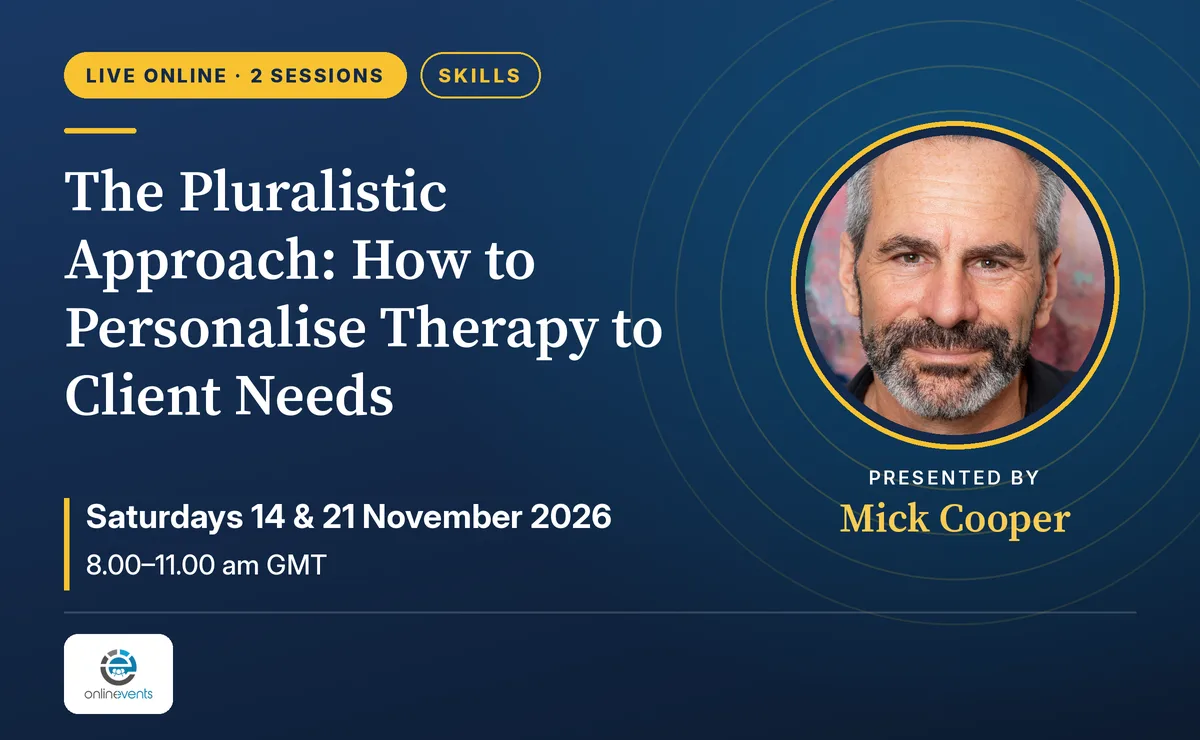
More things to do in Online
- Working with Dreams: Space, Time and Mood in Existential TherapyThursday, 5 November 2026
- Kaleidoscope 2026: Mixed and Multi-Racial Heritage in TherapyFriday, 20 November 2026
- Working with Men at Depth: Frameworks and Experiential Circle Practice - Kenny Mammarella-D'Cruz and John WilsonThursday, 19 November 2026
- Working with Winnicott: Repairing Early Relational Wounds in Therapy - Kate WilliamsFriday, 20 November 2026
- Tarot for Wellbeing: Using Elemental Tarot in Therapeutic Practices - Stephen McCabeThursday, 12 November 2026
- Christmas Wreath workshopThursday, 26 November 2026
- The Mixed + Multiracial Client in Therapy Series: Unpacking Intra-Familial Racism In Mixed Race Client WorkWednesday, 24 February 2027
- How to Plan a Clinical Will and Digital Legacy for Your PracticeThursday, 29 October 2026
- From Trauma to Resilience: Neuroscience Essentials for Therapists - Ana Lund and Chad LukeThursday, 29 October 2026
- GDPR Advanced training for Psychologists, Psychotherapists & Counsellors in private practice.Friday, 4 December 2026
- Two Words Change The Session. Show Me Using Metaphors.Wednesday, 2 December 2026
- Using Schema Therapy When Clients Repeat the Same Life PatternsWednesday, 2 December 2026
- How Therapists Can Use TA Creatively with Neurodivergent ClientsSaturday, 5 December 2026
- Working with Paper in Therapy: Externalising Emotions and Sensations - Stefan CharidgeSaturday, 5 December 2026